Coastal properties offer outstanding views and a strong connection to the surrounding environment, making glass balustrades a popular choice for balconies, decks and pool areas. However, salt air, moisture and wind exposure can gradually affect glass surfaces and supporting hardware. For homeowners considering or maintaining glass balustrades on the Central Coast, understanding these conditions can help preserve the appearance, safety and durability of the system.
This article outlines five practical ways to protect a glass balustrade from salt-related deterioration, including regular rinsing, careful cleaning and early attention to signs of corrosion or damage.

Salt air is one of the toughest environmental exposures for an exterior glass balustrade. Fine salt particles carried in sea breezes settle on glass, stainless steel and aluminium. When these particles combine with moisture, they form deposits that can contribute to staining, surface deterioration and corrosion if they are not removed regularly.
Understanding how salt affects different parts of a balustrade helps explain why some systems become cloudy, marked or discoloured over time, while others remain clear and presentable with the right materials and maintenance routine.
Salt spray leaves a fine residue on the glass. When humidity rises or rain falls, these deposits become wet and then dry again, often leaving visible marks behind. Repeated exposure can:
These effects are particularly noticeable on frameless and semi-frameless balustrades, where clear views are one of the main reasons for choosing glass.
Salt air is particularly aggressive towards the metal components that support the glass. Even stainless steel can develop corrosion or surface staining in marine conditions if the grade, finish or maintenance routine is unsuitable.
Salt deposits can:
One of the most common early signs is tea staining on stainless steel. This appears as light brown discolouration, often following the direction of the polished finish. Although tea staining may initially be cosmetic, ongoing exposure can eventually contribute to pitting and material deterioration.
Salt air can also affect less visible parts of the balustrade. UV exposure, moisture and salt deposits may gradually harden or crack sealants, affect powder-coated finishes and reduce the service life of protective surface treatments.
Salt-laden moisture can also collect in drainage channels or around the base of posts. Where water does not drain freely, fixings can remain damp for longer periods, increasing the risk of corrosion and premature wear.
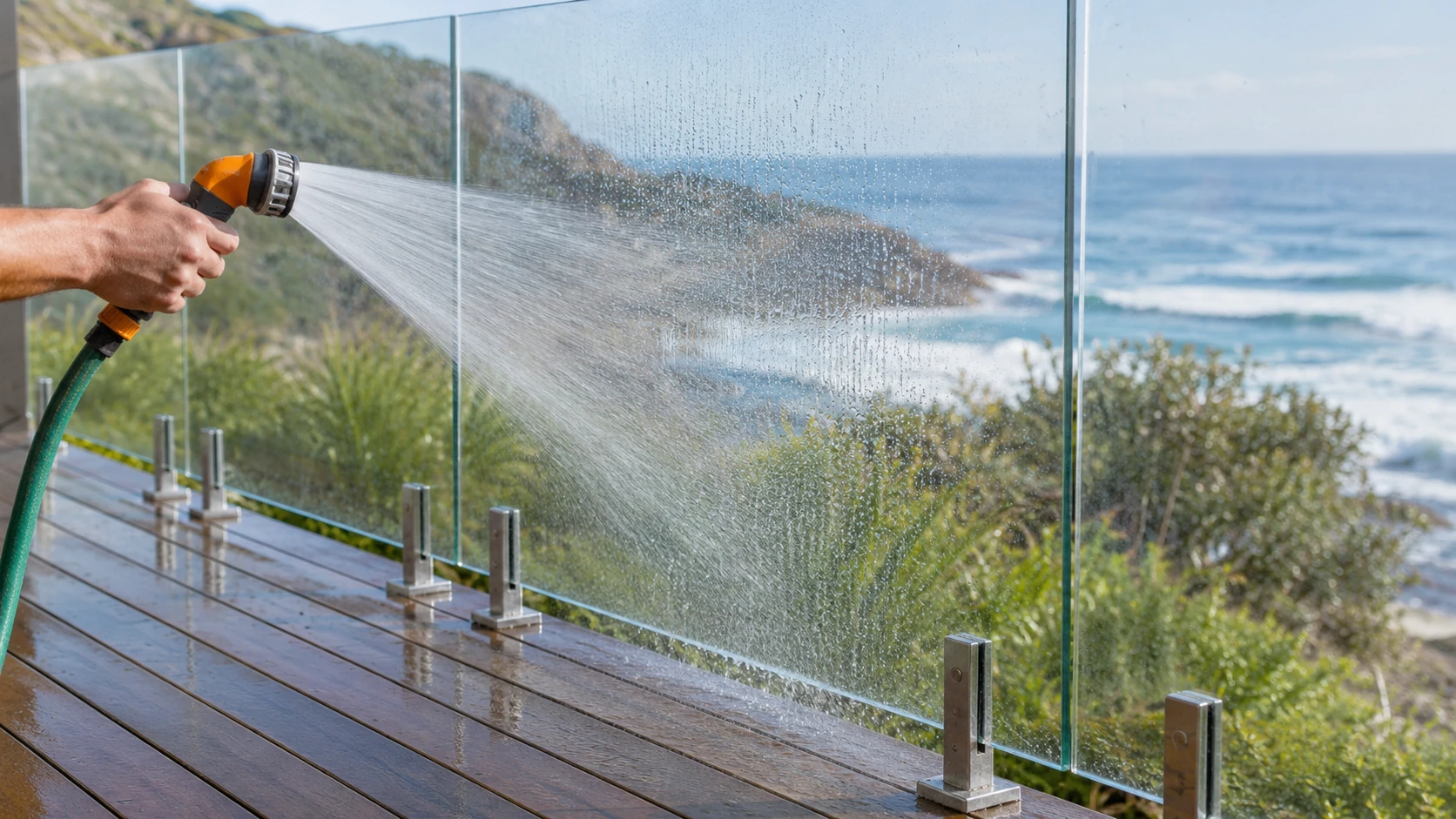
Regular freshwater rinsing is one of the simplest ways to protect a glass balustrade from coastal conditions. Salt particles settle on glass and hardware, attract moisture and become increasingly difficult to remove when they are left in place.
Treating rinsing as part of routine exterior maintenance helps preserve the transparency of the glass and reduce the likelihood of staining on stainless steel fittings, posts and handrails.
The ideal frequency depends on the property’s proximity to the shoreline, elevation, wind exposure and whether the balustrade is sheltered or directly exposed to sea spray.
Balustrades on beachfront, cliffside or highly exposed properties may need a light rinse every few days or after strong onshore winds. Properties further from the shoreline may only require rinsing weekly or fortnightly.
An additional rinse is advisable after storms or periods of windy weather. Fresh salt spray can leave a visible film overnight, and regular light cleaning is generally easier than removing built-up deposits later.
A garden hose with a standard nozzle is usually sufficient. Use a gentle, wide spray pattern rather than a high-pressure jet, as excessive pressure can force water into caps, seals and fixings.
Work from the top of the balustrade down, allowing water to sheet over the glass and across handrails, spigots and posts. Pay particular attention to edges, corners and horizontal surfaces where salt tends to collect.
Where possible, use clean mains water. Bore or tank water with a high mineral content may leave additional deposits on the glass as it dries. A squeegee or soft microfibre cloth can help reduce spotting after rinsing.
Freshwater rinsing removes loose salt deposits, but glass balustrades also need a more thorough clean from time to time. Suitable products help remove residue without damaging the glass, coatings, seals or nearby hardware.
Choosing a cleaner is less about a particular brand and more about using mild ingredients, soft tools and the correct method.
A mild pH-neutral detergent diluted in clean water is generally suitable for routine cleaning. Commercial glass cleaners labelled as safe for toughened or laminated glass may also be appropriate, particularly where they are compatible with any protective coatings applied to the surface.
Avoid:
These products can scratch the glass, damage coatings or stain nearby stainless steel fittings.
Some glass balustrades have protective surface treatments, while seals and gaskets may be made from materials that react poorly to harsh chemicals.
For coated or treated glass:
For seals and gaskets:
For stainless steel hardware:
Metal spigots, brackets, clamps and fixings require particular attention in coastal locations. These components often contain joins, edges and horizontal surfaces where salt deposits and moisture can accumulate.
Routine cleaning helps limit tea staining on stainless steel, reduce oxidation on aluminium and prevent dirt from building up around screws, base plates and channels.
For routine cleaning, use a mild pH-neutral detergent diluted in warm, fresh water. Apply the solution with a soft cloth or non-abrasive brush, rinse thoroughly and dry the hardware with a clean cloth.
A purpose-made stainless steel or marine-grade metal cleaner may be suitable for more stubborn marks, provided the product is compatible with the specific finish and is labelled as non-abrasive. Always follow the manufacturer’s directions.
Avoid strong acids, bleach and abrasive powders. These products can damage protective finishes and make the surface more vulnerable to future staining.
When cleaning the hardware, check:
Rain may naturally wash some exposed surfaces, but covered or recessed areas can retain salt deposits for longer periods. These sections often need more careful manual cleaning.
Small visual changes can indicate that the maintenance routine needs to be adjusted. Early action is important because surface staining is generally easier to address before it develops into deeper corrosion or widespread deterioration.
Tea staining typically appears as light brown streaks or discolouration on stainless steel posts, handrails, clamps and fixings. Although it may initially be cosmetic, it indicates that salt deposits are accumulating on the surface.
Rust marks are usually darker orange or reddish. They may appear around screw heads, cut edges or brackets and can sometimes run down the glass from a fitting.
Aluminium components may develop a white, powdery residue where the protective finish has deteriorated or where the surface remains damp for extended periods.
Light tea staining can often be removed with a suitable stainless steel cleaner and a soft cloth. Always rinse the area thoroughly with fresh water afterwards. Where staining is widespread, repeatedly returns after cleaning or is accompanied by visible pitting, professional advice is recommended.
Surface damage and construction debris can accelerate deterioration. Grinding dust, concrete splatter, paint overspray and metal particles may settle on the glass or hardware during renovation work.
After nearby building or landscaping work, clean the entire balustrade carefully. Pay attention to the metal components, as carbon steel particles from cutting or grinding can contribute to rust marks on stainless steel surfaces.
Inspect glass panels for chips around edges, corners and mounting points. Any damage near fixing holes, glass edges or areas subject to load should be assessed by a glazing professional.
Deep scratches, impact marks or visible chips should not be ignored, even where the panel otherwise appears stable.
Regular cleaning allows homeowners to identify surface deposits early, but some issues need professional assessment. A glass balustrade is a safety barrier, so movement, deteriorating fixings and visible material damage should not be treated as cosmetic concerns.
A qualified balustrade or glazing professional can assess whether cleaning is sufficient or whether components need repair or replacement.
Arrange an inspection if you notice:
Homeowners should not attempt to adjust or tighten structural fixings without professional advice. Over-tightening can damage anchors, seals or gaskets and may not address the underlying cause of the movement.
A thorough inspection may include:
Periodic inspections are particularly worthwhile for balustrades in highly exposed coastal locations. Early attention can help prevent small maintenance issues from becoming more expensive repairs.
Coastal exposure does not prevent homeowners from installing glass balustrades, but it does make regular maintenance more important. Freshwater rinsing, mild cleaning products and careful attention to fittings can help reduce staining, corrosion and premature wear.
Where rust marks, pitting, loose hardware or glass damage appear, a professional inspection can determine whether cleaning, repair or replacement is required. With suitable materials and consistent care, glass balustrades on the Central Coast can maintain their clarity, appearance and performance for longer.
Ready to elevate your space with stunning glass solutions? Contact Clearview Glass today for expert advice, quality craftsmanship, and unmatched customer service. Let's bring your vision to life – get in touch now for a consultation.


