Homeowners across the Central Coast are choosing glass balustrades to make the most of views and natural light, especially on elevated decks and coastal properties. With that popularity comes an important question: can glass safely withstand strong winds and significant deck heights while still providing a secure barrier for family and guests?
This article explores why wind exposure and deck height create specific safety considerations and how professional design and installation address those risks. Readers will gain clarity on how glass balustrades perform in high wind conditions and what factors determine whether a system is suitable for an exposed position.
Clearview Glass Group explains how compliant glass balustrades in the Central Coast are engineered to withstand wind loads, what types and thicknesses of glass are used in higher wind areas and how panel size and configuration influence performance. The discussion also covers fixing methods and structural support options that are critical on elevated decks, along with the Australian Standards that govern wind and height safety for balustrade installations. Just as importantly, it highlights situations where glass balustrades may not be the right choice so homeowners can make a confident decision about safety, durability and long term performance.
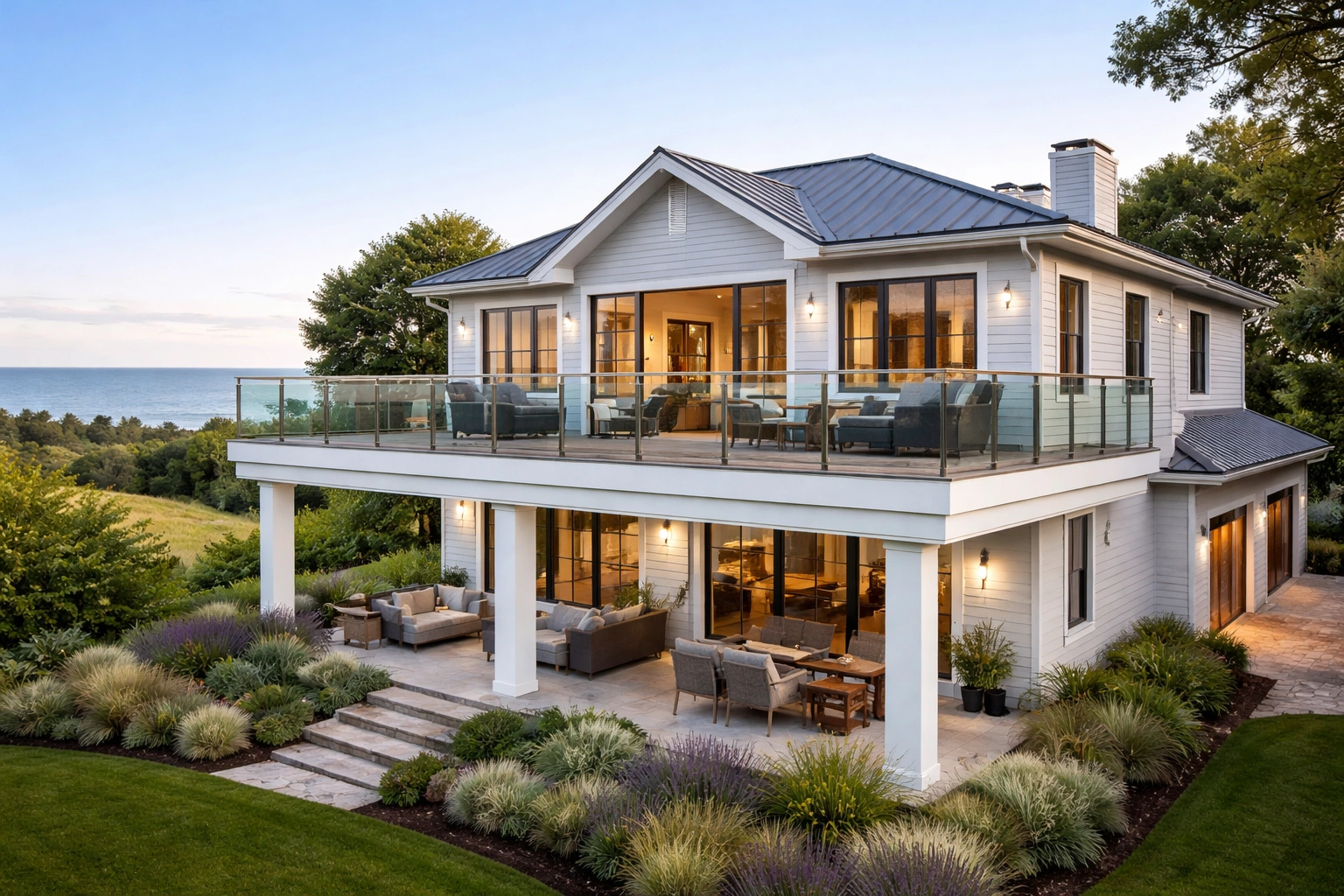
Homeowners on the Central Coast often worry that glass balustrades might not cope with coastal winds or the extra risk that comes with height. Those concerns are valid because wind pressure increases with exposure and the consequences of a failure on an upper deck are far more serious than at ground level. Understanding how wind and height interact helps clarify what a safe glass balustrade must be designed to handle.
Glass balustrades are frequently installed on homes facing open water, headlands and elevated bush blocks. In these locations, the balustrade is a critical safety barrier, not just an architectural feature. Wind exposure and deck height influence everything from glass thickness and panel sizing to fixing methods and compliance requirements.
Wind does not just blow past a balustrade. It creates pressure on the glass surface and suction on the opposite side. On exposed decks this pressure can be significant, especially during storms. If the glass, posts or fixings are under‑designed the balustrade can flex excessively, loosen over time or in the worst case fail under extreme gusts.
On the Central Coast properties along ridgelines, escarpments or open beachfronts are classified into higher wind regions under Australian Standards. In these zones the design must consider:
Glass panels need adequate thickness and strength rating for the specific wind category of the site. Hardware such as spigots, channels and post fixings must also be engineered so the whole system works together. A compliant design will account for the full height of the balustrade exposed to wind, not just the glass itself.
The higher the deck the greater the potential impact of a fall. A balustrade that might only cause minor injury if it failed at low level could have life‑threatening consequences on a second‑storey or rooftop terrace. For this reason building codes set stricter requirements once a fall of more than 1 metre exists.
On elevated decks there are additional practical risks:
These behaviours increase the horizontal forces applied to the glass and handrail. On higher decks glass balustrades must be designed to resist both wind loads and crowd loads such as several adults leaning at once. For frameless or semi frameless systems this means careful selection of glass type, edge treatment and anchoring into structurally sound substrates.
For many Central Coast homes wind exposure and deck height occur together. A first‑floor deck facing open water will experience stronger wind pressures at a level where a fall is more dangerous. In these situations safety depends on accurate site assessment, wind category determination and a balustrade system that is engineered specifically for that combination of conditions.
Glass balustrades installed on elevated decks are engineered to resist site-specific wind pressures, not simply selected for appearance. On exposed Central Coast properties, the design must account for how wind acts on the glass surface and how those forces transfer into the deck structure below.
Wind creates pressure on the face of the glass and suction on the opposite side. On elevated or coastal decks where there is little shielding from surrounding buildings, these forces increase significantly. During storms, short-duration gusts can apply loads well above everyday conditions.
A correctly designed balustrade may flex slightly at the top edge in strong winds. That controlled deflection is normal and part of the structural behaviour. What should not occur is cracking, loosening of fixings or excessive movement that feels unstable under hand.
Wind performance begins with understanding the location. Factors such as:
all influence wind classification.
For example, a first-floor deck facing open water in Terrigal may experience substantially higher design pressures than a sheltered suburban deck in Erina. Using the same balustrade detail in both locations would not be appropriate.
Once wind exposure is determined, the balustrade is specified as an integrated system rather than as individual parts. This includes:
Framed systems benefit from continuous edge support, which reduces stress on the glass. Frameless systems rely more heavily on glass thickness and fixing strength, making correct specification particularly important in high-wind areas.
Wind pressure applied to the glass ultimately transfers into the deck structure. If the underlying concrete slab, timber framing or steel edge beam is not strong enough, the system can underperform even if the glass itself is correctly specified.
That is why structural support and fixing design are just as critical as panel selection. A balustrade must work together with the deck, not simply attach to it.
When wind exposure is properly assessed and each component is selected to suit the site, glass balustrades can perform safely on elevated decks, including in strong coastal wind conditions.
Once wind exposure and deck height are assessed, the next step is selecting the appropriate glass and panel layout. In elevated or exposed coastal locations, glass choice is not purely aesthetic. It directly influences strength, stiffness and post-breakage performance.
Balustrades must use safety glass, typically either fully toughened or toughened laminated glass.
Toughened glass is heat-treated to increase its strength and, if broken, shatters into small granular pieces. Laminated toughened glass consists of two glass layers bonded to an interlayer. If one pane cracks, the interlayer helps hold the panel together and maintain a barrier.
For lower residential decks with moderate exposure, fully toughened glass can be suitable when correctly supported. On higher decks or more exposed coastal sites, laminated toughened glass is often preferred because it provides additional redundancy and improved performance if damage occurs.
Glass thickness plays a major role in limiting deflection under load. Common balustrade thicknesses include 10 mm, 12 mm and 15 mm, with laminated configurations used where required.
Thicker panels are generally specified as wind exposure, span width or deck height increases. In frameless systems, where the glass carries more structural demand, increased thickness is often necessary to reduce movement and maintain a solid feel under hand.
Thickness should always be determined based on calculated loads and panel spans rather than rules of thumb. This ensures the balustrade performs consistently in everyday conditions and during peak gust events.
Panel size has a direct impact on performance. Large uninterrupted panes attract greater wind pressure and can deflect more noticeably. Reducing panel width or decreasing the spacing between posts or spigots improves stiffness and load distribution.
Panel height is governed by building regulations, but within those limits, deflection at the top edge must be considered. Taller panels may require thicker glass or closer support spacing to maintain comfort and perceived stability.
Joint alignment and consistent spacing also help distribute loads evenly across the balustrade, reducing stress concentration at individual fixings.
By combining appropriate glass type, suitable thickness and a panel configuration tailored to site exposure, glass balustrades can remain stable and secure on elevated decks, even in strong coastal wind conditions.
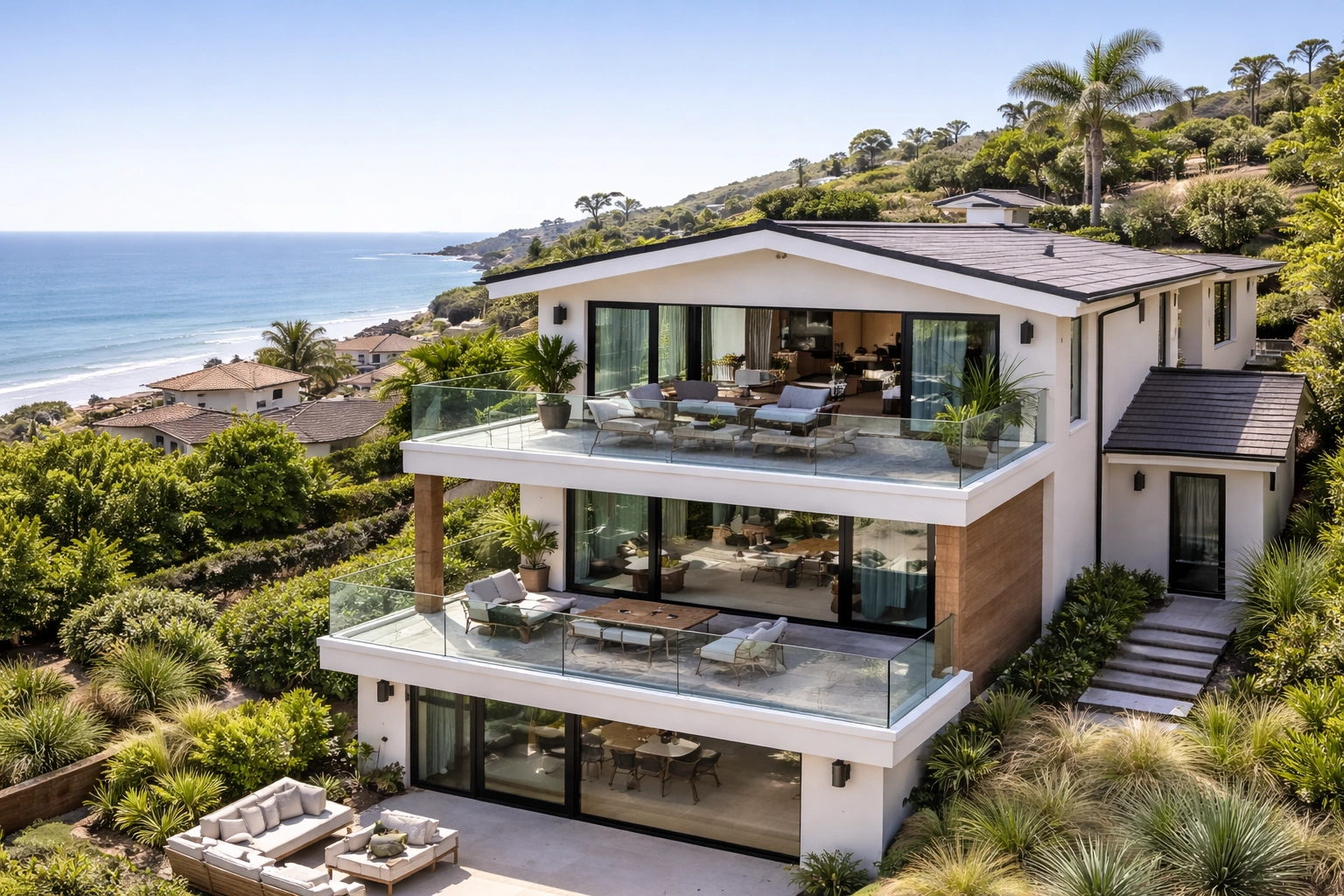
On elevated decks balustrades are exposed to higher wind forces and a greater risk of falls so the way the glass is fixed is just as important as the glass itself. The connection between the balustrade and the deck framing must safely transfer wind and impact loads into the structure without excessive movement or corrosion.
For homes on the Central Coast, where coastal winds and salt exposure are common, fixing methods and substrates should meet or exceed Australian Standards and be suited to the specific deck construction, whether timber, concrete or steel.
The type and condition of the deck structure dictate what fixing methods are suitable. Sound framing is essential before any balustrade is installed.
On timber decks the edge joists and noggins must be correctly sized and securely fixed so they can take the horizontal loading from the glass. Often additional blocking is required directly under the balustrade line to provide solid screw or bolt locations. If the existing timber is undersized or weathered it may need strengthening or partial replacement before a compliant balustrade can be anchored.
On concrete slabs or concrete upstands fixings rely on chemical anchors or expansion anchors embedded to a specified depth. The concrete strength edge distance and slab thickness all affect what fixings can be used. Hairline cracking or poorly compacted concrete may require repair or alternative fixing solutions.
For steel framing the balustrade is usually bolted through pre‑welded plates or steel edge beams. Thickness of the steel and corrosion protection are critical so appropriate grade fasteners and isolation methods are used to prevent galvanic corrosion.
There are three main fixing styles commonly used on elevated decks, each with specific structural considerations.
Spigot-fixed systems use stainless steel spigots bolted through the deck surface into reinforced framing or concrete. The concentrated loads at each spigot mean correct spacing, edge distances and bolt sizing are critical. In high-wind areas, heavier-duty spigots or closer spacing may be required.
Channel or base shoe systems grip the glass along the bottom edge within a continuous aluminium channel that is either face-fixed or top-fixed. This approach spreads loads along the deck edge, which is beneficial where framing can be constructed as a continuous beam. Channels must be securely anchored with engineer-specified fixings and often include neoprene gaskets to allow fine adjustment and reduce stress on the glass.
Fascia or side-mounted fixings anchor the balustrade to the side of the deck structure rather than the top surface, which can maximise usable floor space. These systems require strong edge beams or concrete upstands, as loads are applied outward from the face of the structure. Bracket design, bolt selection and corrosion protection are particularly important in coastal wind zones.
Regardless of fixing method all elevated deck balustrades must be designed to resist live load from people leaning or pushing plus site specific wind loads as set out in Australian Standards including AS 1170.2 and AS 1288. On the Central Coast wind categories can vary significantly between sheltered urban blocks and exposed escarpment or beachfront sites so one generic fixing detail is rarely suitable.
Design verification should involve structural engineering input or the use of tested proprietary systems to confirm that fixings, edge distances and glass sizes are appropriate for the deck height, wind classification and intended use of the area. This also includes serviceability considerations to ensure the balustrade does not flex excessively in strong gusts, which can cause discomfort or long-term fatigue in fixings.
Glass balustrades on elevated decks must comply with the National Construction Code and the Australian Standards referenced within it. These include AS 1288 Glass in Buildings and AS/NZS 1170 Structural Design Actions, which together govern glass selection, structural loading and wind pressure requirements.
These standards ensure that balustrades function as safety barriers rather than simply architectural features. Compliance requires that the system is designed for both site specific wind loads and imposed human loads, including people leaning or crowding against the barrier.
AS/NZS 1170 sets minimum structural loading requirements for balustrades, including horizontal crowd loads and wind actions. Elevated residential decks, particularly those used for entertaining, must be designed to resist combined loading scenarios where wind pressure and human forces act simultaneously.
AS 1288 governs the type of safety glass that must be used, when laminated toughened glass is required and how glass panels are supported and fixed. The selected glass and fixing system must work together to resist these calculated loads without failure.
The National Construction Code specifies minimum balustrade heights based on fall risk. For residential decks where the fall height exceeds 1 metre, the balustrade must be at least 1 metre above the finished floor level. Where the fall exceeds 4 metres, additional scrutiny is applied to glass type, fixing design and overall structural performance.
The NCC also limits openings. Gaps within the lower portion of a balustrade must not allow a 125 mm sphere to pass through. For frameless systems, panel spacing must remain compliant even under load and minor deflection.
Compliance is not achieved by copying a standard detail from another project. Wind classifications under AS/NZS 1170 vary significantly across the Central Coast, from sheltered suburban blocks to exposed escarpments and beachfront sites. The balustrade system must be verified as suitable for the actual wind region, deck height and structural substrate.
This may involve manufacturer test data, proprietary system certification or engineering verification to confirm that glass thickness, fixing spacing and anchoring methods align with the required design pressures.
When these standards are correctly applied and verified for the site, glass balustrades can meet the same structural and regulatory expectations as traditional alternatives on elevated decks.
Glass balustrades are engineered to meet strict Australian Standards for safety in wind and at height, but they are not ideal for every home or setting. In some locations around the Central Coast another balustrade style may be more practical, more durable or simply better suited to how the space is used.
Understanding where glass is less suitable helps homeowners make a realistic decision before committing to a major investment. The key considerations are usually exposure to extreme conditions, how much maintenance an owner is willing to do and specific privacy or impact risks around the property.
Coastal locations like Norah Head, The Entrance or open headlands can experience fierce salt‑laden winds. While our systems are designed for these environments and use marine‑grade hardware glass is still more maintenance intensive in such conditions.
On very exposed sites salt spray, sand and debris build up quickly on glass. If panels are not washed down regularly etched marks and staining can develop that are difficult to remove. The stainless fittings also need more frequent rinsing and inspection to control surface tea staining.
Where an elevated deck sits directly above breaking surf or on a clifftop with near‑constant high winds solid glass can become a “sail” that changes wind flow across the deck. This can increase wind noise and turbulence. In some of these extreme positions a more permeable balustrade such as vertical batten or wire might deliver a more comfortable outdoor area.
In busy family homes or short‑term holiday rentals balustrades are often subjected to rougher treatment. Although safety glass is very strong repeated hard impacts from bikes, sports equipment or furniture can chip edges or damage fittings over time.
If there are young children who regularly kick balls against railings or teenagers who may lean back heavily on panels a robust metal or timber balustrade can be more forgiving. The same applies near active play areas or where pets are likely to jump at the barrier and scratch at the glass.
Glass balustrades are also less suitable where there is a high risk of vandalism such as some street‑front or public‑facing locations. While toughened glass is difficult to break intentional heavy impact can still cause failure and replacement costs are higher than for simple metal infill.
One of the main reasons people love glass is the open view. In some situations that transparency is a drawback. On closely spaced Central Coast suburbs or townhouse complexes clear glass can create a “fishbowl” effect on elevated decks where neighbours look directly into living spaces.
Frosted or tinted glass can help but is more expensive and slightly reduces light and view. Where privacy is a top priority from the outset a solid or semi‑solid balustrade in another material may be a better fit.
Glass can also reflect strong sunlight at certain times of day. On west‑facing decks reflection and glare may be uncomfortable for occupants or neighbours. Careful design and coatings can reduce this but in very bright exposed orientations another balustrade type is sometimes simpler and more effective.
In summary, when wind exposure and deck height are properly assessed and engineered, glass balustrades can be a safe and compliant solution for elevated decks, even in coastal or high-wind areas. Wind pressure increases with height and exposure, so the correct glass type and thickness, appropriate panel sizing and a properly designed fixing system must all be specified from the outset.
When installed in accordance with Australian Standards for balustrades, wind loads and glazing, glass barriers can perform as reliably as traditional alternatives while maintaining unobstructed views. However, sites with extreme wind conditions or inadequate deck structure may require a different solution. The priority should always be structural performance first, design second.
Ready to elevate your space with stunning glass solutions? Contact Clearview Glass today for expert advice, quality craftsmanship, and unmatched customer service. Let's bring your vision to life – get in touch now for a consultation.


