Glass roofs can bring natural light into an interior and create a greater sense of openness, but their exposure to hail, heavy rain and strong winds raises understandable concerns. Homeowners need to know whether the glass above them can withstand severe weather without cracking, leaking or becoming unsafe.
For homeowners considering glass roofs in Central Coast properties, the answer depends on more than the visible glass. Glass type, panel dimensions, framing, roof pitch, drainage, installation quality and local design conditions all influence how the completed roof performs.
Clearview Glass Group can help property owners assess these factors and select glazing suited to the structure and intended application. A correctly specified glass roof can provide reliable protection during many storm conditions, although no roofing material is completely immune to damage during an extreme event.
This article explains the types of glass used in roof glazing, how glass roofs respond to hail and strong winds, what affects their weather resistance and what property owners should do after a severe storm.
Glass used in overhead applications is different from ordinary glass found in basic windows or picture frames. Roof glazing must be selected with safety, structural performance and exposure to the weather in mind.

The appropriate glass configuration depends on several factors, including:
A qualified glazier, designer or engineer should determine the final specification rather than relying on glass thickness alone.
Toughened glass is heat-treated to increase its strength compared with ordinary annealed glass of the same thickness. It is commonly used where the glass must resist wind pressure, temperature changes and moderate impact.
If toughened glass breaks, it fractures into many small pieces rather than large, sharp shards. This reduces the risk of serious cutting injuries, although the broken panel can still leave the roof exposed to rain and falling fragments.
For that reason, toughened glass may form part of an overhead glazing system rather than being used as an unsupported single pane. Its suitability depends on the complete glass and framing design.
Laminated glass consists of two or more glass sheets bonded with an interlayer. If one or both glass layers break, the interlayer helps hold the fragments together.
This containment is particularly valuable in roof glazing because it reduces the likelihood of broken pieces falling into the area below. Depending on the extent of the damage, the
panel may also continue providing limited weather protection until it can be replaced.
However, a cracked laminated panel should not be assumed to remain structurally safe. Its condition must be assessed promptly, and the space beneath it should be kept clear until a professional confirms what action is required.
An insulated glass unit contains two or more panes separated by a sealed cavity. A roof unit may use toughened glass on the exposed side and laminated glass on the interior side, although the correct arrangement varies between systems.
The different layers perform separate functions. The outer pane may provide impact and weather resistance, while the laminated inner pane helps retain fragments if breakage occurs. The sealed cavity can improve thermal performance and reduce some external noise.
Low-emissivity coatings, suitable spacers and other thermal features may also be included. These components must be compatible with the intended application, frame and exposure conditions.
Options for glass roof insulation may include insulated glazing, low-emissivity coatings and suitable tinting, depending on the roof design and desired level of indoor comfort.
A properly designed glass roof can withstand many hail events, but its performance depends on the severity of the storm and the specification of the entire system.
Hailstones vary considerably in size, density, speed and angle of impact. Wind can also drive hail against the roof with greater force. A system that performs well during one storm may still be damaged during an unusually severe event.
No glass roof should therefore be described as completely hail-proof unless that claim is supported by appropriate product testing and clearly defined performance limits.
Toughened, laminated and toughened-laminated glass can all form part of a hail-resistant roof design. Each provides different benefits.
Toughened glass offers increased resistance to impact compared with ordinary annealed glass. Laminated glass provides fragment retention if cracking occurs. Toughened-laminated glass combines these characteristics but must still be selected according to the panel size, support conditions and calculated loads.
The most appropriate choice cannot be determined solely by naming a glass type. The complete make-up of the glazing, including individual pane thicknesses, interlayer type, edge support and frame design, must be considered.
Thicker glass may provide greater resistance in some configurations, but there is no single thickness that guarantees protection against hail.
Two panels of the same thickness can perform differently when they have different dimensions, heat-treatment processes, support spacing or edge conditions. A large panel with limited support may deflect more than a smaller panel held within a properly designed frame.
Instead of relying on a general thickness recommendation, property owners should request a specification prepared for the proposed installation.
Where hail resistance is a priority, the supplier should be able to explain what testing or technical evidence supports the product’s claimed performance.
Useful details to request include:
Testing of a single glass sample does not necessarily confirm how the finished roof will perform. The framing, seals, fixings and panel supports must also be suitable for the expected conditions.
Roof design can affect how hail interacts with the glazing. A suitable pitch helps water and loose hail leave the surface rather than accumulating around seals and drainage points. Depending on the direction of the storm, the angle of the glass may also reduce the force of some impacts.
Panel size is another consideration. Large uninterrupted panes create an attractive appearance, but they may require thicker or differently constructed glass and stronger supporting members. Smaller glazed bays can reduce unsupported spans, provided the additional framing is correctly designed.
Edges must also be protected. Chips, poor clearances or concentrated pressure around the perimeter can weaken a panel and increase the risk of cracking during impact or structural movement.
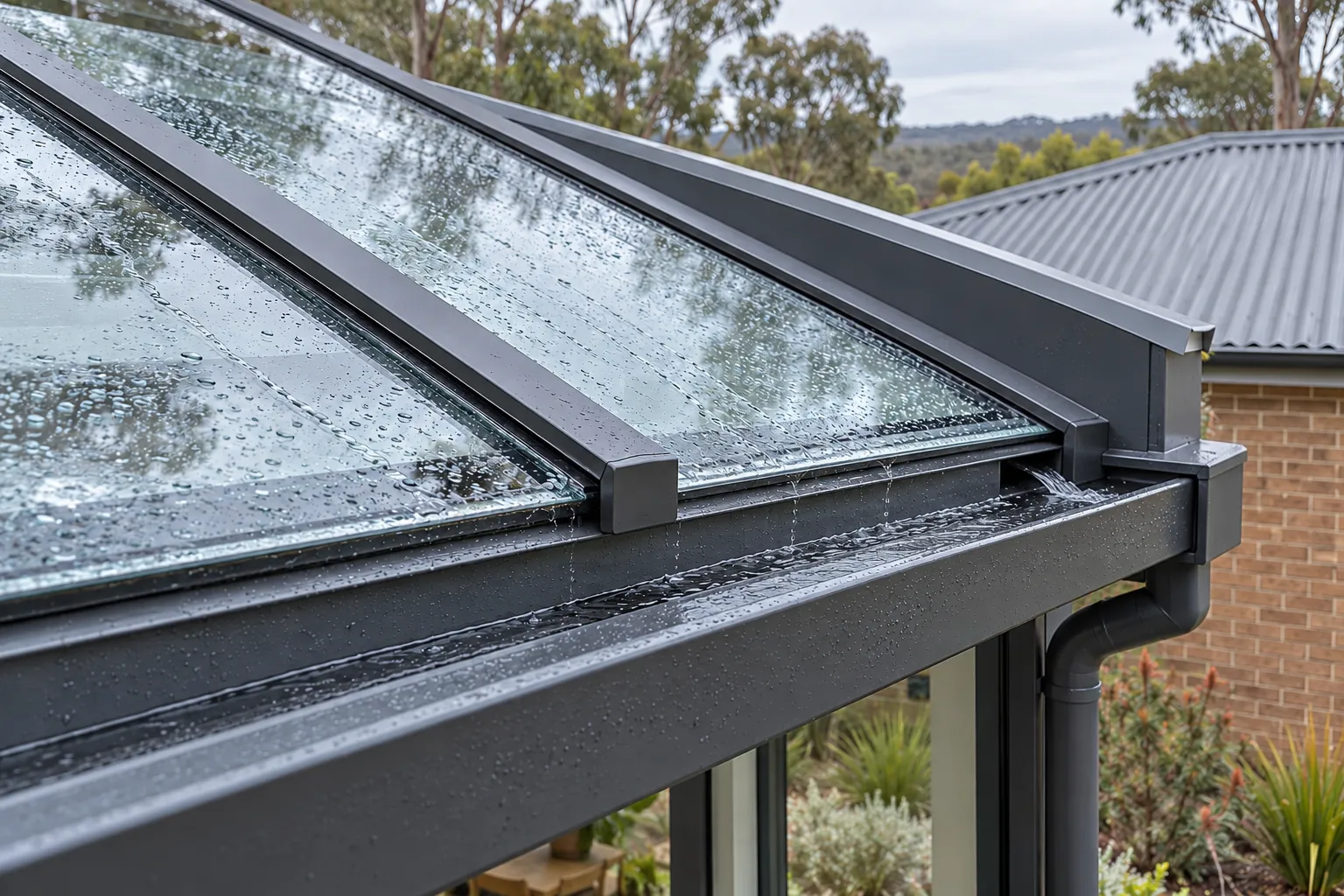
Glass roofs can perform reliably in high winds and driving rain when they are designed for the location and installed as a complete weather-resistant system. Their performance depends on the glass, framing, fixings, seals, flashings and drainage working together.
A strong pane cannot compensate for weak framing or inadequate anchoring. Similarly, a structurally sound roof may still leak if its seals and drainage paths are poorly designed or maintained.
Strong winds create changing pressures across a roof. Some areas experience downward pressure, while others may be subjected to uplift that attempts to pull components away from the building.
The roof design must account for factors such as:
The glazing and frame must limit excessive movement under these forces. Deflection that is not properly controlled can stress glass edges, seals, fixings and surrounding building elements.
Aluminium, steel or another suitable structural framing system is used to transfer loads from the glass into the building. The size of framing members and the number, type and spacing of fixings should be determined as part of the overall design.
Gaskets, pressure plates and cappings help hold the glass evenly while allowing controlled movement. If the glass is gripped too tightly, poorly supported or exposed to concentrated pressure, normal thermal expansion and building movement can contribute to damage.
Corrosion resistance is also important, particularly in coastal locations. Materials and fixings should be suitable for the environment and checked periodically for deterioration.
Heavy rain often exposes problems in joints, flashings and drainage before it damages the glass itself. Wind-driven rain can enter small gaps that may not leak during lighter rainfall.
A weather-resistant glass roof generally requires:
Very shallow roof pitches require particular attention because water may drain more slowly. Leaves, dirt and other debris can also block concealed channels and cause water to back up around seals.
Branches and loose building materials can place greater impact loads on a roof than ordinary rain or small hail. Laminated glass can help retain broken fragments if a panel is struck, but it does not make the roof indestructible.
Properties surrounded by overhanging trees may benefit from regular tree maintenance, while loose outdoor objects should be secured before forecast severe weather where practical.
NSW SES storm preparation advice recommends trimming overhanging branches, clearing gutters and drainage channels, repairing existing roof damage and securing loose outdoor items.
Rain and hail will usually be more noticeable on glass than on some insulated opaque roofing materials. Laminated and insulated glass units may help reduce noise, but occupants should still expect storms to be audible.
Thermally appropriate glazing and framing can also help manage heat transfer and condensation. Some energy-efficient glass roofs use solar-control coatings, insulated glazing or smart technology to improve indoor comfort.
Glass type is only one part of roof performance. Site conditions, design calculations, installation workmanship and maintenance all influence how the roof responds over time.
As panel dimensions increase, the glass may require a different thickness, composition or framing arrangement. The distance between supports affects how much the panel can deflect under wind pressure and other loads.
The glass must sit correctly within the frame, with appropriate edge cover, setting blocks and clearances. Direct contact with hard materials or pressure at one point can create local stress and increase the risk of breakage.
The roof pitch influences water drainage, debris accumulation and maintenance requirements. A suitable slope helps direct rain towards the drainage system and reduces the likelihood of water remaining around joints.
Orientation can also affect temperature. Panels exposed to intense sunlight may experience greater heat gain and thermal movement. The selected glass, coatings, seals and frame must accommodate these conditions.
A sheltered suburban property may experience different wind pressures from a house on elevated ground or near an exposed coastline. Building height, terrain and surrounding structures can all influence design loads.
The glass roof should therefore be specified for its actual location rather than copied from a system used on another building.
Roof glazing must comply with the applicable National Construction Code requirements and the standards referenced for the particular project. AS 1288:2021 addresses the selection and installation of glass in buildings, including considerations for wind loads, framing and overhead glazing.
Wind actions may also need to be determined under AS/NZS 1170.2:2021 as part of the structural design. This standard is used to assess wind speeds and loads affecting buildings and their components.
The applicable NCC edition and compliance pathway can depend on the project, building classification, location and approval date. A qualified building professional should confirm the current requirements before the glazing is ordered or installed.
Even correctly specified glass can underperform if it is installed poorly. Common concerns include inadequate edge support, incompatible sealants, uneven gasket pressure and incorrectly positioned fixings.
Installation should be completed by experienced professionals following the approved design and manufacturer’s requirements. Substituting glass, seals or frame components without proper review may affect the performance of the entire roof.
Regular maintenance helps preserve weather resistance and identify defects before they become serious.
Inspections should look for:
The roof should only be accessed using an appropriate safe-access method. Glass panels should not be walked on unless the system has been specifically designed and approved for that purpose.
A glass roof should be checked after a significant storm once weather conditions are safe. Early inspection can reveal damage before it develops into leaks, broader deterioration or a safety hazard.
The first inspection should be performed from the ground, an adjacent window or another safe vantage point. Property owners should not climb onto the roof to examine the glass.
Visible warning signs include:
Cracks in toughened glass can lead to complete fragmentation. Laminated glass may remain in position after cracking, but its strength may be reduced. People, pets and valuables should be kept away from the area beneath any damaged panel.
Hail and strong winds can damage surrounding components even when the glass appears intact.
From a safe location, property owners can look for:
A frame that appears twisted or out of alignment may place uneven pressure on the glass and should be professionally assessed.
Damage is sometimes more visible from inside the property. The area beneath and around the roof should be checked for:
Photos should be taken from safe positions to document visible changes. These records may assist the glazier, builder or insurer when determining what repairs are required.
If water is entering near lights, power points or other electrical equipment, occupants should follow NSW Government electrical safety guidance, avoid the affected area and contact a licensed electrician. Electrical equipment should not be touched while wet.
Damage to roof glazing should be treated promptly. A small crack can spread as the glass responds to temperature changes, wind pressure and movement within the building.
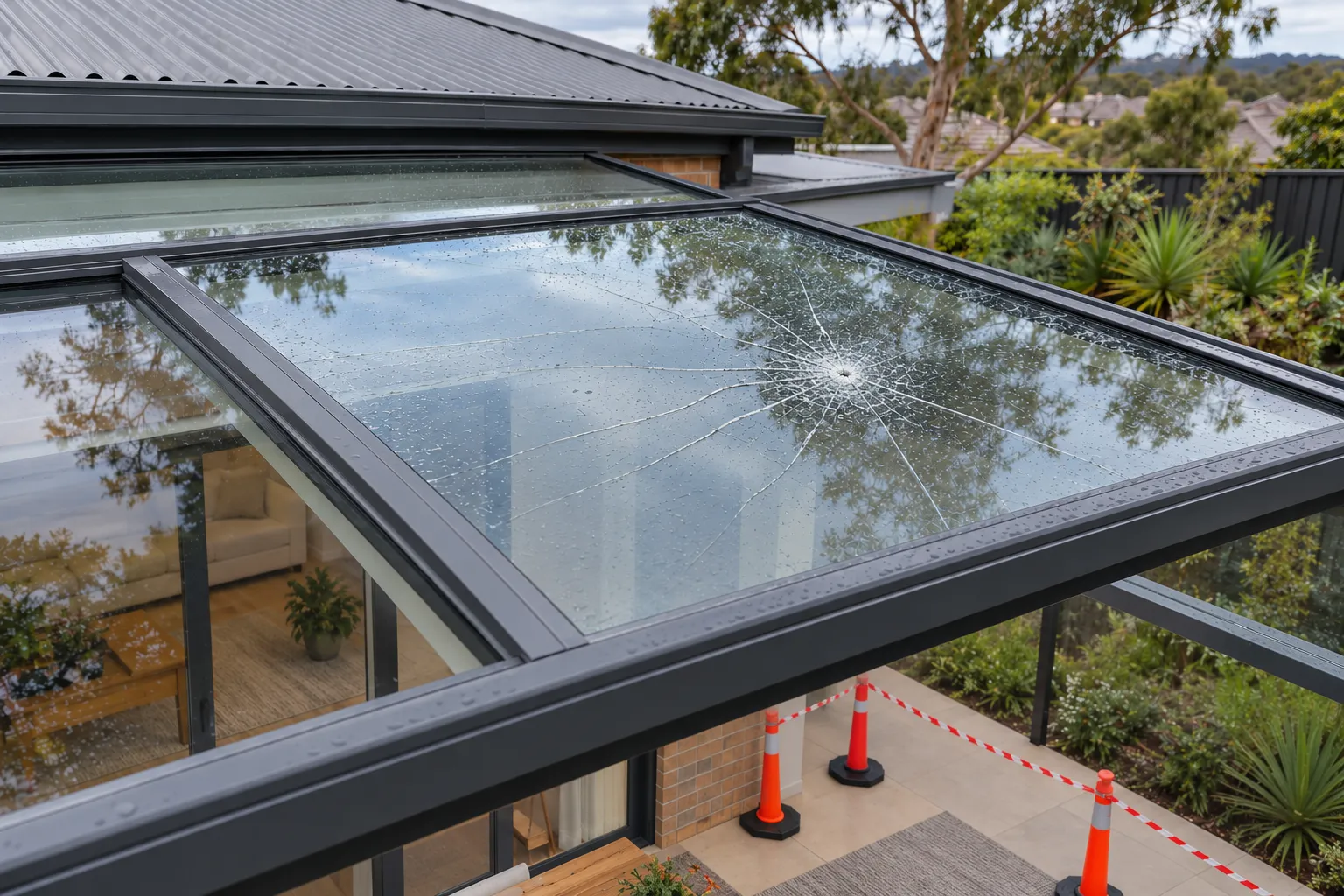
The area beneath a damaged panel should be cleared and isolated. People should not stand beneath the glazing or attempt to press, tape or remove loose fragments.
A professional glazier should assess the damage and arrange suitable temporary weather protection where required. Homeowners should not climb onto the roof or attempt to secure a tarpaulin over damaged glass themselves.
Buckets or protective coverings may be used inside to manage minor dripping, provided it is safe and there are no nearby electrical hazards.
Toughened glass normally fragments into many small pieces when it fails. Some pieces may remain temporarily within the frame, but the panel can no longer provide reliable structural or weather protection.
A shattered toughened panel requires replacement. The surrounding frame and fixings should also be examined to determine whether movement, impact or installation problems contributed to the failure.
Laminated glass may develop extensive cracking while remaining attached to its interlayer. This can prevent large fragments from falling immediately, but it does not mean the panel is safe to leave indefinitely.
The degree of cracking, condition of the interlayer, exposure to water and remaining support around the edges all affect the panel’s condition. A professional assessment is required to determine how quickly it must be removed and replaced.
Cracked roof glass generally requires panel replacement rather than a cosmetic repair. Resin repairs used for minor damage in some vertical glazing applications are not normally an appropriate long-term solution for structurally important overhead glass.
Insulated glass units also require replacement when their seals fail and persistent condensation develops between the panes. The sealed cavity cannot usually be restored reliably while the unit remains installed.
Before ordering a replacement, the specialist should confirm:
An upgrade may be considered if the original glazing was unsuitable for the location or if the replacement provides an opportunity to improve thermal, acoustic or impact performance.
Glass roofs can withstand hail, heavy rain and strong winds when the glass, framing, fixings, seals and drainage are properly designed for the property. However, no system is immune to every storm, and broad claims of being completely hail-proof should be treated carefully.
Professional specification, compliant installation and regular inspections provide the most reliable protection. Clearview Glass Group can assess the proposed application, explain suitable glazing options and help property owners make an informed decision based on the building, location and expected exposure.
Ready to elevate your space with stunning glass solutions? Contact Clearview Glass today for expert advice, quality craftsmanship, and unmatched customer service. Let's bring your vision to life – get in touch now for a consultation.


