Reducing heat gain through shopfront glazing has become a critical consideration for modern retailers. The right glass can cut cooling costs, improve in-store comfort and protect valuable merchandise from heat and UV damage. Clearview Glass Group explores how different glass types, coatings and configurations influence solar control and thermal performance in commercial shopfronts. By understanding how glass interacts with sunlight and ambient temperature, business owners can make smarter choices that directly affect running costs and customer experience.
Readers will learn how several factors contribute to a cooler, more efficient retail space. This discussion about shopfront glass in Central Coast will cover the role of modern solar control glass, tinted and reflective options, low-E technologies and double or laminated glazing in managing unwanted heat. Property managers, architects and shop owners will have a clear picture of which glass solutions are most effective for reducing heat gain in shopfronts and how partnering with an experienced specialist can turn glazing decisions into long-term performance and financial benefits.
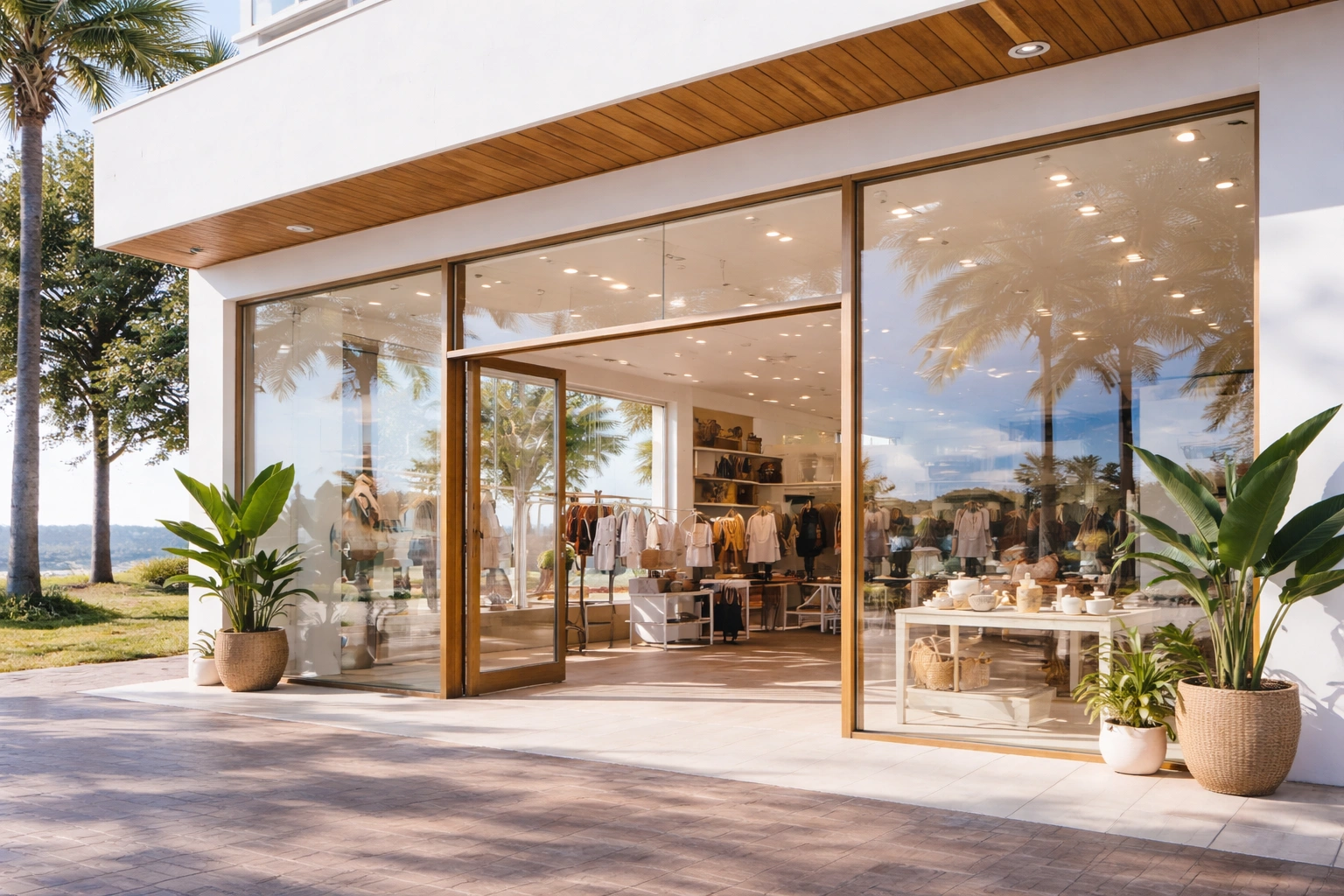
Excess heat gain through a shopfront is not just a comfort issue; it directly affects running costs, how long fittings and stock last and how customers experience the space. For many businesses, the glass at the front of the building is the largest source of unwanted solar heat, so choosing the wrong glass can lock in higher bills and ongoing problems.
By understanding how excess heat affects energy use, staff performance and the condition of the shop environment, business owners can make better decisions about their glazing. The right glass can reduce heat without sacrificing visibility or street appeal.
When a shopfront lets in a lot of solar heat, the indoor temperature quickly rises, especially in areas with strong afternoon sun or large west- or north-facing windows. Air conditioning units must work harder and for longer periods to bring the temperature back to a comfortable range.
This constant load increases electricity consumption, leading to higher operating costs throughout the cooling season. In many commercial spaces, cooling already accounts for a large portion of the energy bill. Poorly performing glass magnifies this cost every sunny day.
HVAC systems that frequently run at or near capacity also tend to wear out faster. Components such as compressors and fans experience more stress, which can lead to more frequent breakdowns and shorter equipment lifespans. This means businesses face not only higher power bills but also higher maintenance and replacement costs over time.
Excess heat gain often creates hot spots near the windows, even when the rest of the shop is reasonably cool. Customers browsing near the front of the store may feel uncomfortably warm or be dazzled by glare from direct sunlight reflecting off glass, polished floors or displays. This can shorten dwell time and reduce the likelihood of customers engaging with products displayed in the window area.
Staff working behind counters close to the shopfront can experience similar discomfort. Prolonged exposure to high radiant heat and glare can lead to fatigue, headaches and reduced concentration. Over a trading day, this can affect productivity and the quality of customer service.
In some layouts, businesses respond by rearranging shelving or blocking windows with posters or blinds to try to manage the heat and glare. While this can help in the short term, it reduces visibility into the store and undermines the value of the shopfront as a merchandising and branding tool.
Solar heat gain usually comes with increased ultraviolet and infrared exposure. Together, these can damage and fade products and interior finishes. Items displayed close to the window are more vulnerable.
Fabrics can eventually fade, plastics can become brittle and adhesives can deteriorate. Flooring and joinery may also change colour in sun-exposed patches, creating an uneven and worn appearance. Businesses then face more frequent stock rotation away from windows and accelerated replacement of fittings.
From a branding perspective, a shopfront that looks hot, glary and faded sends the wrong message about quality and comfort. Customers are more likely to walk into a space that looks cool, clear and inviting. Managing excess heat gain through appropriate glazing is not just a technical issue but a key part of protecting the presentation and perceived value of the business.
For many retail and commercial premises, single-glazed shopfronts are preferred for budget or design reasons. That does not have to mean putting up with excessive heat gain. By choosing the right high-performance glass and coatings, solar heat entering through a single pane can be significantly reduced while maintaining clear visibility into the store.
Below are the main glass options that control heat in single-glazed shopfronts, how they work and when each is most suitable.
Solar control tinted glass is a popular step up from clear float glass, where glare and heat are a problem. Colourants are added during manufacture to reduce how much visible and infrared light passes through the pane.
Common tints include grey, bronze, green and blue. In practical terms:
Tinted glass can cut solar heat gain by 30 to 50% compared with clear glass of the same thickness. It still allows natural daylight into the store, but the interior feels noticeably cooler on sunny days. One trade-off is that very dark tints can reduce interior visibility from outside, especially in lower light.
For stronger heat reduction without resorting to heavy tints, reflective or high-performance solar control coatings provide a more technical solution. These coatings are applied to one surface of the glass during manufacture.
Traditional reflective glass has a metallic coating that reflects a portion of solar energy. This can reduce heat gain by 40 to 60% compared with clear glass. It also creates a mirror-like external appearance in daytime, which can be attractive for some corporate facades but may not suit every retail brand or streetscape.
Newer low-reflective solar control coatings give similar heat control with a more neutral look. These are often called soft-coat or low-e solar control products. They:
When specifying coated glass in a single-glazed shopfront, consider installation orientation, privacy needs and local council aesthetic requirements to select the most appropriate product.
In harsher sun-exposed locations, using body tint and a solar control coating on a single pane can further reduce heat gain. A lightly tinted substrate with a selective coating can achieve low solar heat gain coefficients while still allowing attractive shopfront transparency.
This option is well-suited to west- or north-facing frontages that suffer from afternoon heat. It can often delay or avoid the need for larger air conditioning upgrades. The combined system must be chosen carefully so that interior lighting colour and external reflectivity still support the store’s visual merchandising, which is where product knowledge is important.
Double glazing and insulated glass units are often the most effective way to reduce heat gain in shopfronts without sacrificing visibility. Where simple solar control films or single-glazed upgrades are not enough, glass consultants will usually recommend moving to a sealed unit that combines multiple panes of glass with a thermal spacer and gas-filled cavity.
For many retail and commercial premises, the shopfront is a large, continuous area of glass that is exposed for long periods each day. In these situations, insulated glass units can cut unwanted heat entering from outside, help stabilise indoor temperatures and reduce reliance on air conditioning.
Single-glazed shopfronts struggle in locations with strong sun exposure, large glass areas or long trading hours. If staff and customers feel uncomfortable near the windows, air conditioning is running constantly or interior finishes are fading quickly, double glazing is often a more robust solution than coatings alone.
Insulated glass units work by introducing a sealed air or argon gas gap between two panes, which slows heat transfer. Combined with low‑E or solar control glass, the unit can greatly reduce conductive heat entering through the glass and radiant heat from direct sun. For street-facing cafés, fashion boutiques or showrooms with large display windows, this can make the front of house more usable during hot weather.
Many retailers want clear views into the store and cannot rely on dark tints. In these cases, double glazing allows high-performance low‑E or spectrally selective glass that blocks more solar heat than a standard clear pane while keeping a neutral, transparent appearance.
This is beneficial where:
Because insulated units also improve winter performance, they help keep interiors more stable across the year, supporting longer equipment life and more predictable energy bills. For landlords and building owners, upgrading to double glazing in shopfronts can also improve compliance with current energy efficiency expectations and support higher quality tenancies.
In many commercial streets, heat gain is only part of the brief. Shopfront glass often needs to address security concerns and traffic noise as well. Double glazing is well-suited to multi‑purpose performance because different glass types can be combined within the same unit.
For example, a commercial glazier can pair a laminated security pane on the external face with a low‑E pane on the internal face, then adjust the cavity width to improve acoustic insulation. The result is a shopfront that reduces solar heat gain, discourages break‑ins and softens street noise without heavy tinting or shutters. This is often a better investment than repeated spending on cooling, blinds or temporary shading solutions.
When choosing glass to reduce heat gain in a shopfront, it is important to understand how U-values and Solar Heat Gain Coefficient (SHGC) work together. Glaziers suggest looking at figures side by side so the glass provides comfort for customers and staff without driving up energy costs.
U-value measures how well glass insulates against heat transfer, while SHGC measures how much of the sun’s heat passes through the glass. For shopfronts, it is rarely enough to focus on just one of these figures. The right balance depends on the store’s orientation, climate and how much free daylight is desired.
U-value is typically expressed as W/m²·K. The lower the number, the better the glass is at resisting heat flow. Low U-values help keep conditioned air inside and unconditioned air outside.
Here are some recommendations:
For example, a single-glazed clear glass panel might have a U-value around 5.7 W/m²·K, while a quality double-glazed low-E unit might be closer to 2.0 or lower. The lower U-value glass will cut unwanted heat entering in summer and reduce heat loss in winter, which is critical for comfort near the storefront.
SHGC is a number between 0 and 1. It shows what fraction of the sun’s radiant heat passes through the glass, including directly transmitted heat and heat absorbed then re-radiated indoors. A lower SHGC means better control of solar heat gain.
For retail shopfronts facing strong sun, commercial glaziers typically target:
If the shopfront is heavily used for merchandise display, very low SHGC glazing can reduce fading of products due to UV and high thermal stress on stock close to the window.
The best-performing shopfront glass is chosen by balancing U-value and SHGC rather than chasing the lowest number in just one category. Glass consultants assess:
When comparing products, customers should always check that U-values and SHGC figures are for the whole insulated glass unit, not just the centre of the glass. They are based on recognised test standards.
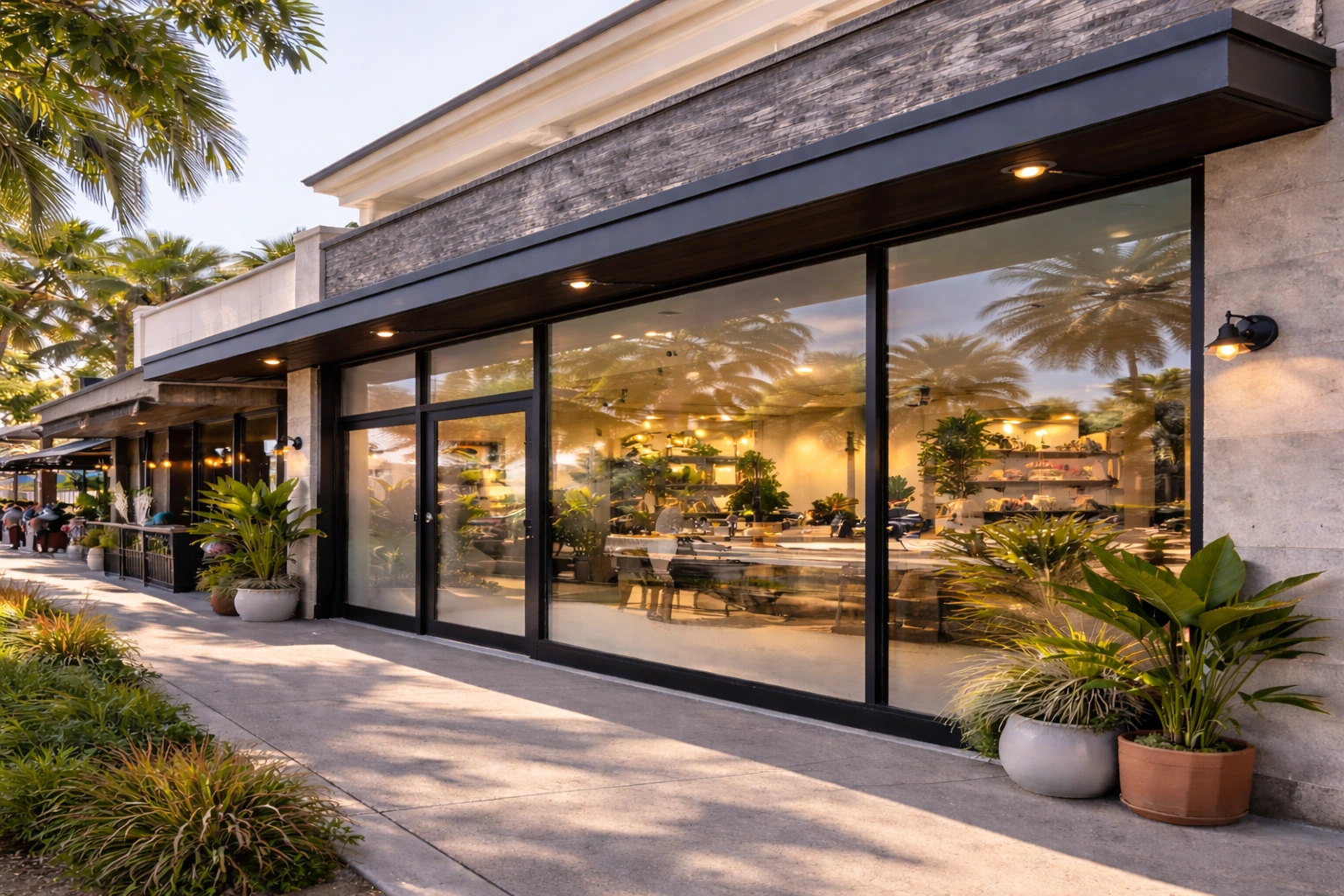
Business owners often worry that improving thermal performance means putting up with dark, mirrored or tinted shopfronts. With the right glass specification, commercial glaziers can reduce heat gain while keeping the interior bright and the display area clearly visible from the street. The key is choosing glass that targets solar heat rather than overall light.
Modern glazing technologies allow a shopfront to block a large portion of infrared solar energy while still transmitting a high level of visible light. This means customers see merchandise clearly, and staff benefit from a naturally lit workspace without the uncomfortable heat that typically comes with large expanses of glass.
Low-E and solar control coatings are ultra-thin layers applied to the glass surface during manufacturing. They are designed to reflect or absorb specific wavelengths of energy, targeting heat rather than visible light. For many retail applications, the goal is to select glass with a high visible light transmission (VLT) and a low solar heat gain coefficient (SHGC).
Common specifications include:
For shopfronts exposed to strong afternoon sun, a slightly darker solar control glass may be appropriate. Even then, it can be selected with sufficient VLT to keep the interior feeling open and inviting. The right balance is achieved by reviewing performance data for each glass option rather than relying on appearance alone.
Tinted and reflective glasses can cut heat, but if chosen poorly, they can also reduce visibility or create an unwanted mirrored effect.
In many cases, a light neutral or grey tint is enough to take the glare off merchandise and screens while still allowing clear views into the store. Highly reflective glass is usually avoided for primary retail shopfronts, as it can obscure displays during the day. Where privacy is needed, for example, in back-of-house areas or upper levels, more reflective or darker tints can be introduced without affecting the main customer-facing glazing.
Glass performance is only part of the solution. The way the shopfront is designed and installed also affects how much natural light is retained.
Glass specialists may:
By focusing on glass that separates heat from light and by integrating that glass into a well-considered façade design, clients keep their shopfronts bright, attractive and comfortable even in challenging sun conditions.
Even when shopfronts are upgraded with high-performance glass, the expected drop in heat and glare often does not eventuate. This is usually not a product problem but a specification issue where the glass type or framing detail does not truly match the building’s orientation, climate or usage. Addressing errors early helps owners avoid uncomfortable interiors, higher cooling bills and expensive rework after handover.
One of the most common mistakes is focusing on U-value only and ignoring SHGC. U-value measures how well glass resists conductive heat transfer, which is mainly important for winter performance. SHGC measures how much solar energy actually passes through the glass, which is critical for reducing summer heat gain in shopfronts.
Designs that specify a low U-value product but a relatively high SHGC can feel hot and glare despite being labelled energy efficient. For large street-facing glazing, especially on east and west elevations, glaziers typically prioritise a lower SHGC even if it means accepting a slightly higher U-value. The correct balance depends on local climate, shading and air conditioning strategy.
Another frequent error is assuming any dark tint will cut heat effectively. Standard tinted glass may reduce visible light, but it often still allows a significant portion of infrared solar energy to pass through. This can leave the shopfront looking darker without a meaningful reduction in internal temperatures.
To genuinely reduce heat gain, the specification should call for a solar control coating or a selective Low-E coating with a verified SHGC value. It is important to check the product datasheet for both:
If the documentation refers only to tint colour or privacy and does not list an SHGC value, the glass is unlikely to deliver the intended cooling benefit.
Performance figures published for glass products assume correct installation in compatible framing. In reality, gaps, thermal bridging and poor edge detailing can seriously compromise results.
Common specification oversights include:
Even a high-performance double-glazed unit can underperform if the frame conducts heat directly inside or if small single-glazed sections are left in the design.
What matters most is that the glass in shopfronts is working as hard for the business as every person. By understanding how heat gain works, comparing the different glazing options and weighing U-values, solar heat gain coefficients, visible light transmission and safety standards, we can move beyond basic “clear vs tinted” decisions and choose glass that genuinely supports comfort, lowers running costs and protects stock. Upgrading to the right combination of low‑E coatings, double or laminated glazing, solar control films and shading strategies doesn’t just make the space cooler; it helps air conditioning perform more efficiently, reduces glare for staff and customers and presents the brand the best possible. As energy prices rise and customer expectations for comfort increase, treating glass selection as a strategic investment rather than a cosmetic afterthought becomes a clear competitive advantage.
Ready to elevate your space with stunning glass solutions? Contact Clearview Glass today for expert advice, quality craftsmanship, and unmatched customer service. Let's bring your vision to life – get in touch now for a consultation.


