Water dripping from overhead glazing can make you question whether your roof is doing its job. However, a wet underside does not necessarily mean rainwater is getting through. Moisture can form directly on the glass, even during dry weather, when the surface becomes cool enough for water vapour in the surrounding air to condense.
If you have a glazed patio or enclosed entertaining area, understanding the difference between condensation and a leak can help you avoid paying for the wrong solution. Clearview Glass Group can explore suitable glazing options and assess how your existing installation may be performing. Knowing why droplets develop, how enclosure affects moisture levels and which signs require professional attention will help you decide about your glass roof.
Condensation forms when a surface reaches or falls below the dew point of the surrounding air. The dew point is the temperature at which air becomes saturated with moisture, causing some of its water vapour to turn into liquid. On overhead glazing, this may appear as a light mist, small beads or larger droplets that eventually fall.
Condensation depends on how much moisture is in the air and how cold the underside of the glass becomes. Neither a cool surface nor humid air tells the whole story on its own. Both conditions need to be considered when investigating recurring moisture.
Air carrying moisture can reach overhead glass through normal circulation within a covered space. If the glass is sufficiently cool, water vapour condenses where the air meets it. As moisture collects, small droplets join together. Depending on the roof pitch and surface conditions, they may run towards an edge or drip from the underside.
This explains why glass roof condensation can become more noticeable at particular times. An evening gathering adds moisture through people's breathing, while cooking nearby can release additional water vapour. If the roof surface cools at the same time, conditions become more favourable for droplets to form.
Two neighbouring spaces can also behave differently despite experiencing similar weather. One may remain open to moving air, while the other has enclosed sides. One may receive morning sunlight, while the other stays shaded. Their roofs may look similar, but the air conditions and surface temperatures beneath them can vary considerably.
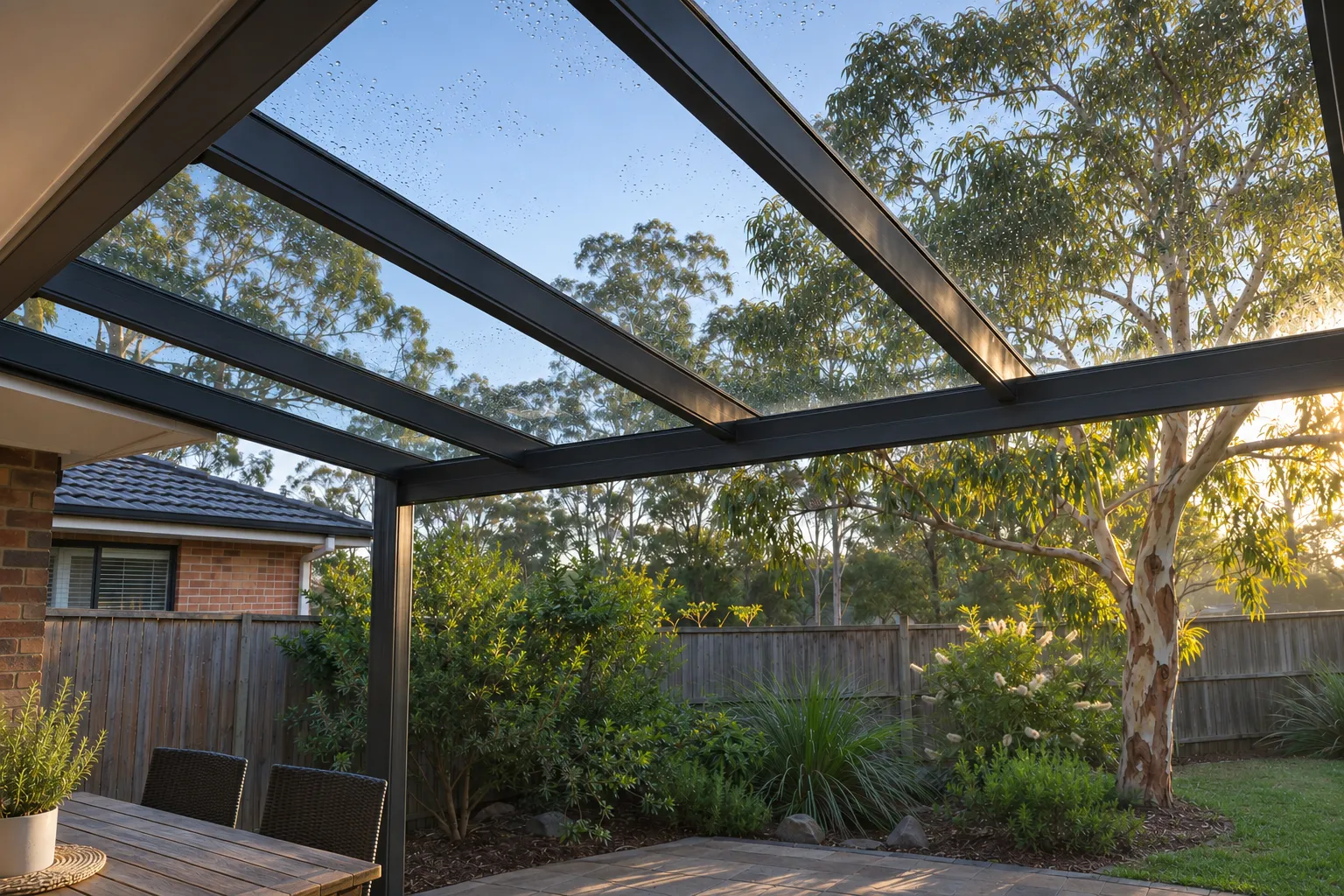
During a clear night, roof glazing can lose heat towards the sky and become cooler than the surrounding air. Moisture may then collect underneath even when there has been no rainfall. Droplets noticed early in the morning can result from overnight cooling rather than a leak.
The pattern may change after sunrise as the glazing warms. Water can evaporate, remain in shaded sections or continue dripping briefly as existing droplets move and combine. Finding a wet chair beneath the roof in the morning does not establish when the water formed.
Dry-weather droplets are a useful clue, but they do not provide a complete diagnosis. Water retained elsewhere in a roof assembly can also emerge later. Note whether the underside itself is visibly beaded and whether the same behaviour occurs under similar conditions, without climbing onto the roof to investigate.
A covered outdoor area is not moisture-free simply because it sits outside the main house. Everyday activities and humid outdoor air can both supply water vapour. What changes when you add an enclosure is how readily that moisture can disperse.
Covered patio condensation may become more noticeable after side panels or doors are installed, even if the overhead glazing remains unchanged. The roof is now covering a space with different airflow and moisture conditions.
People release moisture through breathing and normal activity. A gathering in a partly enclosed space can increase humidity when doors remain closed. Cooking that releases steam adds another source, especially when moisture is not effectively exhausted outside.
Laundry drying under cover also releases water into the air. The clothes become drier because their moisture evaporates, but that water has not disappeared. In a sheltered space with limited air exchange, some of it may later condense on cooler glazing or framing.
Damp paving, wet furniture and rain-soaked items brought under the roof can contribute too. These sources are easily overlooked because they may not produce visible steam. Several small sources operating together can increase the moisture level more than one obvious activity.
An open patio usually allows moisture to disperse through natural air movement. However, outdoor air can itself be humid, so openness does not guarantee a dry underside. If the glazing becomes cold enough, condensation can still form.
Enclosure can reduce air exchange and allow internally generated moisture to accumulate. Screens, doors and side glazing also change wind exposure and how heat moves through the space. The overall design matters more than simply whether one panel is open or shut.
Understanding ventilation and moisture management can help you discuss how water vapour will disperse when the space is enclosed.
If you are considering enclosing an existing covered area, raise these questions before selecting the enclosure. The considerations involved in adding a glass roof to an existing pergola or alfresco are also relevant when assessing how an existing structure will perform after changes.
Ventilation should suit the way you intend to use the area. A design that relies on permanently open sides may not provide the expected comfort if you plan to close the space during cool or wet weather. Tell the designer which openings you expect to keep closed and when.
Timing and the distribution of moisture can provide useful clues, but neither proves the cause by itself. Condensation and rainwater entry can also occur together, making a quick diagnosis from one photograph unreliable.
Your role is to record what you can safely observe from below. A glazing professional can then assess whether the pattern points towards surface condensation, a roof assembly issue or a connection with the surrounding building.
Condensation often appears as fine droplets across an exposed glass surface, sometimes with heavier beading in colder areas. If it develops during dry, cool conditions or after moisture-producing activities, condensation is a possible explanation.
A weather-related leak may be more closely associated with rainfall, wind direction or particular storms. A recurring drip at one location during wind-driven rain deserves attention, even if the surrounding glass looks dry. Water staining near a roof-to-wall junction can also help identify where an assessor needs to investigate.
These are indicators rather than definitive diagnostic tests. Rain can cool the glass and trigger condensation, so droplets during rainfall do not automatically establish a leak. Conversely, water entering elsewhere may travel along a frame before appearing away from its original entry point.
Water at a glazing joint can have several explanations. It may be entering through a defect, collecting on a colder frame or running towards the joint from another part of the underside. The visible drip location is not necessarily the source.
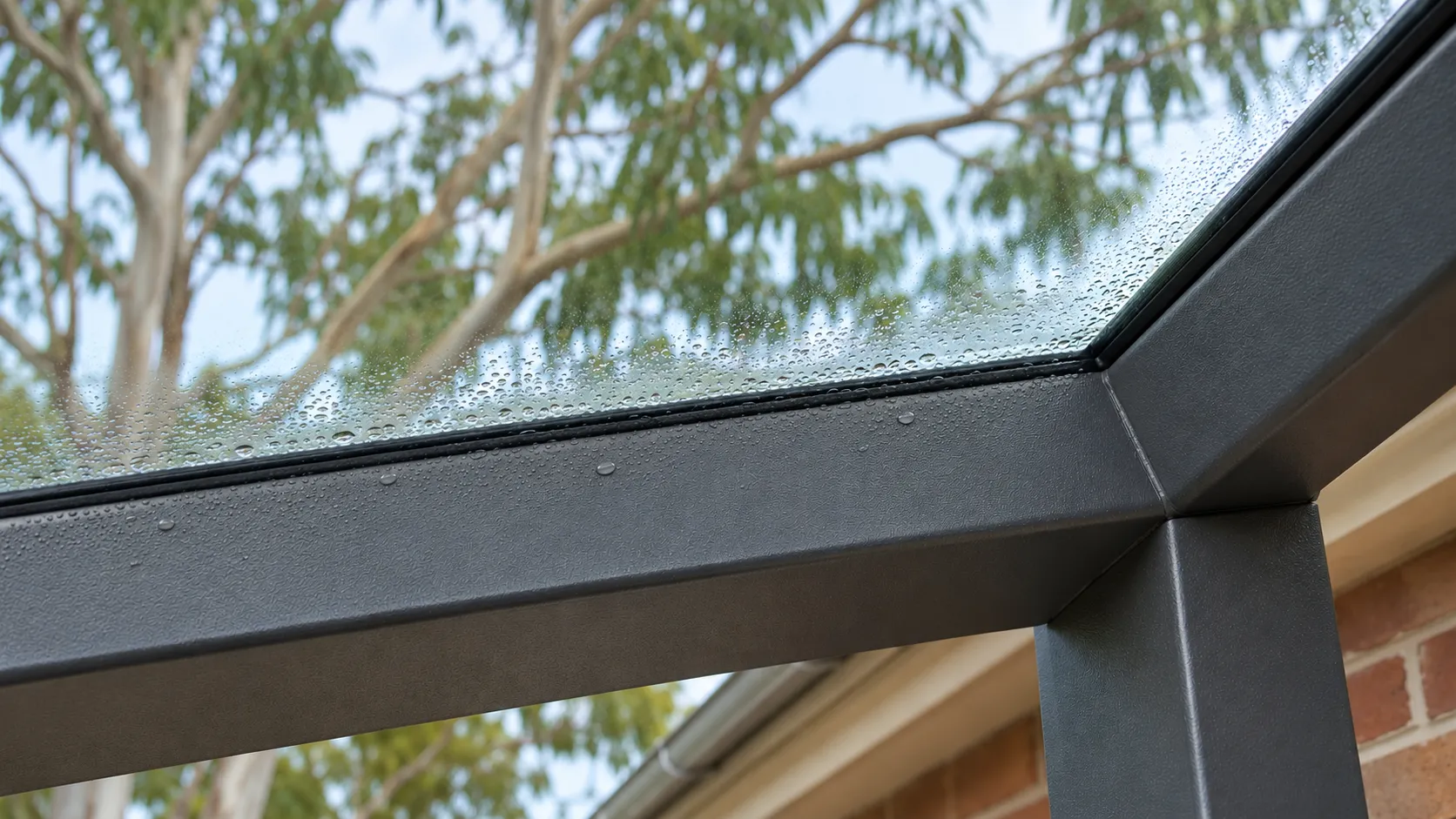
Framing and glazing connections also include details that are not obvious from below. Drainage paths, seals and interfaces with adjacent construction need to be assessed as part of the complete assembly. Adding sealant without understanding these details can leave the real cause unresolved and may interfere with intended drainage.
Do not test the roof by climbing onto it, loosening fittings or directing water into joints. Arrange an assessment by a professional for the work involved. If controlled testing is necessary, they can determine how to carry it out safely and interpret the results.
If your roof uses insulated glass units and the haze appears between the panes rather than on an accessible surface, mention that specifically. Moisture within a sealed cavity may indicate a failure of the insulated glass unit's seal. This is different from ordinary surface condensation and requires a separate glazing assessment.
A roof's condensation behaviour cannot be judged from the glass alone. The glazing, frame, supports, surrounding construction and air conditions influence surface temperatures and where moisture collects.
Replacing one component without assessing the complete installation can produce disappointing results. A proposed change needs to address the identified cause rather than simply the place where you first noticed water.
Different glazing configurations have different thermal properties. An selected insulated glazing system can maintain a warmer internal glass surface under certain conditions, reducing the likelihood of condensation. However, double glazing does not guarantee that a roof will remain dry in every setting.
Frames and connections matter as well. Conductive components can create local cold spots, sometimes called thermal bridges. Moisture may collect at these locations even when the middle of the pane remains clear. Improving the glass alone may leave colder edges or structural interfaces unchanged.
Orientation, shading and exposure also affect the roof. A shaded section may warm more slowly in the morning. Different roof areas may lose heat or receive sunlight differently, producing uneven moisture patterns across an otherwise consistent installation.
If you are comparing options for glass roofs in Central Coast, ask how the proposed specification responds to your enclosure, exposure and intended use. The discussion should cover how the complete roof system will perform rather than whether one glass product is described as better in isolation.
Tinting and solar-control choices require similar consideration. Their effects on daylight and solar heat gain do not, by themselves, establish how the underside will behave on a cold night. Read about insulating and tinting a glass roof alongside advice specific to your moisture problem, rather than treating either option as a guaranteed remedy.
A roof originally installed over an open area may experience different conditions after the sides are enclosed. Moisture can accumulate differently, while altered airflow changes how the underside exchanges heat with the surrounding air.
Heating the space can improve comfort, but it does not remove water vapour. If moisture levels remain high and the roof surface stays below the dew point, condensation can still occur.
Any proposed enclosure or roof alteration should therefore be reviewed as a connected design. The assessor may need information about the existing glass, frame, supports and building interfaces, as well as your expected ventilation arrangements.
Before agreeing to replacement glazing or another alteration, establish what the problem is and what the proposed work is intended to improve. A professional recommendation should explain what may be causing the moisture and identify anything that still needs investigation.
For you as the customer, this makes supplier comparisons more useful. Two quotations may describe different scopes because one addresses only the glass while the other includes framing, connections or changes to how the space is enclosed.
Describe the area in practical terms. Is it an open patio most of the year, or a room-like space with the sides regularly closed? Do you dry laundry there, cook nearby or use it for evening gatherings? Does dripping occur only on winter mornings, during humid weather or after rain?
Explain what you want the space to provide. Occasional outdoor shelter is a different requirement from a regularly occupied enclosed area where furnishings need to remain dry. Your expectations help the professional assess whether the existing arrangement suits its current use.
A useful proposal should distinguish between reducing condensation risk and promising to eliminate all moisture. Conditions vary, and even a well-designed roof may experience condensation when humidity and surface temperatures align. Be cautious about an explanation that relies entirely on a product label without considering the installation.
A glazing assessment may be appropriate where the concern involves glass selection, seals, framing or the condition of an insulated glass unit. Where water appears at a roof-to-wall connection, nearby ceiling or surrounding construction, a building assessment may also be necessary.
Structural alterations and changes to the use or enclosure of a space can require input beyond glazing selection. Use experts to assess that work rather than treating new glass as a standalone purchase.
Ask who will assess the existing conditions, what the proposed scope includes and which matters sit outside it. You should also understand whether further investigation is needed before a firm recommendation can be made.
An occasional light mist and repeated dripping are different practical problems. Even where condensation is the likely explanation, regularly wet furniture or surrounding finishes warrants attention rather than ongoing guesswork.
The aim is to identify why the moisture persists and whether anything else is being affected. Calling it condensation does not make the water harmless, just as seeing a drip does not automatically mean the glazing needs replacement.
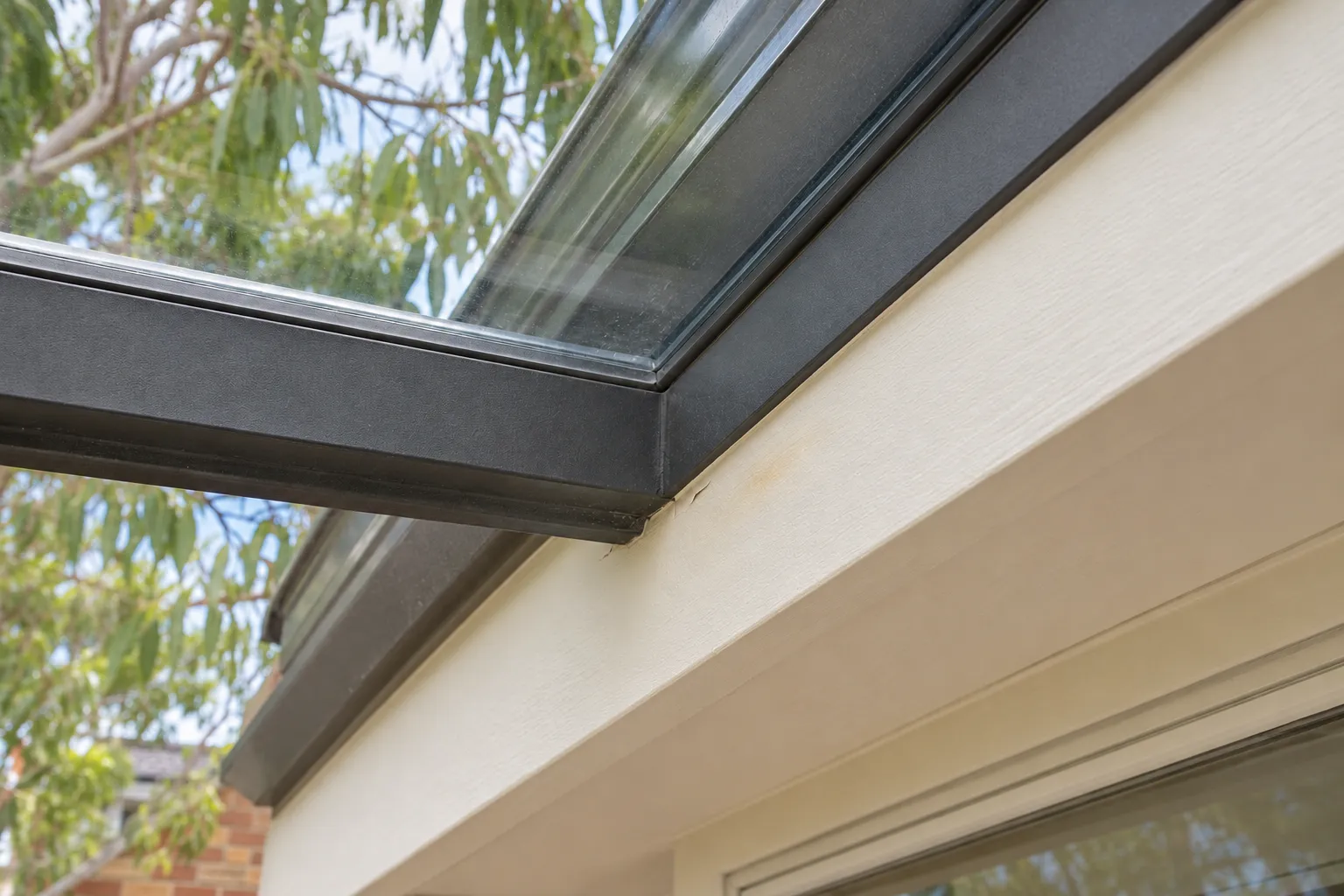
Pay attention to what remains wet after the visible droplets disappear. Damp frame corners, swollen trim, staining and deteriorating paint can indicate that moisture is repeatedly reaching surrounding materials. These observations help establish the extent of the issue, although they do not identify its source on their own.
Guidance on recognising condensation and moisture damage can help you identify signs that warrant further investigation.
Water may move along framing or collect at a low point before it falls. This can leave one area much wetter than the rest, even where condensation initially formed across a broader surface. A professional may need to trace that path rather than focus solely on the final drip point.
Note whether affected finishes dry fully between events. Persistent dampness around a connection may require investigation of concealed areas, depending on the construction and the assessor's findings. Do not remove trims or disturb glazing components to look for the source yourself.
If there is visible glass damage, movement in the assembly or water near electrical fittings, keep clear of the affected area and seek prompt professional advice. Electrical concerns need a licensed electrician, while glazing or structural concerns need the relevant qualified professional.
Start with observations made from floor or ground level. Record when moisture appears, where it forms and what was happening in the space beforehand. Avoid touching overhead glass to check which surface is wet or using furniture as access equipment.
Where safe, move moisture-sensitive belongings away from the drip area and manage water on the floor to reduce slipping. Do not attach improvised drainage, films or other materials to the glazing. These additions can obscure the original pattern and may affect components in ways that have not been assessed.
Arrange an inspection if dripping recurs, follows storms or leaves surrounding materials persistently damp. Explain any previous repairs, including added sealant or replacement panes, because those changes may be relevant to how the assembly now behaves.
After any recommended work, ask what observations will help assess its effect. Useful checks might include whether droplets still form under comparable conditions and whether previously wet finishes are drying. Keep those observations tied to the weather and use of the space so a drier week is not mistaken for proof that the underlying issue has been resolved.
Water dripping from overhead glazing does not always mean your roof is leaking. Condensation can develop when humid air meets a cooler glass surface, particularly in sheltered or enclosed entertaining areas. However, recurring moisture, water around connections and damage to surrounding finishes deserve proper investigation. Before replacing glass or modifying an enclosure, establish whether the problem relates to condensation, water ingress or another part of the installation.
Clearview Glass Group will discuss glass roof options and assess suitable glazing considerations for your property. With a clearer understanding of your existing installation and how you use the space, you can improve its performance and enjoy your covered outdoor area.
Ready to elevate your space with stunning glass solutions? Contact Clearview Glass today for expert advice, quality craftsmanship, and unmatched customer service. Let's bring your vision to life – get in touch now for a consultation.


