A glass pool fence keeps a pool area safe, compliant and visually appealing. When a panel becomes cracked or chipped, however, it can be difficult for property owners to determine whether the damage is simply cosmetic or a sign that the fence is no longer safe. Even seemingly minor defects can weaken toughened safety glass and increase the risk of sudden failure, making prompt assessment essential for maintaining a secure pool barrier.
With extensive experience installing and replacing glass pool fencing in Central Coast, Clearview Glass Group has seen how quickly seemingly minor damage can develop into a safety and compliance concern if left unaddressed. Cracks, chips and other forms of glass damage can affect the structural integrity of a pool fence in ways that are not always immediately obvious. Recognising the warning signs early and knowing when repair or replacement is necessary helps property owners maintain a safe and reliable pool barrier.
Any damage to a glass pool fence should be treated as more than a cosmetic issue. While a small crack or chip may seem insignificant, it can weaken the structural integrity of toughened safety glass and reduce its ability to withstand everyday forces. Because a glass pool fence serves as a critical safety barrier, even minor defects should be assessed as soon as they are discovered.
Damage is concerning when it affects the edge or corner of a panel, as these areas are more vulnerable to stress. A small defect can worsen due to temperature changes, movement within the fence system or repeated everyday loads, increasing the likelihood of unexpected panel failure.
Visible damage should never be ignored because it can:
Prompt action helps minimise safety risks and prevents minor damage from developing into a larger and more costly problem. A thorough inspection can determine whether the damage is purely cosmetic or whether the panel has been structurally compromised and should be replaced.
Toughened safety glass is designed to withstand the demands of outdoor environments, making it much stronger than ordinary glass. It resists wind loads, everyday knocks and normal use, but it is not indestructible. A sufficiently hard impact or an existing defect can weaken the panel and increase the risk of failure.
Australian building requirements also contain specific safety glass requirements covering the selection and use of glazing in situations where safety and human impact must be considered.
Not every impact causes a panel to shatter straight away. Depending on the force and where the glass is struck, the damage may appear as a small chip, a hairline crack or even microscopic fractures that are difficult to detect.
Common causes of impact damage include:
Even if the panel appears intact, the impact can create weak points that make the glass more susceptible to future failure. Unlike ordinary glass, toughened safety glass can fail suddenly once its internal stress pattern has been compromised, often with little or no visible warning beforehand.
Toughened glass is manufactured through a heating and rapid cooling process that creates internal stresses, giving it exceptional strength during normal use. When a crack or chip penetrates the surface, those stresses become unbalanced.
If the damage reaches a critical point, the entire panel can shatter suddenly into small, cube-like fragments. Although these fragments are less likely to cause serious cuts than ordinary glass, the loss of the panel leaves an opening in the pool barrier that requires immediate attention.
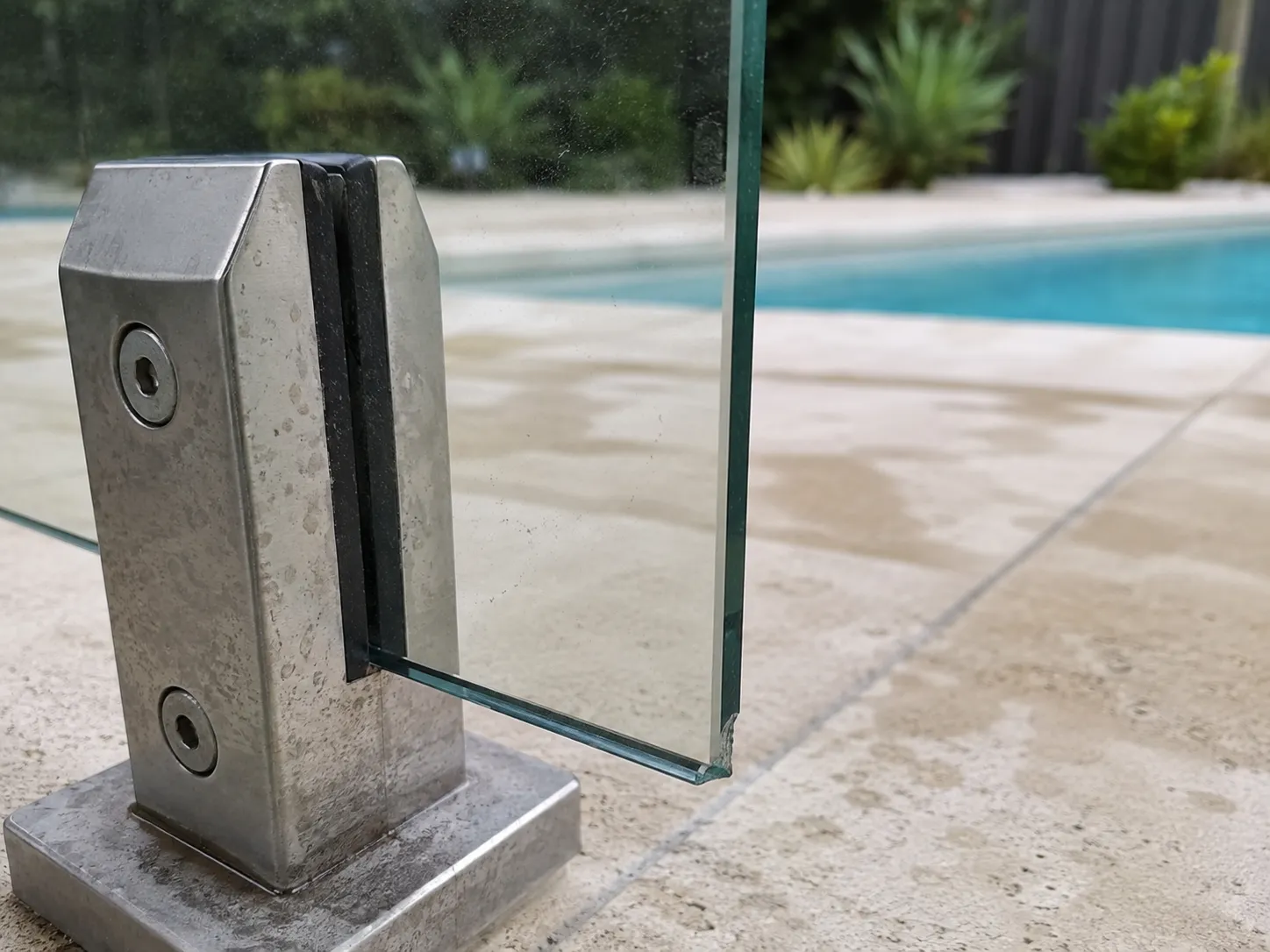
The edges and corners of toughened glass are its most vulnerable areas. Damage in these locations is more likely to develop into larger cracks because stresses naturally concentrate around the edges.
Edge damage commonly occurs when:
For this reason, even a small edge chip should be professionally assessed rather than dismissed as cosmetic.
In most cases, no. Continuing to use a pool when the glass fence is cracked or chipped is not recommended because it is difficult to determine whether the panel has lost its structural strength. Even damage that appears minor can weaken toughened safety glass and increase the risk of unexpected failure. As the pool fence is a critical safety barrier, any visible damage should be treated seriously until it has been professionally assessed.
A damaged panel may remain intact for some time before failing. Everyday factors such as strong winds, temperature changes, vibrations from the pool gate or someone leaning against the glass can place additional stress on the weakened area and cause the panel to shatter without further impact. Because there is no reliable way to predict when this might happen, the damaged section should not be relied upon to provide the same level of protection as an undamaged panel.
If the glass fails, it can leave an opening in the pool barrier, allowing unrestricted access to the pool area. Damage may also affect nearby hardware, posts or gate alignment, reducing the overall effectiveness of the fence and potentially affecting compliance with pool safety requirements.
Until the damaged panel has been inspected or replaced, access to the pool area should be carefully managed. Children and pets should be closely supervised, people should avoid leaning on or touching the damaged panel and a qualified professional should be contacted as soon as possible to assess the fence.
It is worth noting that not every mark requires immediate replacement. Light surface scuffs or stains that do not penetrate the glass are generally cosmetic. However, if there is any visible crack, an edge chip or a scratch deep enough to catch a fingernail, the safest option is to have the panel assessed before continuing to rely on it as part of the pool barrier.
In many cases, no. Australian pool safety regulations require pool barriers to remain structurally sound and capable of restricting unsupervised access to the pool. A cracked or significantly chipped glass panel can compromise the integrity of the barrier, meaning the fence may no longer satisfy the requirements of a compliant pool enclosure.
Property owners should also be familiar with NSW pool fencing requirements, which require pool barriers to be properly maintained and remain in good working order.
Compliance is assessed on the condition of the entire fence system, not just the damaged panel. While the glass itself may still be standing, an impact can also affect pool fencing hardware such as spigots, posts, clamps or gate components.
During a professional inspection, the entire pool barrier is typically checked to ensure:
Because it is difficult to determine compliance through a visual inspection alone, any cracked or chipped panel should be assessed by a qualified professional as soon as possible. Addressing damage promptly helps restore the fence's structural integrity and ensures it continues to provide the level of protection expected of a compliant pool barrier.
In most cases, no. Toughened safety glass cannot be repaired in a way that restores its original strength once it has been cracked, chipped or deeply scratched. While some cosmetic products may disguise minor damage, they do not return the glass to its original structural condition or make it suitable for use as a compliant pool safety barrier.
For this reason, damaged pool fence panels are generally replaced rather than repaired. Whether replacement is required depends on the type, location and severity of the damage, but any defect that compromises the glass should be professionally assessed as soon as possible.
Replacement is typically recommended when the damage affects the structural integrity of the panel. This commonly includes:
These types of damage weaken the panel and increase the risk of sudden failure. A replacement panel should match the original glass specification, including its size, thickness, finish and hardware compatibility, so the fence remains safe, compliant and visually consistent.
Not every mark on a glass panel means it needs to be replaced. Minor cosmetic imperfections that do not affect the structural integrity of the glass can often be cleaned or monitored. Examples include:
If there is any uncertainty about whether damage is cosmetic or structural, arranging an inspection is the safest approach. Identifying problems early helps avoid unexpected panel failure and ensures the fence continues to perform as intended.
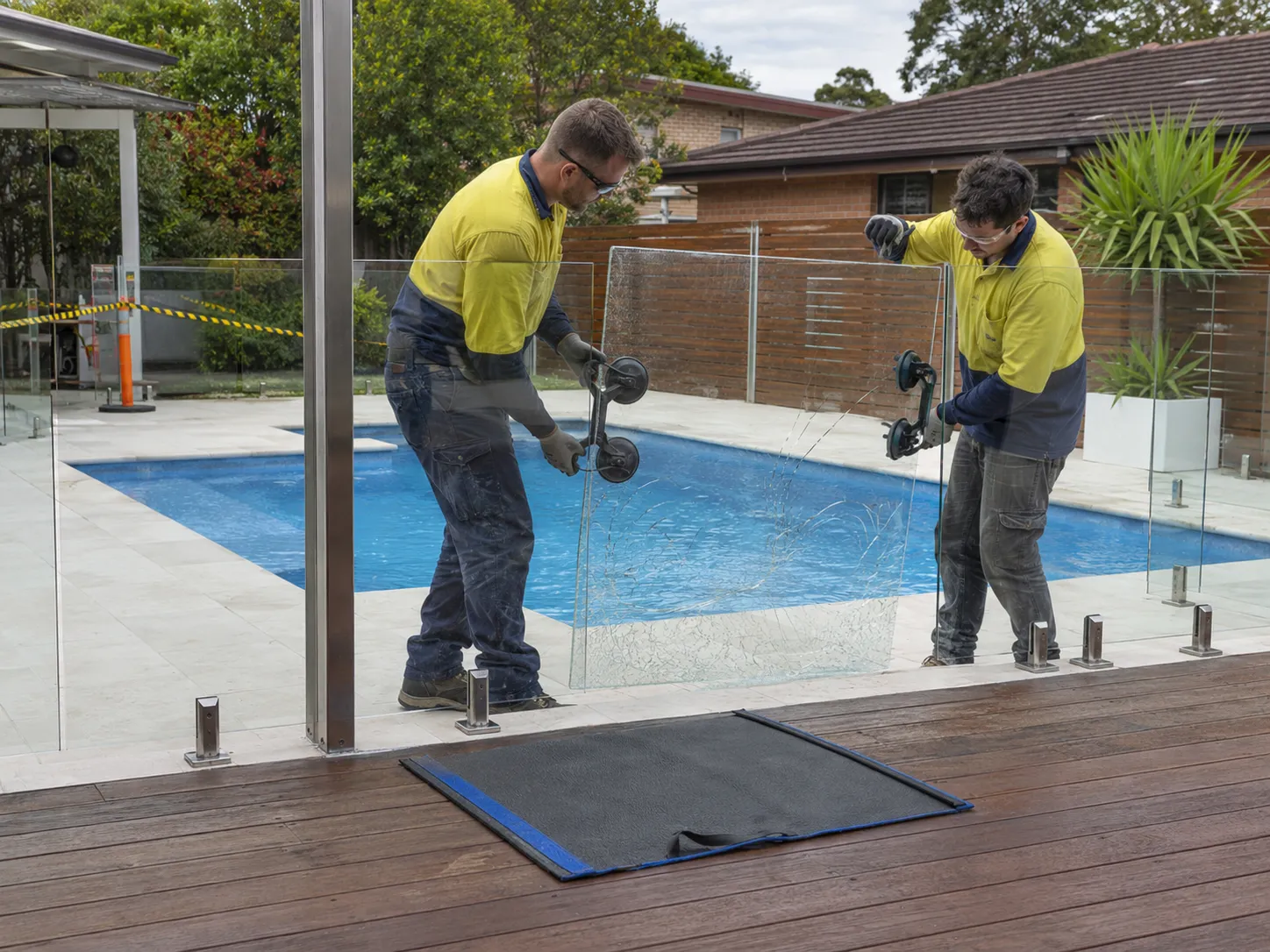
A cracked or shattered glass panel does not necessarily mean the entire pool fence needs to be replaced. A single panel can be removed and replaced while the rest of the fence remains in place. Whether this is possible depends on the condition of the surrounding fence system and whether the damage is confined to one panel.
A professional inspection is essential to confirm that the remaining glass, hardware and supporting structure are still safe and compliant before replacing only the damaged panel.
Single-panel replacement is often possible when the damage is isolated and the surrounding fence remains in good condition. This is common with modern frameless and semi-frameless glass pool fencing, where each panel is installed independently.
A single panel can usually be replaced if:
The replacement panel should match the original glass in terms of size, thickness, tint, edge finish and hardware compatibility so the fence remains both compliant and visually consistent.
Replacing only the damaged panel may not be appropriate if the impact has affected other parts of the fence or the system has deteriorated over time.
A larger repair or partial fence replacement may be recommended where:
Replacing additional panels or upgrading part of the fence may be the safest and most practical solution to restore the fence's structural integrity while maintaining a consistent appearance and safe performance.
A cracked or chipped glass pool fence should be treated as a temporary safety risk until it has been repaired or replaced. While waiting for replacement, the priority is to prevent further damage, minimise the risk of injury and ensure the pool barrier is not relied upon if its structural integrity is in doubt.
Until the damaged panel has been replaced:
If the damaged panel fails or must be removed before a replacement is installed, the opening should be secured with a compliant temporary barrier where required so the pool remains inaccessible to unsupervised children. Prompt action helps maintain safety until the permanent glass panel is installed.
Replacing a damaged glass pool fence panel is more than simply installing a new piece of glass. The replacement must restore the fence's structural integrity, ensure all components work together correctly and confirm the barrier continues to comply with pool safety requirements.
A qualified installer will assess the condition of the surrounding fence, remove the damaged panel and install a replacement that matches the original glass specifications and existing hardware. Although the exact process varies depending on the fence design, most panel replacements follow the same general steps.
The damaged panel is carefully removed to avoid placing unnecessary stress on neighbouring glass or fittings. Before installing the replacement, the installer checks that supporting components such as spigots, posts, clamps or channels remain secure and free from damage.
Correct positioning and alignment are essential to ensure the replacement panel fits securely and maintains consistent spacing throughout the fence.
Once the new panel has been installed, the entire fence should be inspected to confirm it continues to function as a compliant pool safety barrier. This typically includes checking:
Completing these final checks helps ensure the repaired fence provides the same level of safety, durability and compliance as it did before the panel was damaged.
While accidents cannot always be avoided, many cases of cracked or chipped pool fence glass result from preventable impacts, poor maintenance or unnoticed movement within the fence system. A few simple maintenance habits can reduce the risk of damage while helping the fence remain safe, attractive and compliant for years to come.
Regular cleaning and inspection can also help homeowners maintain their glass pool fence and identify chips, loose fittings or other problems before they become more serious.
To help protect glass pool fence panels:
Regular maintenance not only helps prevent accidental damage but also makes it easier to identify developing problems before they require costly repairs. By addressing issues early and maintaining the fence properly, homeowners can extend the lifespan of their glass pool fence while preserving its strength, appearance and compliance with Australian pool safety requirements.
A cracked or chipped glass pool fence should never be dismissed as a cosmetic issue. Any visible damage has the potential to reduce the strength of toughened safety glass, compromise the effectiveness of the pool barrier and affect compliance with Australian pool safety requirements. While some defects may appear minor, they can worsen and lead to unexpected panel failure if left unaddressed.
Having the damage assessed promptly is the best way to determine whether the panel can remain in service temporarily or whether replacement is required. Acting early helps maintain a safe and reliable pool barrier while reducing the likelihood of more extensive repairs in the future. Clearview Glass Group provides professional assessment and replacement services that help property owners restore the safety, appearance and performance of their pool fencing system. By addressing damaged glass without delay, homeowners can ensure their pool fence continues to provide the protection, durability and peace of mind it was designed to deliver.
Ready to elevate your space with stunning glass solutions? Contact Clearview Glass today for expert advice, quality craftsmanship, and unmatched customer service. Let's bring your vision to life – get in touch now for a consultation.


