Glass pool fencing is defined not only by the clarity of the glass, but also by the hardware system supporting it. Every spigot, hinge, latch and fixing contributes to how secure the fence feels, how smoothly the gate operates and how well the finished installation suits the surrounding outdoor space. For homeowners considering glass pool fencing on the Central Coast, the right hardware plays an important role in achieving a balance between compliance, durability and visual appeal.
In this article, Clearview Glass Group explores the key hardware choices that influence the performance and appearance of modern glass pool fencing. From frameless spigots and semi-frameless posts to self-closing hinges, compliant latches and corrosion-resistant finishes, each component plays a practical role in how the fence functions over time.
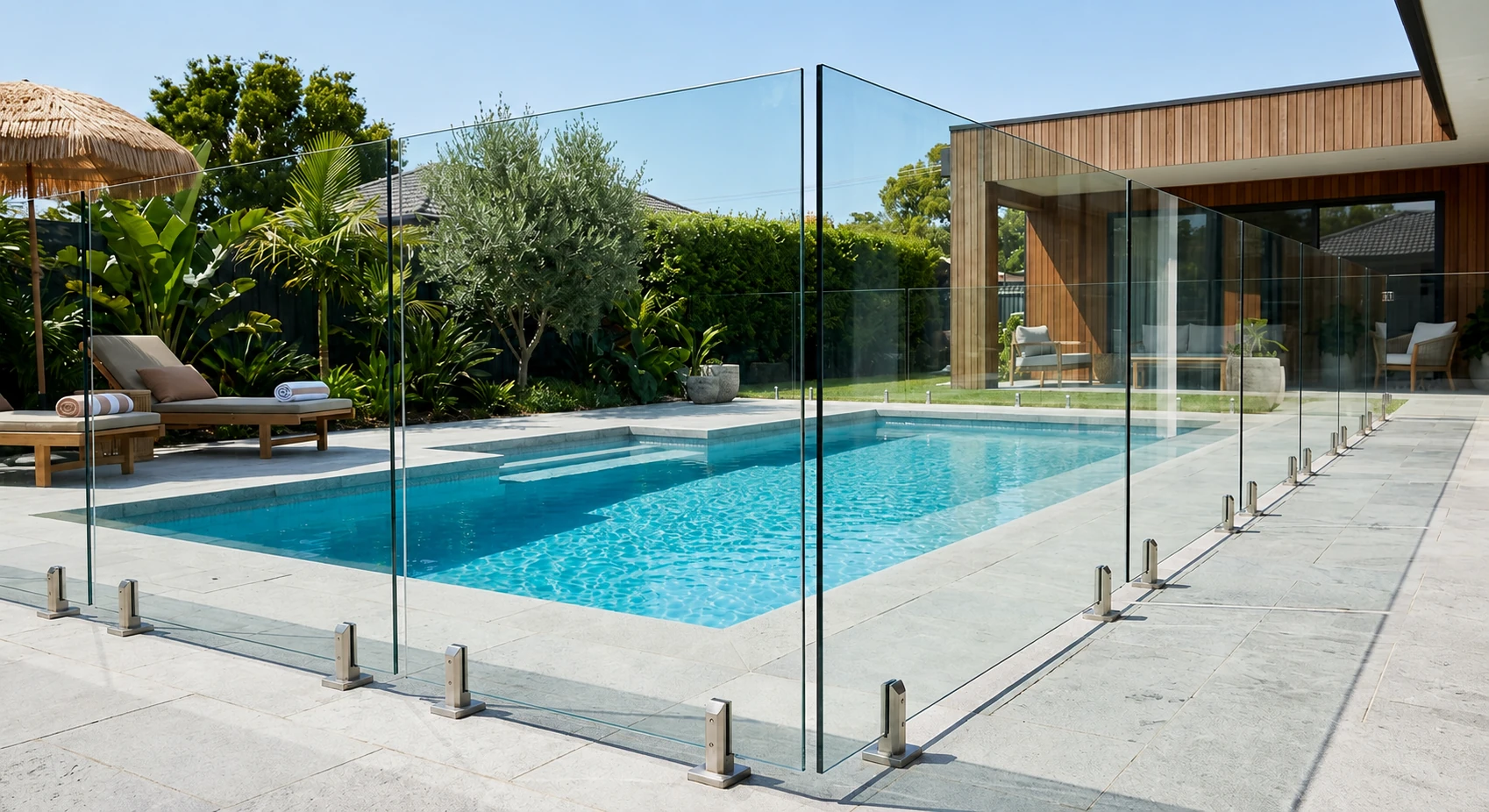
Hardware is what holds a glass pool fence together. It secures the glass panels, supports the gate, transfers loads into the ground or surrounding structure and helps the fence meet pool safety requirements. While glass is usually the most visible part of the installation, the hardware determines how stable, usable and long-lasting the system will be.
Every pool area places different demands on the fence. A pool close to the coast may need hardware with stronger corrosion resistance, while an exposed site may require fittings suited to higher wind loads. Sloped ground, narrow surrounds, tiled areas, retaining walls and boundary constraints can also affect which hardware system is most suitable.
Choosing the right hardware from the start helps avoid common issues such as loose panels, gates that fall out of alignment, corrosion, awkward junctions and hardware that does not suit the overall look of the space. It also ensures the fence feels solid and performs reliably during everyday use.
Pool fencing hardware plays a major role in safety compliance. Hinges must allow the gate to self-close from the required positions, and the latch must engage securely each time the gate closes. Latch placement also matters, as the release mechanism must be positioned or shielded so it cannot be easily operated by young children.
The structural side is equally important. Spigots, posts, channels and fixings must be suitable for the glass thickness, panel size, substrate and site conditions. These components transfer pressure from the glass into the concrete, deck, wall or footing below. If the hardware is undersized, poorly fixed or unsuitable for the location, the fence may move, loosen or become unsafe over time.
For Central Coast pool areas, coastal exposure should also be considered. Salt air, moisture, pool chemicals and regular UV exposure can all accelerate wear on lower-quality fittings. Using the right grade of stainless steel, powder-coated hardware or corrosion-resistant components helps the fence remain both safe and visually presentable for longer.
Glass pool fencing needs to work well every day, especially during the warmer months when gates are opened and closed frequently. Hardware quality affects how easy the fence is to live with, from the way the gate swings to how smoothly it latches.
Good hinges help the gate close at a controlled speed without slamming. This protects the glass, reduces noise and helps the latch engage correctly. Poor-quality or poorly adjusted hinges can cause the gate to close too slowly, slam shut, drag, or fail to latch properly.
Latch design also affects convenience. Magnetic latches are commonly used because they help pull the gate into the correct position and can compensate for small alignment changes. Key lockable options may also be suitable where additional access control is needed. The aim is to create a gate that adults can use easily while still restricting access for children.
Hardware has a strong influence on the finished appearance of a glass pool fence. Slimline spigots, square profiles, round profiles, exposed posts, concealed fixings and surface-mounted plates all change how visible the support system appears.
For many frameless glass pool fencing projects, the goal is to keep the hardware as discreet as possible so the view remains open. In other designs, hardware may be used more deliberately to match other architectural features, such as black window frames, stainless steel balustrades, outdoor furniture or tiled finishes.
Consistency is important. Matching hinges, latches, spigots, brackets and posts helps the fence look planned rather than pieced together. This is especially noticeable in open pool areas where the fence is viewed from several angles, including from the house, outdoor entertaining areas and the pool itself.
Gate hardware is one of the most important parts of any glass pool fence because it controls access to the pool area. A fence can look well finished, but if the gate does not close and latch correctly, the enclosure may not perform as required.
Glass pool gates must be fitted with hardware that can handle frequent use, exposure to water and outdoor conditions while maintaining compliance. Hinges, latches and related fixings should be selected as a complete system rather than treated as separate decorative items.
Glass pool gates commonly use spring hinges or hydraulic soft-close hinges. Spring hinges provide the force needed to close the gate, but they need to be correctly adjusted to avoid slamming or failing to latch.
Hydraulic soft-close hinges provide a smoother action. They control the speed of the gate as it closes, reducing impact on the latch and surrounding glass. This can be particularly useful in busy family pool areas where the gate is used many times throughout the day.
Quality hinges are generally made from corrosion-resistant stainless steel or durable composite materials suited to pool environments. In coastal or saltwater settings, cheaper metals can deteriorate quickly, affecting both appearance and function. Hinges must also be strong enough to support the weight of toughened glass without sagging or pulling the gate out of alignment.
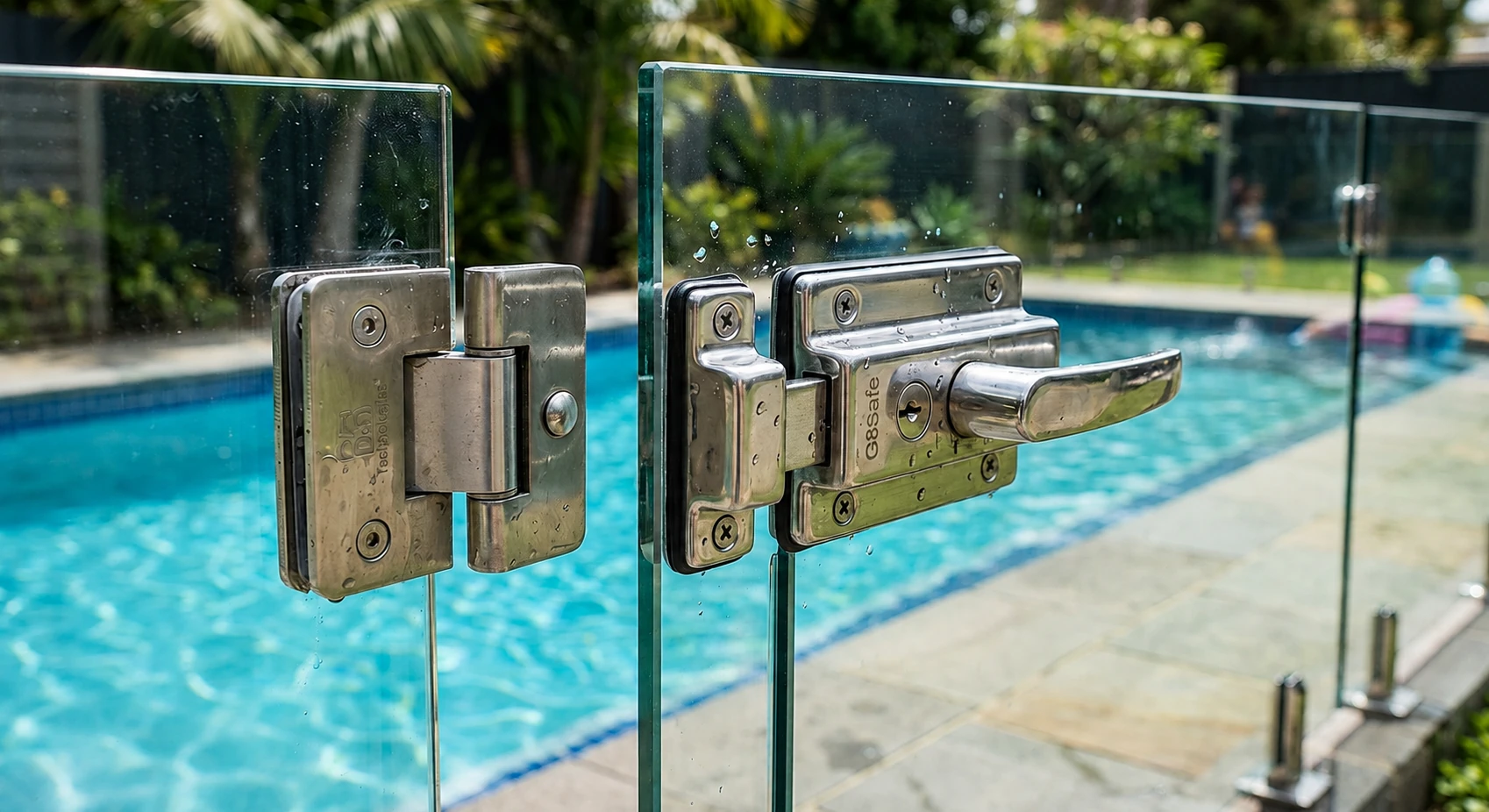
Pool gate latches are designed to be child-resistant rather than childproof. Their purpose is to make access difficult for young children while still allowing adults to enter and exit the pool area easily.
Magnetic latches are a popular choice for glass pool fencing because they help draw the gate into the closed position and provide reliable engagement. The latch is usually mounted between the gate and a fixed glass panel, post or wall bracket, depending on the fence design.
The release mechanism must be positioned in accordance with pool safety requirements. In many cases, this means placing it high enough above finished ground level or shielding it so it cannot be reached or operated by a young child. Correct installation is just as important as choosing a quality latch.
A pool gate must self-close and self-latch reliably. This function usually comes from the combined performance of the hinges and latch rather than from one component alone.
After installation, the gate should be tested from different opening positions to make sure it closes without assistance and latches securely each time. It should not stop short, bounce open, drag on the ground or require manual pressure to engage the latch.
Over time, hinges and latches may need adjustment due to ground movement, repeated use, wind exposure or general wear. Regular checks help ensure the gate continues to operate as intended and the pool area remains safe.
The finish of the hardware has a major effect on the overall appearance of a glass pool fence. Stainless steel, matt black, dark architectural finishes and specialty metallic tones can all create a different style. The best option depends on the surrounding home, pool design, maintenance expectations and level of exposure.
Finish choice is not only about colour. Some finishes show fingerprints, water spots and salt residue more easily than others. In coastal pool areas, corrosion resistance and ease of cleaning should be considered alongside style.
Stainless steel remains a common choice for glass pool fencing hardware because it suits many exterior designs and offers strong durability when the correct grade is used.
Brushed and satin stainless steel have a softer, less reflective appearance. They work well in modern and coastal homes because they look clean without being overly shiny. These finishes are also relatively forgiving, as minor water spots, fingerprints and dust are less noticeable than on highly polished metal.
Polished stainless steel creates a brighter, more reflective finish. It can suit contemporary homes where the hardware is intended to stand out as part of the design. However, polished finishes often show marks more easily and may require more regular cleaning to keep them looking sharp.
Matt black hardware has become a popular option for modern pool areas. It pairs well with dark window frames, black balustrades, charcoal tiles and minimalist landscaping. It also creates a defined outline against the glass, which can help the fence feel more visually structured.
A quality matt black finish is usually powder coated over stainless steel or aluminium. The non-reflective surface reduces glare, although pale dust, salt residue and mineral marks may still show if the hardware is not rinsed regularly.
Other dark finishes, such as charcoal, bronze or custom powder-coated colours, can be used to soften the contrast compared with black. These finishes often work well with timber, natural stone, earthy render and warmer outdoor palettes.
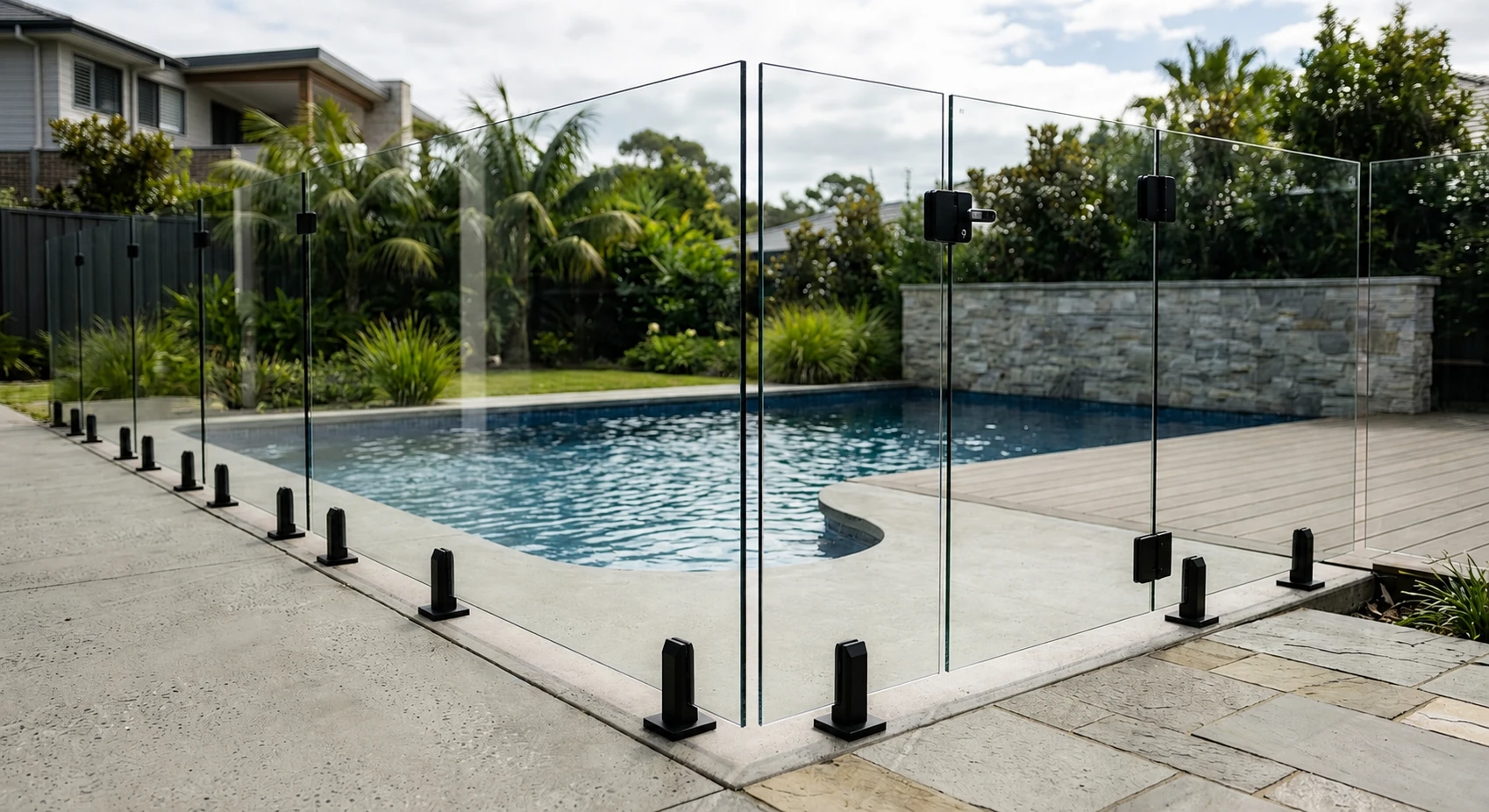
Speciality finishes can be useful where the pool fence needs to coordinate with a specific design style. Brushed nickel, soft metallic tones and warmer powder-coated finishes may suit coastal, Hamptons-inspired or resort-style outdoor areas.
The most important point is that the hardware should relate to the broader space. Matching it with window frames, outdoor furniture, balustrades, paving tones or other metalwork creates a more cohesive result. When hardware is selected without considering the surroundings, it can look disconnected from the rest of the pool area.
Hardware requirements vary depending on whether the pool fence is frameless or semi-frameless. The two systems can achieve a similar purpose, but they rely on different support methods and create different visual effects.
The right choice depends on the desired appearance, site conditions, budget, glass thickness, wind exposure and fixing surface. Hardware should always be selected to suit the specific fencing system rather than chosen purely for appearance.
Frameless glass pool fencing is usually supported at the base with minimal visible structure. The most common fixing methods are individual spigots or continuous channels.
Spigots are individual supports that hold each glass panel at specific points along the fence line. They can be core drilled into concrete or surface-mounted using base plates, depending on the substrate and project requirements. Core-drilled spigots often provide a very clean look and strong rigidity, while base-plated spigots may be suitable where core drilling is not practical.
Side-mounted spigots can also be used where the fence needs to be fixed to the face of a slab, retaining wall or raised edge. This can help save space on narrow pool surrounds while maintaining a frameless look.
Continuous channels hold the glass along the base rather than at separate points. This can create a very streamlined finish, especially when the channel is recessed into the surrounding surface. However, drainage, cleaning access and substrate preparation need to be considered carefully.
Semi-frameless pool fencing uses posts between glass panels. The posts provide much of the structural support, so the hardware system is more visible than a fully frameless design.
Posts may be made from aluminium or stainless steel. Aluminium posts are commonly powder coated to match window frames, balustrades or other exterior features. Stainless steel posts provide a more refined look and can offer strong durability in exposed environments when properly maintained.
Semi-frameless systems may use full-length channels within the posts or smaller brackets that grip the glass. Channel-style posts create a more defined framed look, while discrete clamp-style fittings can appear lighter. The best option depends on the site, design preference and how much visual structure is desired.
Glass pool fencing hardware is designed for outdoor use, but it still needs regular care. Pool chemicals, salt air, moisture, sun exposure and frequent gate use can all affect the condition of hinges, latches, spigots and posts over time.
Routine maintenance helps protect the appearance of the hardware and keeps the pool fence functioning safely. It also makes it easier to identify issues before they become more serious.
Stainless steel and powder-coated hardware should be rinsed with fresh water regularly, especially in coastal areas or near saltwater pools. A mild detergent can be used for general cleaning, followed by a fresh water rinse and soft cloth dry where needed.
Abrasive pads, harsh acids and aggressive cleaners should be avoided because they can damage protective surfaces. Pool chemicals should also be rinsed off promptly if they splash onto hinges, latches, posts or spigots.
Moving parts such as hinges and latches may need lubrication according to the manufacturer’s instructions. A suitable silicone-based product is often used, but excess spray should be wiped away so it does not attract dirt and grit.
It is also worth checking the glass edges, fixings and gate alignment during cleaning. Small chips, loose screws, movement at the base or a gate that no longer latches cleanly should be assessed promptly.
Hardware problems often appear gradually. Early warning signs include rust staining, pitting, flaking finishes, loose fixings, stiff hinges, slow gate movement, latch misalignment and visible movement in posts or spigots.
Tea staining on stainless steel can sometimes be cleaned if caught early, but persistent staining or pitting may indicate that the hardware is deteriorating. Powder-coated finishes that chip, bubble or peel can expose the underlying metal and allow corrosion to develop.
Structural movement is a more serious concern. If a spigot, post or base plate can be moved by hand, or if grout, concrete or tiles around the fixing point are cracking, the fence should be checked by a professional. A glass pool fence relies on secure hardware, so movement should not be ignored.
Selecting hardware for a glass pool fence involves more than choosing fittings that look good. Every component contributes to safety, compliance, durability, maintenance and the overall appearance of the pool area.
Frameless spigots, recessed channels, semi-frameless posts, self-closing hinges and compliant latches all affect how the fence performs in real outdoor conditions. When hardware is matched to the site, installed correctly and maintained properly, the result is a glass pool fence that remains secure, practical and visually refined for many years.
Ready to elevate your space with stunning glass solutions? Contact Clearview Glass today for expert advice, quality craftsmanship, and unmatched customer service. Let's bring your vision to life – get in touch now for a consultation.


