Frameless shower screens are a popular choice in coastal bathrooms because they create a clean, open look and help maximise natural light. In salt air environments, however, they are exposed to more moisture, corrosion risk and surface build-up than screens in inland homes. Clearview Glass understands these conditions firsthand, which is why careful attention to glass selection, hardware, finishes and installation details is so important for long-term performance near the coast.
This article looks at the materials, fittings and design decisions that help frameless shower screens perform well in coastal conditions. It covers issues such as corrosion, mineral staining, mould around seals, ventilation, cleaning and the common mistakes that can shorten the life of the installation. With a better understanding of these factors, homeowners, designers and builders can make more confident choices for bathrooms near the coast.
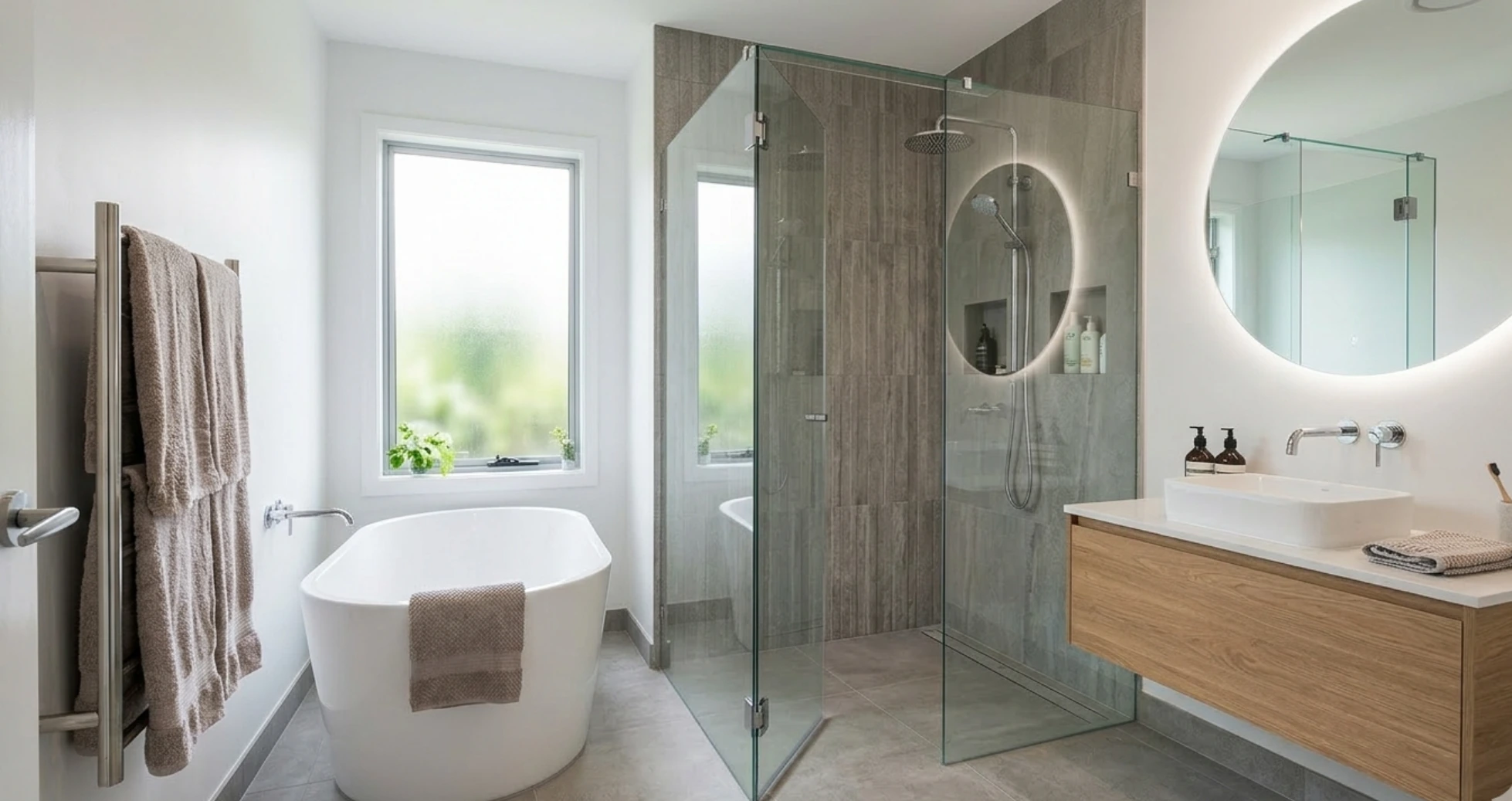
In coastal bathrooms, salty air, constant moisture and warm temperatures create a harsher environment for frameless shower screens than most inland homes. These conditions place ongoing pressure on both the glass and the supporting hardware, which can affect appearance, hygiene and long-term performance if the screen is not specified properly from the start.
Salt deposits, humidity and poor ventilation can accelerate corrosion on metal components, leave the glass looking dull or marked and increase the likelihood of mould forming around seals and corners. Understanding these effects early helps homeowners, designers and builders make better choices about materials, layout and maintenance.
One of the most common issues in coastal bathrooms is corrosion of the metal components that support the shower screen. Salt carried in sea breezes settles on hinges, brackets, channels and screws. When that salty residue combines with humid air, moisture remains on the metal for longer and corrosion can develop much faster.
Lower-grade hardware may begin to pit, stain or seize far sooner in these environments. Tea staining on stainless surfaces, rough patches around screw holes and stiff hinge movement are often early signs that the fittings are not coping well with the conditions. Once corrosion starts, it can spread beneath the surface and reduce the working life of the screen.
While glass does not corrode, it can still suffer in coastal bathrooms. Salt crystals, soap residue and mineral-rich moisture can sit on the surface for long periods, especially in spaces where the glass rarely dries fully between showers. Over time, this can leave cloudy patches, white spotting and a roughened surface where light etching has begun.
These marks are often most noticeable along the bottom edge of the glass and around areas that receive frequent spray. If deposits are allowed to build up, they become harder to remove and can gradually affect the clean, clear appearance that makes frameless shower screens so appealing in the first place.
High humidity also affects the seals and joints around a frameless shower screen. Persistent condensation around the base of the glass, in corners and along silicone lines creates the kind of damp conditions that allow mould and mildew to develop, especially where ventilation is poor.
In practice, this often appears as dark staining in silicone, discolouration in clear seals or a musty smell around the shower area. Although this does not damage the glass itself, it affects hygiene, appearance and the overall finish of the bathroom. In coastal settings, keeping moisture from lingering around these junctions is just as important as protecting the visible glass and hardware.
Once the effects of salt air and humidity are understood, the next step is choosing materials that can cope with those conditions over the long term. In coastal bathrooms, the durability of a frameless shower screen depends heavily on the quality of its hardware, the type of glass used and the way the installation is sealed and fixed.
In coastal areas, ordinary chrome-plated fittings often deteriorate quickly. For better long-term performance, frameless shower screen installers generally recommend marine-grade 316 stainless steel for hinges, brackets, channels and handles in homes close to the coast. In less exposed locations, high-quality brass hardware with durable chrome or PVD finishes can also be suitable.
Marine-grade 316 stainless steel offers better resistance to salt corrosion than 304 stainless. Where a preferred style is only available in 304 stainless or brass, it is usually better to choose solid cast components rather than thin plated parts, which are more likely to bubble, peel or flake over time.
Screws and fixings also matter. Marine-grade stainless fixings are typically preferred over zinc-plated steel, and installers should avoid poorly matched metals that may contribute to galvanic corrosion. Careful sealing around penetrations also helps protect concealed fixings from ongoing moisture exposure.
For coastal frameless shower screens, toughened safety glass that complies with Australian Standards is the standard choice. Glass thickness should suit the size and function of the screen, with 10 mm toughened glass commonly used for standard doors and fixed panels, and 12 mm often preferred where panels are wider, taller or subject to greater movement.
Edge finishing is another important detail. Smooth, polished edges are easier to keep clean and less likely to trap moisture, soap residue or salt deposits. They are also less prone to minor chips, which can affect both appearance and long-term performance.
Where privacy is needed, frosted or patterned toughened glass can be used without reducing durability. The key considerations remain the quality of the toughening, the finish of the edges and whether the glass is suitable for the intended opening and span.
A protective coating can make a noticeable difference in coastal bathrooms. Factory-applied coatings help water bead and run off more easily, which reduces the build-up of salt residue, soap scum and mineral spotting on the glass. They do not eliminate cleaning, but they can make ongoing maintenance easier and help preserve clarity.
Sealants and gaskets should also be selected with wet coastal conditions in mind. High-quality neutral-cure silicones are generally more durable around shower bases and wall junctions, where constant moisture can cause lower-grade products to discolour, harden or break down. Good sealing does more than prevent leaks. It also helps protect hidden areas where corrosion or mould may otherwise develop unnoticed.
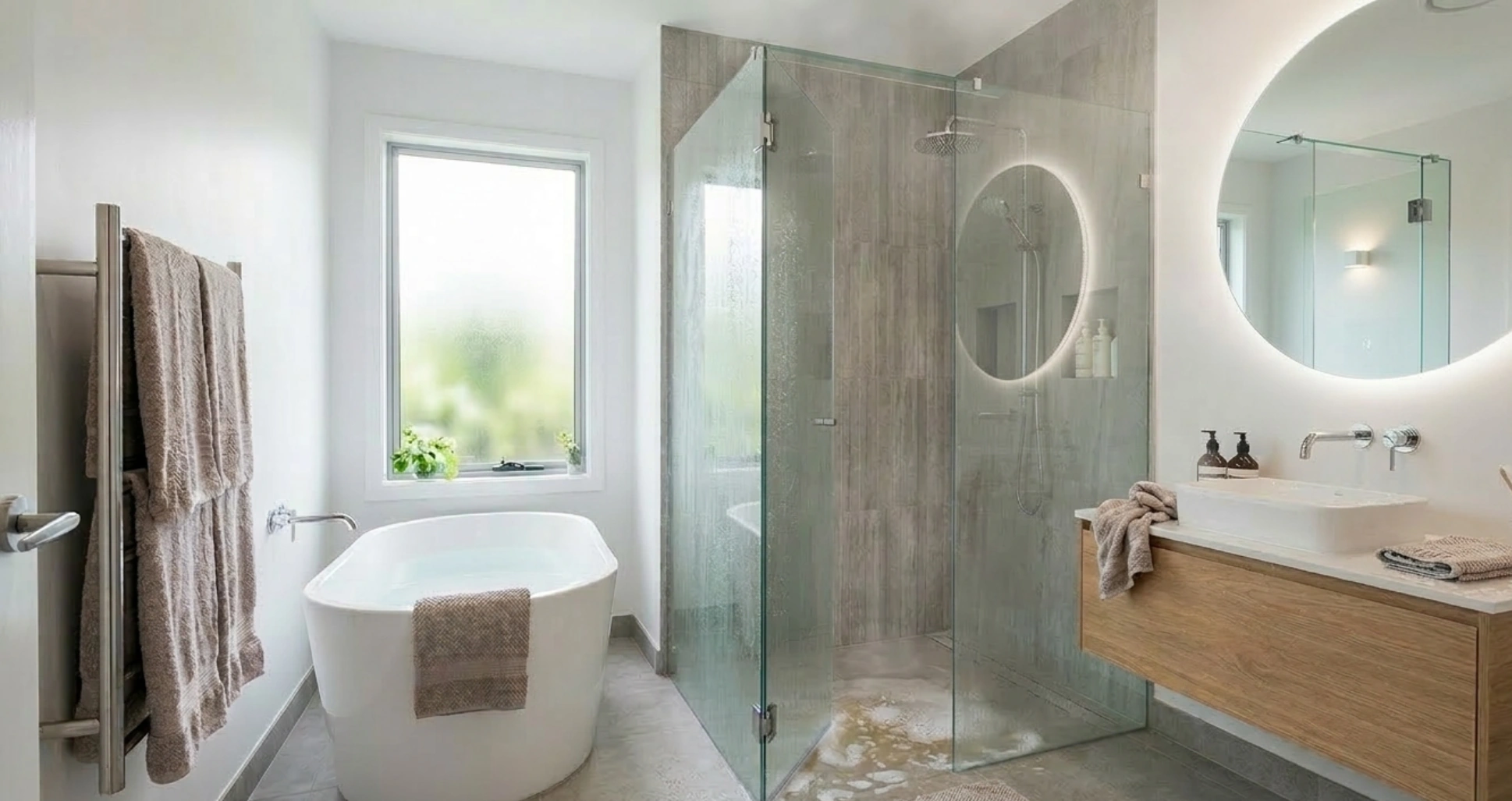
Condensation is a constant issue in coastal bathrooms, where warm showers combine with humid sea air. On frameless shower screens it often appears as fogging, water beading and moisture collecting around silicone lines, corners and wall junctions. If that moisture lingers for too long, it can contribute to mould growth, mildew and staining on nearby glass, grout and seals.
The aim is not to eliminate condensation entirely, because that is rarely realistic in a coastal setting. The more practical goal is to help moisture clear quickly and to reduce the number of places where water can sit unnoticed around the shower screen.
Good ventilation is the most effective long-term defence against condensation build-up. In coastal bathrooms, this usually means combining mechanical extraction with natural airflow wherever possible.
A properly sized exhaust fan that vents to the outside can make a major difference, particularly when it continues running after the shower has finished. In bathrooms with windows or louvres, natural cross-ventilation can also help moist air escape more quickly and reduce the amount of condensation settling on the glass and surrounding surfaces.
The layout of the shower also affects how well moisture clears. Frameless designs that allow air to circulate more freely tend to dry faster than layouts with tight enclosed corners or poorly ventilated junctions.
Small design choices, such as allowing steam to escape at the top of the screen, avoiding unnecessary moisture traps and making sure water drains cleanly back towards the shower area, can reduce the likelihood of mould forming around seals, edges and tiled junctions. In coastal bathrooms, these details play an important role in keeping the shower area cleaner and easier to maintain over time.
Coastal bathrooms place frameless shower screens under more pressure than standard indoor environments. Humidity, salt in the air and mineral-rich water can all leave marks on the glass, affect hardware finishes and encourage mould around seals if regular cleaning is neglected. A consistent maintenance routine helps preserve clarity, hygiene and long-term performance.
The most effective approach is to combine quick daily habits with more thorough weekly cleaning and a monthly inspection of fittings, seals and problem areas. This helps prevent residue from building up to the point where it becomes difficult to remove or begins to affect the condition of the screen.
Daily care does not need to be time-consuming, but it makes a noticeable difference in coastal bathrooms. After each shower, removing moisture from the glass with a squeegee helps stop water drying in streaks and reduces the build-up of salt, soap residue and mineral spotting.
It is also worth wiping excess moisture from the lower edge of the glass, around brackets and along the shower threshold, especially in areas where water tends to collect. These simple habits help limit mould growth around silicone joints and reduce the amount of heavier cleaning needed later.
Once a week, the shower screen should be cleaned more thoroughly using a mild pH-neutral cleaner or warm water with a small amount of gentle dishwashing liquid. Harsh abrasive products, bleach and ammonia-based cleaners are best avoided, as they can damage hardware finishes and wear down protective coatings on the glass.
A soft microfibre cloth or non-scratch sponge is usually enough to clean the surface effectively. Areas that receive the most direct spray, such as the lower half of the glass, corners and edges, should be cleaned carefully and then rinsed well. Finishing with a squeegee or dry cloth helps prevent residue being left behind.
A monthly deep clean is a good opportunity to deal with any water spotting or salt residue that has started to form. Where marks are beginning to build up, a speciality shower screen cleaner or a diluted vinegar solution can help loosen deposits before they become harder to remove. Care is needed around natural stone, as vinegar-based products may damage surrounding surfaces.
This is also the right time to inspect the screen more closely. Hinges, brackets, seals and door sweeps should be checked for early signs of corrosion, wear, stiffness or discolouration. Catching these small issues early makes it easier to maintain the appearance and safe operation of the screen in a coastal bathroom.
Frameless shower screens can work extremely well in coastal bathrooms, but many long-term problems begin with decisions made before the screen is even installed. In most cases, the issue is not the frameless design itself. It is the use of unsuitable hardware, poor drainage, weak ventilation or details that make the screen harder to clean and maintain in a salty, humid environment.
One of the most common mistakes is choosing fittings based on appearance without considering how they will perform near the coast. Hardware that looks suitable in a showroom may begin to pit, stiffen or discolour much sooner if it is not designed for high-moisture, salt-exposed conditions. This is why the grade of stainless steel, the quality of the finish and the compatibility of fixings all need careful attention.
Another common issue is overlooking how water will behave once the shower is in daily use. Poor floor falls, awkward panel layouts and junctions that trap moisture can all lead to leaks, staining and mould around the base of the screen. Even high-quality glass and fittings can underperform if the surrounding bathroom design does not allow water to drain properly or surfaces to dry efficiently.
Maintenance expectations are also often underestimated. Frameless shower screens create a clean, open look, but in coastal bathrooms they still need regular care to stay that way. When owners understand from the beginning that quick wipe-downs, gentle cleaning and periodic checks of seals and fittings are part of protecting the screen, the installation is far more likely to remain clear, functional and hygienic over the long term.
For many coastal homes, a frameless shower screen is an appealing option. It keeps sightlines open, helps smaller bathrooms feel less enclosed and avoids the bulky framing that can collect grime and moisture over time. However, coastal conditions are more demanding than standard suburban environments, so the decision should balance appearance with durability, practicality and ongoing maintenance.
In many cases, frameless works very well in coastal bathrooms when it is paired with the right hardware, suitable glass and a layout that manages water effectively. In other situations, a semi-frameless or framed design may prove more practical over the long term.
Frameless shower screens are especially well suited to coastal homes that prioritise a clean, open look and want to maximise natural light. With fewer visible components, they can help the bathroom feel larger and reduce the number of places where salt residue, moisture and grime tend to collect.
They are often a strong choice in:
In coastal homes where the rest of the bathroom is already designed with moisture resistance in mind, such as good ventilation, suitable tiles and corrosion-resistant fixtures, a frameless shower screen often fits naturally into the overall design.
Frameless is not always the most practical choice. In high-traffic rentals, holiday accommodation or busy family bathrooms, the glass may not receive the regular care needed to prevent salt spotting, soap residue and early surface marking. In those settings, a different screen style may be easier to manage over time.
Some households may also prefer a design that offers more flexibility for accessories or support fittings. While grab rails and similar additions can still be incorporated into a bathroom with a frameless screen, they usually require more planning and may be easier to accommodate with a semi-frameless or framed option.
The best choice usually comes down to three practical factors.
The first is the bathroom layout. Frameless screens perform best where floor falls, drainage and screen positioning are all working properly to contain water. If the layout does not support that, adjustments may be needed before frameless is the right option.
The second is specification. In coastal locations, the quality of the glass, hardware, fixings and finishes has a direct impact on how well the screen will hold up over time. A frameless screen is only as durable as the materials used to build and install it.
The third is maintenance. Frameless suits owners who are comfortable with simple regular care, such as squeegeeing the glass and cleaning it with suitable products. Where that routine is unlikely to happen, it may be worth considering a different style or selecting features that make upkeep easier.
By weighing layout, specification and maintenance together, homeowners and designers can make a more informed choice about whether frameless is the right long-term solution for a coastal bathroom.
In coastal bathrooms, frameless shower screens can deliver both a refined finish and strong long-term performance when they are selected with the environment in mind. Salt air, humidity and regular moisture place more pressure on glass, hardware and seals, so success depends on choosing suitable materials, getting the installation details right and allowing for ongoing care. When those elements come together, a frameless shower screen can remain clear, functional and visually appealing for years, while continuing to suit the light, open feel that makes coastal bathroom design so effective.
Ready to elevate your space with stunning glass solutions? Contact Clearview Glass today for expert advice, quality craftsmanship, and unmatched customer service. Let's bring your vision to life – get in touch now for a consultation.


