Designing a small bathroom that feels open and functional often comes down to one key decision: the shower screen. The right style can visually expand the room, improve circulation and reduce clutter, while the wrong choice can make a compact layout feel tight and awkward. With extensive experience installing frameless shower screens in Central Coast and surrounding areas, Clearview Glass Group understands how small layout decisions can significantly influence space, light and usability in compact bathrooms.
This guide explores the most practical shower screen options for smaller bathrooms, including fully frameless and semi-frameless designs, sliding and bi-fold doors and fixed panel walk-in screens. It explains how different opening styles affect usable floor space, how glass thickness and hardware influence the overall look and how custom sizing can solve challenging layouts. With a clear understanding of these factors, renovators can make confident, well-informed decisions that enhance both space and style in even the most compact bathroom.
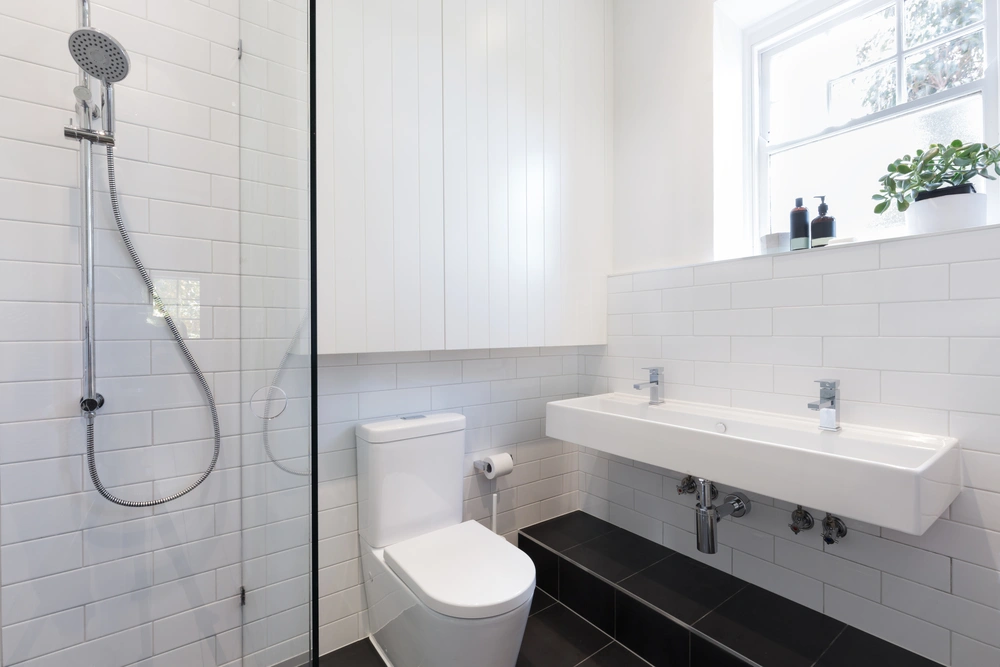
Every centimetre counts in a small bathroom. The type of shower screen selected can be the difference between a space that feels cramped and awkward and one that feels open and easy to move around in. The right design can improve circulation space, storage and even how bright the room appears without changing the room’s actual footprint.
Installers understand that homeowners are often trying to fit a full shower into tight layouts with competing needs such as a vanity, toilet and storage. Choosing the most suitable screen style and configuration helps the whole room work better, not just the shower area.
In compact bathrooms, the way a shower screen opens has a direct impact on how usable the room is. A hinged door that swings out into the room can clash with the vanity or toilet and make it difficult to enter the shower safely. For many small layouts, a sliding or pivot configuration is far more practical because it reduces the door swing area and keeps access points clear.
The footprint of the shower enclosure also matters. A bulky framed screen with thick profiles can visually shrink the room and eat into floor space, while a frameless or semi-frameless design uses thinner lines and less visible hardware. This makes the edges of the shower feel less intrusive, so circulation areas around the vanity and toilet feel larger.
Installers typically assess where people need to stand and move within the room first, then recommend a screen type that protects that circulation zone rather than cutting across it.
Small bathrooms rely heavily on smart use of light to avoid feeling closed in. A poor shower screen choice can block natural and artificial light, creating dark corners and a tunnel effect. Full-height clear glass panels carry light from windows and downlights through to the farthest wall, so the room appears wider and less boxed in.
The style of glass also influences how open the space feels. Clear toughened glass maximises visibility and makes the shower feel like part of the main room instead of a separate cubicle. Heavy framing, frosted sections or chunky patterned glass can visually chop up the room, which is usually unhelpful in a tight space.
By choosing minimal hardware and keeping lines clean, renovators help the shower virtually disappear into the background so tiles and finishes become the focus rather than the inclosure itself.
Limited space often means tighter manoeuvring when entering or exiting the shower, so safety becomes more critical. A well-chosen screen allows a comfortable entry width and avoids awkward step-around movements that increase slip risk. Handles and hinges also need to be positioned where they will not catch on nearby fixtures.
Cleaning is another key consideration in small bathrooms. When there is less room to move, nobody wants to spend extra time navigating around complex frames and tracks. Frameless or semi-frameless screens with fewer joins are easier to wipe down and less likely to trap soap scum, which keeps the whole room looking fresher despite its size.
By balancing these practical factors with aesthetics, installers ensure that the shower screen supports safe movement, easy maintenance and an uncluttered feel, which matters far more when space is limited.
Before choosing a shower screen for a small bathroom, it is essential to understand the physical limitations of the room. The right screen can make a compact space feel open and usable, while the wrong one can block movement, cause awkward door swings and create cleaning headaches.
Bathroom designers recommend starting with careful measurements and thinking about how people actually move around the bathroom. This helps narrow the options quickly and avoids selecting a screen that technically fits but does not work in day-to-day use.
The first constraint is the relationship between the shower area and everything around it. Measuring only the shower base or planned wet area is not enough. It is important to note distances to the vanity toilet entry door and any windows.
There should be enough clearance to stand comfortably in front of the vanity, open drawers and step out of the shower without bumping into fixtures. In very small rooms, even 50 to 100 mm can make a noticeable difference to how cramped the space feels. Where the shower is close to the bathroom door, an outward-opening shower door can clash with the entry, so a sliding or inward-opening solution may be required.
Ceiling height also matters. Low ceilings or bulkheads can limit the height of the glass or the placement of support bars. Tall frameless screens can visually stretch a small bathroom, but only if there is adequate ceiling height to avoid a boxed-in feel.
For hinged or pivot shower doors, the swing arc is one of the most critical space constraints. It is important to map the full door swing on the floor and check what it will hit. If the door overlaps the toilet or vanity, the user may not be able to get in or out comfortably.
A practical way to plan is to allow at least 600 mm of clear space in front of the shower opening as a minimum access zone. In tight bathrooms, this may push the design towards:
Also, consider where water will drip when the door opens. If an outward-swinging door opens directly over timber flooring or outside the wet area, it may cause long-term maintenance issues.
Walls and floors in small bathrooms are rarely perfectly square or level. Even minor variations can affect how a shower screen fits, particularly frameless glass, which relies on precise alignment. Extra allowances or specific hardware may be required to achieve a clean, accurate finish.
The location of plumbing services and ventilation is another hidden constraint. A fixed panel can block access to taps or an exhaust fan if not planned carefully. Window positions also influence height and width options, as glass joints or hinges should not cut through a window reveal.
Finally, the floor fall and drain position determine how far the screen can extend without allowing water to pool outside the shower area. In some compact bathrooms, a slightly shorter screen or a repositioned opening is the most practical way to keep water contained while still maximising usable floor space.
Choosing between frameless and semi-frameless shower screens is one of the biggest decisions for a small bathroom. Both options can look modern and open, but they differ in cost, maintenance, how much light they let through and how spacious the room feels. Shower screen installers assist homeowners in weighing these factors so the screen suits the bathroom size and the budget.
In compact spaces, the right screen can reduce visual clutter and make the room feel wider and taller. The wrong choice can close the space in or create awkward cleaning areas. Understanding the real day-to-day differences between frameless and semi-frameless styles is essential before committing.
Frameless shower screens use thick, toughened glass with minimal hardware. There is no full metal frame around the glass, which creates a very clean and open look. In a small bathroom, this lack of framing helps the eye read the entire floor and wall area as one continuous space, so the room feels larger.
Frameless panels are ideal for:
With less framing, there are fewer ledges for soap scum and mould to collect. This makes frameless screens relatively easy to keep clear with a squeegee and regular glass cleaner.
Semi-frameless screens use a slim perimeter frame around the main structure, with the door edge or some verticals left free of framing. Visually, they are lighter than fully framed screens but slightly more defined than frameless. Small bathrooms still open up the room while providing clear edges that can suit more traditional interiors.
Semi-frameless options are often better where:
The frame helps contain water more effectively in some configurations, which can be useful in narrow bathrooms where splashing is a concern. Replacement parts for hinges and seals may also be more cost-effective over time. Cleaning involves working around slim frames, but modern powder-coated or anodised finishes minimise staining and corrosion.
For the smallest rooms, frameless screens usually provide the most spacious feel and the cleanest lines. However, if the bathroom is part of a busy family home or investment property, semi-frameless can give a good balance of openness, strength and value.
Bathroom designers recommend assessing three things before deciding: the exact shower footprint available, the overall renovation budget and how much ongoing maintenance the owner is comfortable with. From there, it becomes clear whether a frameless or semi-frameless screen will work hardest to maximise space in that specific compact bathroom.
Choosing the right shower screen style can make a small bathroom feel larger, safer and easier to move around in. The way a door opens directly affects how much usable floor space remains for the vanity, toilet or storage and also influences how comfortable the shower feels day to day.
The opening style should always be matched to the exact layout of the room, taking into account door clearances, nearby fixtures and who will be using the shower most often.
Sliding screens are usually the most space-efficient option because the panels travel along a track instead of swinging out. This keeps the entire door movement inside the shower footprint, so nothing opens into the room. In very narrow bathrooms, a sliding screen often makes circulation possible without bumping into glass.
Sliding designs work especially well on longer shower recesses or over bath showers. A common setup is a fixed panel with one sliding panel that stacks neatly behind it. For very compact spaces, designers can design sliders with slimline tracks to reduce visual bulk and maintain a more open feel.
Homeowners should allow for track cleaning and be aware that inexpensive sliding systems can feel noisy or stiff. Quality rollers and hardware create a smoother glide, which is important in tight spaces where people may open the door more gently and more often.
Pivot doors swing on a central or offset pivot point set into the floor and head of the screen instead of on side hinges. This usually allows a slightly wider opening in the same width compared with some hinged designs and spreads the weight more evenly for a solid feel.
In smaller bathrooms, the main benefit is that the swing can be partly contained in the shower area if the pivot point is set in from the edge of the screen. Part of the glass swings inwards and part outwards, reducing the clear arc needed in the room compared with a fully outward-swinging hinged door. This can help clear the door of a nearby vanity corner or towel rail.
Careful measurement is essential so the door does not hit taps, shower heads or built-in shelves when opening inward.
Hinged screens open like a traditional door on side hinges and usually offer the widest clear opening, which is ideal for accessibility and ease of cleaning. They work best when there is clear floor space in front of the shower, such as at the end of the room or opposite the entry door.
Because the entire door swings in one direction, homeowners must allow a full door arc. As a guide, check the following:
Outward opening is usually preferred for safety, but in some very tight layouts, a custom solution that allows partial inward swing may be considered as long as it meets safety and drainage requirements. For clients who want the cleanest look, a frameless hinged screen with minimal hardware can visually open up the room, provided the floor space for the swing is available.
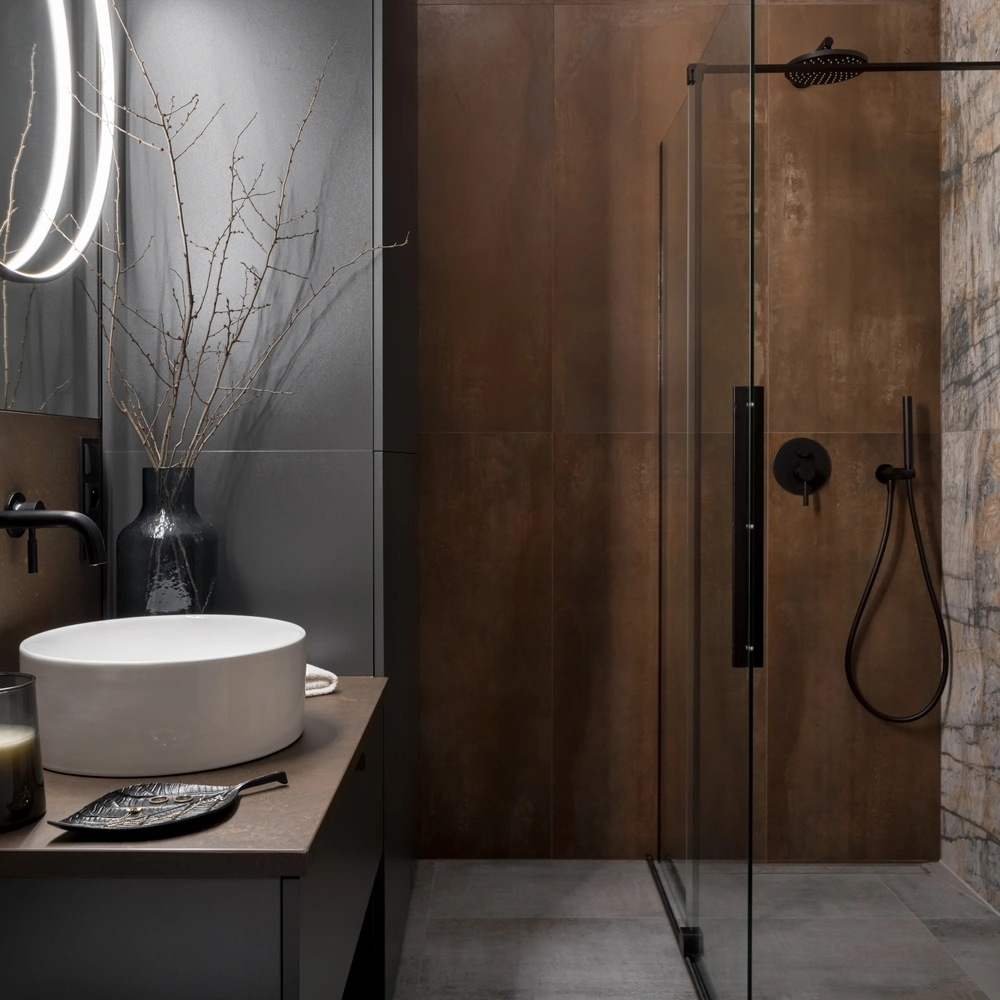
Fixed panel and walk-in shower screens can make a compact bathroom feel larger by opening up sightlines and reducing visual clutter. Instead of closing the shower off with a full inclosure or swinging door, these layouts use a single glass panel to contain water where it is needed while keeping the rest of the room feeling open.
Bathroom renovators suggest these options because they are simple to maintain and can be customised to fit tricky floor plans. With careful planning of panel width placement and drainage, a walk-in style can work even where space is limited.
A fixed panel is a single, stationary glass screen usually installed along one edge of a shower area. There is no swinging or sliding door, which immediately frees up floor space for movement and storage.
In a small layout, this style works especially well in:
A taller panel helps contain spray without needing extra width. Using frameless or minimal channel hardware in a clear finish keeps the line of sight open so the shower visually blends into the rest of the room.
Walk-in showers use one or more fixed panels to create an open entry without a door. In small bathrooms, this can work if the layout is carefully planned around the showerhead and drainage.
Planning points include:
For very tight rooms, a single fixed panel with a 400 to 600 mm walk-through gap at one end. This allows easy entry without needing clearance for a swinging door. Where extra control is needed, a small return panel at 90 degrees can help contain water while still feeling open.
To make a fixed panel or walk-in design work in a compact space, it’s usually considered:
By tailoring panel size, glass type and hardware to the exact bathroom layout, bathroom experts can use fixed panel and walk-in shower screens to make small spaces feel lighter, more open and more functional.
The position and style of the shower screen can be the difference between a space that feels cramped and one that feels open and easy to use. Bathroom designers focus on layouts and installation details that work with the room rather than against it, so every centimetre is used well.
Getting the measurements right, choosing the correct opening style and planning how the screen interacts with doors, toilets and vanities are all critical. Thoughtful planning before ordering the screen will avoid costly changes later.
The available wall length, door swing and location of plumbing will guide the most practical layout. It is recommended:
It is important to keep at least 600 mm of clear space in front of the shower entrance so people can step in and out comfortably. Where the toilet or vanity is close, a sliding door or walk-in opening usually works better than a swinging door.
Swing doors need adequate space to open without hitting walls or fittings. As a general guide, allow a clear arc at least equal to the door width. If a hinged door would clash with a heated towel rail or vanity, a sliding or bi-fold option is usually more suitable.
Sliding doors are ideal for narrow rooms because they remain within the shower footprint. They do require straight, plumb walls and a stable base to glide smoothly. Bi-fold doors fold back on themselves, which can be helpful where a full-size hinged door will not fit, although there still needs to be enough room for the folded panels.
Walk-in screens with no moving door leave the floor area in front completely clear. To reduce splashing, the fixed panel should generally cover at least 700 to 800 mm of the opening and work with a slight floor fall towards the drain.
Every layout should be checked for safe access. Installers aim for door openings of at least 500 to 600 mm so users can enter comfortably. Handles should be easy to reach without stretching around other fixtures.
For easier cleaning, large single panels with minimal framing work best, as they reduce soap buildup on joins and tracks. Locating the fixed panel so that both sides can be reached from outside the shower will make maintenance much simpler, particularly in very tight rooms.
Every decision we make about a shower screen has a direct impact on how spacious, functional and comfortable the room feels. Throughout this article, readers know how different options can change the way a compact space works. It also looked at how clear versus frosted glass, hardware finishes and low-profile or recessed shower bases can visually open up a room. The key takeaway is that there is no one-size-fits-all solution: the best shower screen for a small bathroom is the one that’s been properly measured, carefully planned and tailored to the way you and your household actually use the space. By investing in quality materials, professional installation and a design that balances aesthetics with practicality, a small bathroom can feel bigger, brighter and more enjoyable to use every day.
Ready to elevate your space with stunning glass solutions? Contact Clearview Glass today for expert advice, quality craftsmanship, and unmatched customer service. Let's bring your vision to life – get in touch now for a consultation.


