Glass balustrades are a popular feature in contemporary homes, apartment buildings and commercial developments across New South Wales. They create a clean, modern finish, preserve natural light and help maintain open views, which is why they are widely used in premium residential and strata projects. However, they are also safety-critical building elements, so they must meet strict requirements under the National Construction Code, relevant Australian Standards and NSW approval processes.
Clearview Glass Group regularly works with builders, developers and strata managers on projects where glass balustrade compliance needs to be carefully considered from the outset. Incorrect glass selection, inadequate fixings, missing handrails or poor documentation can delay approvals, trigger rectification works and increase legal and financial risk. Understanding these requirements early helps project teams make better design, specification and installation decisions.
This article outlines the main compliance requirements for glass balustrades on the Central Coast, including barrier heights, structural loading, glass type selection, fixing and hardware requirements, handrail considerations and the different obligations that apply to balconies, stairs and pool areas.
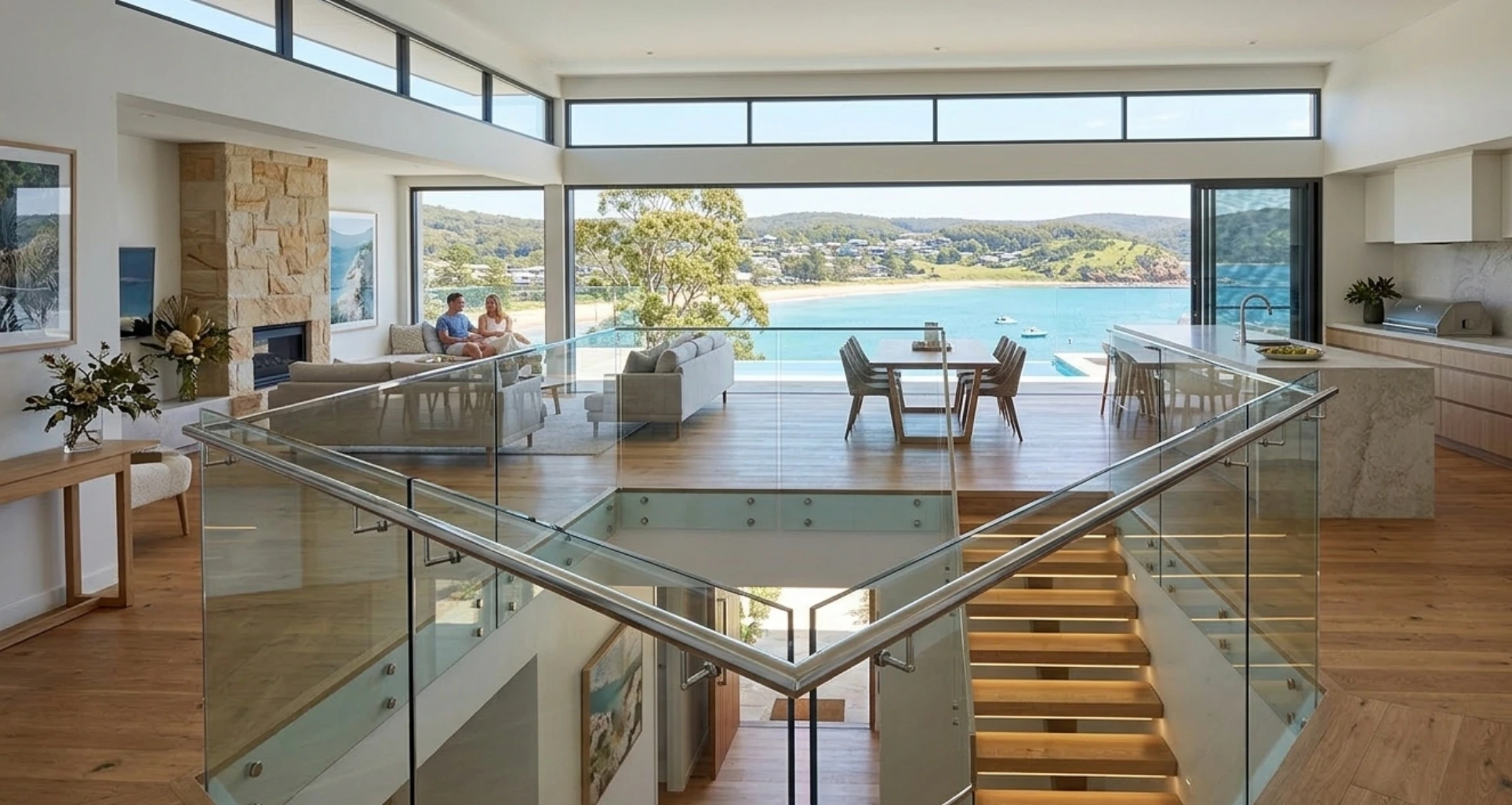
Glass balustrades in New South Wales are regulated through a combination of the National Construction Code, referenced Australian Standards and state-based legislation covering approvals, certification and ongoing building responsibility. For builders and strata managers, compliance depends on understanding how these requirements work together when balustrades are specified, installed, repaired or replaced on balconies, stairs, landings and around pool areas.
In practical terms, compliance is not just a design issue. Councils, certifiers and insurers expect balustrades to meet the relevant code and standard requirements before approvals are granted and while the building remains in use. Where a balustrade does not satisfy those requirements, the outcome can include rectification work, approval delays, increased liability and, in serious cases, safety risks for occupants and visitors.
This legal framework also affects existing buildings, not only new projects. In strata and refurbishment settings, replacement or upgrade works must still meet the current approval and performance requirements that apply to the proposed work, even where older balustrades were installed under earlier standards.
The main technical requirements for glass balustrades come from the National Construction Code, including the Building Code of Australia in Volumes One and Two. These provisions set out when a balustrade is required and the minimum performance standards it must satisfy for safety, strength and barrier design.
In most residential and commercial settings in New South Wales, a balustrade is required where there is a fall of more than 1 metre. The NCC also sets minimum barrier heights and limits on openings to reduce the risk of falls, particularly in areas used by children. Common requirements include a minimum height of 1 metre for balconies and decks in Class 1 and Class 2 buildings, a minimum height of 865 mm above stair nosings and landings, and restrictions so that a 125 mm sphere cannot pass through relevant openings within the lower part of the barrier.
Because the NCC is performance-based, compliance is not only about following a generic detail. A balustrade system must be able to demonstrate that it meets the required level of structural performance and safety for its location and use. This is why the NCC works alongside the relevant Australian Standards, which guide decisions around glass type, thickness, fixings, support conditions and loading.
The National Construction Code sets the overall performance requirements for balustrades, but the detailed technical guidance comes from the Australian Standards it references. These standards are what designers, engineers, certifiers and installers rely on when determining whether a glass balustrade is suitable for a particular application.
AS 1288 Glass in buildings is one of the most important standards for balustrade work. It guides the selection of glass type and thickness based on factors such as barrier height, panel dimensions, support conditions and the location of the installation. It distinguishes between monolithic toughened glass, laminated toughened glass and other safety glazing configurations, which is critical when determining what can be used on stairs, balconies or more exposed areas.
AS/NZS 1170.1 Structural design actions sets out the loads that balustrades must be designed to withstand, including line loads, point loads and other imposed actions. These requirements affect the structural design of the system, including post spacing, panel size, fixing design and the suitability of the supporting structure.
AS 2208 Safety glazing materials in buildings deals with impact performance and glass identification. Glass used in balustrades must be safety glass and permanently marked so that certifiers and other professionals can verify compliance during inspection and maintenance.
Where a glass balustrade forms part of a pool barrier, AS 1926.1 Swimming pool safety also becomes relevant. In those cases, the balustrade must satisfy not only the glass and structural requirements, but also the additional rules that apply to pool safety barriers, such as minimum heights, non-climbable zones and gate requirements.
Alongside the National Construction Code and the relevant Australian Standards, glass balustrades in New South Wales are also affected by state-based approval and certification requirements. These rules determine how balustrade work is assessed as part of the building process and what responsibilities continue after installation, particularly in multi-residential and strata settings.
The Environmental Planning and Assessment Act 1979 and its associated regulations form part of the approval framework for building work in NSW. In practical terms, councils and private certifiers expect glass balustrades to comply with the NCC and all relevant referenced standards before construction certificates, occupation certificates or sign-off can be issued. If a balustrade does not meet the required standards, the result can be approval delays, rectification notices or disputes about defective work.
For strata properties, the Strata Schemes Management Act 2015 is also important because it affects responsibility for balustrades that form part of the common property. In many cases, the owners corporation is responsible for maintaining, repairing or replacing these balustrades and ensuring they remain safe over time. This becomes especially relevant in older buildings, where original balustrades may no longer reflect current compliance expectations or where deterioration has affected their structural reliability.
Glass balustrades are not simply architectural features. They are safety barriers, which means their design must satisfy clear performance requirements for fall protection, structural strength and safe everyday use. For builders and strata managers, this is often where the most important compliance decisions are made, because even a well-finished balustrade can fail if the underlying design does not meet the required standards.
At this stage, the focus should be on whether the balustrade achieves the required height, resists the relevant loads, uses the correct type of safety glass and avoids details that create climbability or containment issues. These are the elements that determine whether the system is suitable for balconies, stairs, landings, pool surrounds and other elevated areas.
When these requirements are addressed early, the rest of the project tends to run more smoothly. When they are overlooked, the result is often redesign, replacement or delays during certification.
In New South Wales, glass balustrades must meet minimum height requirements that vary depending on where the barrier is installed. For most balconies and decks with a fall of 1 metre or more, the minimum height is 1 metre. On stairs and landings, the minimum height is generally 865 mm measured vertically above the stair nosings or finished surface.
These measurements must be taken from the completed surface, not from the structural slab before finishes are applied. This is an area where mistakes often happen, especially where tiles, decking or other surface finishes are added later and reduce the final barrier height below the required minimum.
Climbability must also be considered, particularly where there is a significant fall. Where a surface has a fall of more than 4 metres, the lower part of the balustrade must not include features that make it easy to climb. In practical terms, this usually means avoiding horizontal rails, footholds or wide ledges within the lower section of the barrier. Full-height glass panels are often used to help satisfy this requirement, though the full design still needs to be assessed in context.
Glass used in balustrades must be grade A safety glass and must be selected to suit the specific application. The correct glass type and thickness depend on factors such as panel size, support method, building height, wind exposure and the location of the balustrade within the project. This is why glass selection should never be treated as a visual choice alone.
Depending on the system, the balustrade may use toughened safety glass, laminated toughened glass or another compliant safety glazing configuration permitted under the relevant standards. In more demanding applications, such as elevated balconies or structural frameless systems, laminated toughened glass is often required so that the barrier can retain a level of containment if one layer fails.
Structural performance must also be considered alongside the glass itself. The balustrade needs to withstand the line and point loads that apply to its use, which affects panel dimensions, post spacing, support conditions and fixing design. Using thinner glass or a system that has not been designed for the actual site conditions is a common cause of non-compliance and can create serious safety risks over time.
The performance of a glass balustrade depends not only on the glass itself but also on how it is supported and restrained. Spigots, base channels, posts and point fixings all need to be suitable for the required loads and compatible with the supporting structure. Even compliant glass can become a safety risk if the fixing system is undersized, poorly installed or attached to an inadequate substrate.
Handrail requirements also need careful attention. In many applications, monolithic toughened glass cannot be relied on as the only means of containment if a panel breaks. A continuous top rail or handrail may therefore be required so the barrier can still provide a level of protection in the event of glass failure. Where laminated glass is used, some systems may be designed to perform without a top rail, but only where the specific system has been engineered and certified for that use.
For builders and strata managers, this is an important distinction. It is not enough to choose a frameless or semi-frameless look and assume the rest will follow. The overall system must provide reliable containment under normal use and maintain an appropriate level of safety if a component fails.
Many glass balustrades fail compliance not because the concept is wrong, but because the installation does not match the certified design, the relevant standards or the actual site conditions. In practice, some of the most expensive defects come down to details that seemed minor during installation but become serious at inspection or after occupation.
This is especially important for builders and strata managers because a balustrade can look complete and still be non-compliant. Problems with fixings, setout, tolerances, handrail requirements or missing records may not be obvious until the certifier requests evidence or movement and deterioration appear over time.
Paying close attention to installation detail is what turns a compliant design into a compliant finished system. When those details are overlooked, rectification often involves more than a simple adjustment, particularly once waterproofing, tiling or surrounding finishes are already in place.
A common cause of non-compliance is the way the balustrade is fixed to the building structure. Even where the correct glass and hardware have been selected, the installation can still fail if the fixings are not suited to the load requirements or if they are installed into an inadequate substrate.
Fixings need to be sized, spaced and embedded to suit the project-specific design rather than selected as a generic site solution. Problems often arise when installers fix into tiles, screeds, packers or other non-structural layers instead of the structural concrete or framing beneath. In older buildings, the condition of the substrate can also be a factor, particularly where concrete is cracked, deteriorated or affected by moisture and corrosion.
Edge clearances and installation pressure also matter. Over-tightened point fixings, insufficient edge distances or poorly aligned supports can place ongoing stress on the glass and increase the risk of cracking or failure. These issues may not be obvious immediately, but they can compromise the long-term performance of the system and create serious compliance concerns.
Small dimensional errors can quickly turn an otherwise well-designed balustrade into a non-compliant installation. Minimum heights must be checked from the finished surface, not from the slab before tiles, pavers or decking are installed. Where adjacent built elements such as planter boxes, seating or raised surfaces change how the barrier is measured, these also need to be considered during setout.
Openings are another common issue. In areas where the relevant rules apply, gaps between glass panels, beneath the bottom edge of the balustrade and beside adjacent walls or posts must not allow a 125 mm sphere to pass through. Minor variations caused by uneven slabs, poor alignment or inaccurate installation can be enough to push the finished balustrade outside compliance limits.
Climbability can also become a problem when surrounding features are not considered as part of the final built condition. A balustrade may meet the basic height requirement but still create a safety risk if nearby elements provide footholds or reduce the effective barrier height. This is why setout and final measurements need to be checked carefully once all finishes and adjoining features are in place.
Another common compliance issue arises when the completed balustrade does not provide adequate containment if a glass panel fails. This is especially important in systems that use monolithic toughened glass, because once that type of glass breaks, it does not continue to act as a barrier. In many cases, a continuous top rail or handrail is required so the balustrade can still offer a level of protection after breakage.
Where laminated glass is used, the system may be capable of performing without a top rail, but this depends on the specific design, certification and method of support. It is not enough to assume that a frameless appearance means a handrail is optional. The system needs to be assessed as a whole, including the glass type, fixings and redundancy built into the design.
Documentation is also a frequent point of failure. Certifiers and strata managers commonly expect clear records showing the glass specification, hardware details, installation requirements and any supporting engineering or compliance evidence. Without that documentation, even a balustrade that appears compliant on site can create approval delays, disputes or difficulties later when repairs or replacements are needed.
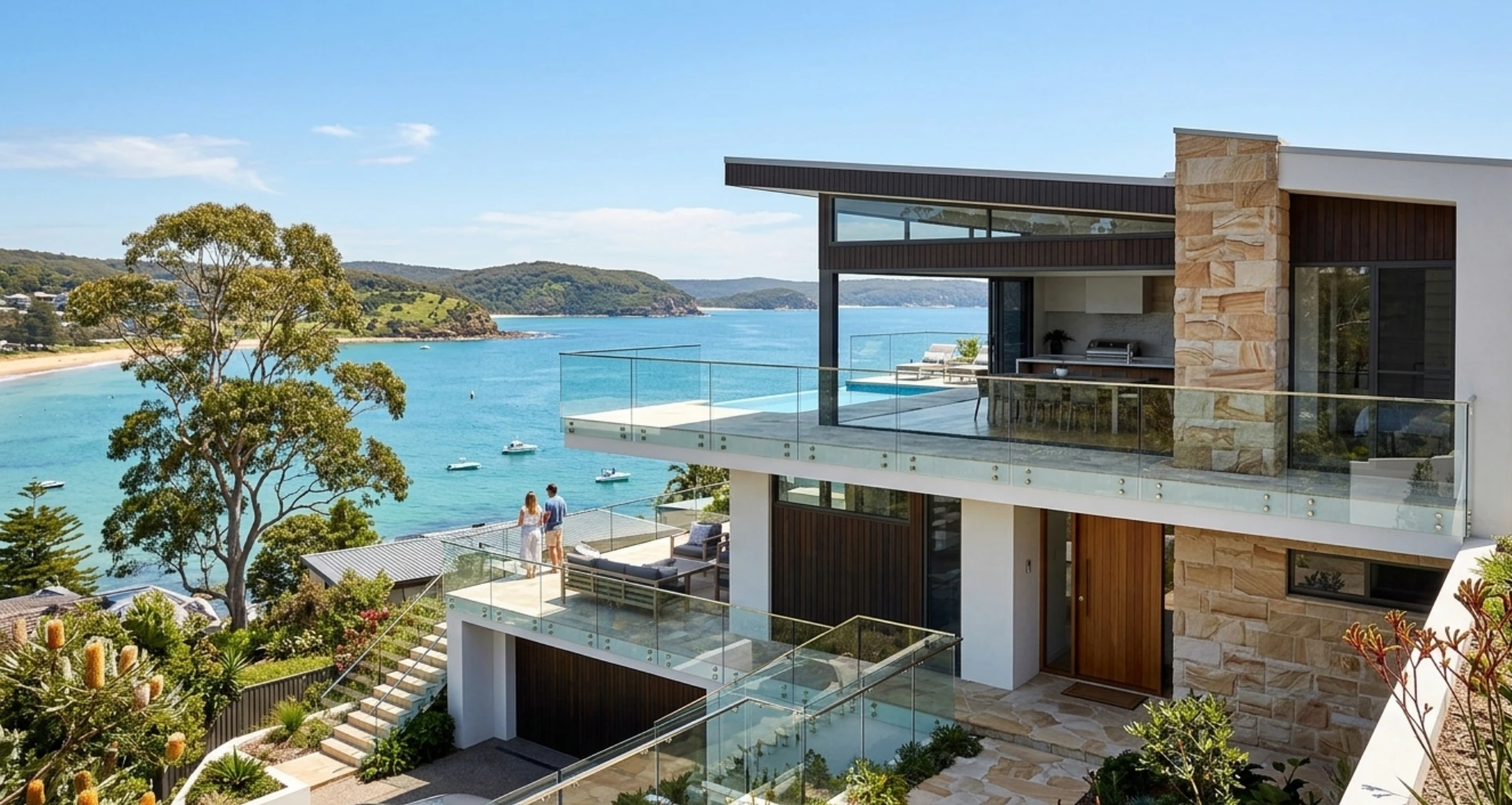
Glass balustrades installed on the Central Coast need to do more than meet standard design requirements. Coastal conditions can place additional pressure on the system through salt-laden air, strong winds and ongoing exposure to moisture, all of which affect durability and long-term structural performance. For builders and strata managers, this means the location of the project should influence material selection, fixing design and maintenance planning from the outset.
A balustrade that performs well in a sheltered inland setting may not be suitable for a beachfront balcony, an elevated terrace or a strata building close to the ocean. Corrosion, higher wind loads and ageing substrates can all change how the system behaves over time, particularly in refurbishment work. On the Central Coast, these site-specific factors are an important part of compliance and should be treated as part of the design brief rather than as an afterthought.
Many Central Coast properties are exposed to marine conditions that can accelerate corrosion and shorten the service life of balustrade components if the wrong materials are used. Salt-laden air affects not only visible hardware but also concealed fixings, anchors and connections, which means a balustrade can begin to deteriorate even when the glass itself remains unchanged.
In these environments, material selection is critical. Posts, brackets, screws and other fittings often need to be specified in more corrosion-resistant grades, such as 316 stainless steel, rather than lower-grade alternatives that may perform adequately further inland. Where dissimilar metals are used together, the risk of bimetallic corrosion also needs to be managed through appropriate detailing, coatings and isolation.
For builders and strata managers, this is not just a durability issue. Corrosion can reduce structural capacity, stain surrounding finishes and create ongoing maintenance problems that affect safety and compliance over time. A coastal balustrade system should therefore be selected with its long-term exposure conditions in mind, not simply its appearance on the day of installation.
Wind exposure can have a major impact on how a glass balustrade needs to be designed, particularly on elevated sites, headlands and buildings close to the coast. A system that may be suitable for a sheltered suburban location can be inadequate on an exposed balcony or rooftop where wind pressures are significantly higher. On the Central Coast, this is an important consideration for both new builds and refurbishment work.
Higher wind loads can affect the required glass type and thickness, the span between supports, the size of posts or base channels and the design of the fixings anchoring the system to the structure. These factors need to be assessed for the actual site conditions rather than assumed from a standard product brochure or a similar-looking past project. Building height, topography and the degree of exposure all influence the final design requirements.
The condition of the supporting structure also matters. In older strata buildings, slabs and edges may have cracking, carbonation or salt-related deterioration that reduces anchor performance. Where this is the case, the balustrade design may need further engineering review to confirm the substrate is suitable and that the selected fixing method can achieve the required capacity safely and reliably.
On the Central Coast, balustrade compliance does not end once the installation is complete. Coastal exposure can gradually affect fixings, brackets, channels and surrounding substrates, which means a system that was compliant at handover can become unsafe if deterioration is left unchecked. For builders, strata managers and owners corporations, maintenance needs to be treated as part of the balustrade’s ongoing performance, not as a separate issue.
Regular cleaning and inspection are particularly important in marine-exposed areas. Salt deposits can build up on hardware and around connections, increasing the risk of corrosion and premature wear. Washing down glass and fittings, checking for rust staining, movement, loose components or early signs of substrate damage can help identify problems before they affect structural reliability.
Clear maintenance guidance should also be provided at handover, especially for strata and multi-residential projects. Where owners corporations understand how often the balustrade should be cleaned, what signs of deterioration to watch for and when to engage a qualified contractor, it becomes much easier to preserve safety, appearance and compliance over time.
In New South Wales, glass balustrades are treated as structural safety elements, so compliance usually needs to be supported by more than the finished installation alone. Certifiers, builders and strata managers generally need clear evidence showing that the system has been designed, specified and installed in line with the relevant code and standard requirements.
This typically includes engineering confirmation of the balustrade design, product information for the glass and hardware, and records showing the installed system matches the approved details. On larger residential, commercial and strata projects, missing or incomplete documentation is one of the most common reasons for delays at final inspection or occupation certificate stage.
For this reason, certification should be considered part of the project from the beginning rather than something gathered at the end. When the design, product selection and installation records are properly coordinated, it becomes much easier to demonstrate compliance and avoid disputes later.
Engineering sign-off is generally required where a glass balustrade is performing a fall-protection function and is subject to structural loads in everyday use. This commonly includes balconies, terraces, stairs, landings and shared access areas where the barrier must resist line loads, point loads and other imposed actions in accordance with the relevant standards.
In practical terms, the engineer needs to confirm that the proposed system is suitable for its location, support conditions and intended use. That usually means reviewing the glass type and thickness, the fixing method, the support structure, any handrail requirements and the design loads that apply to the specific part of the building. For more complex projects, this may also involve checking wind exposure, crowd loading or the condition of an existing substrate in refurbishment work.
For builders and strata managers, engineering sign-off provides an important layer of verification. It helps show that the balustrade has been assessed as a complete system rather than as a collection of individual components, which is critical for certification, risk management and future record keeping.
Alongside engineering sign-off, certifiers and project teams usually need evidence that the individual components used in the balustrade system are compliant for the application. This includes documentation for the glass, hardware and any proprietary fixing or support system used as part of the installation.
For the glass itself, this generally means compliance certificates or manufacturer documentation showing that the product meets the relevant safety glazing requirements and matches the specified type and thickness. Hardware such as spigots, base channels, posts and handrails should also be supported by manufacturer data, installation instructions and, where relevant, test or engineering information showing the system is suitable for the required loads and conditions.
Installer documentation is equally important. Records confirming how the system was installed, whether any site-specific variations occurred and what maintenance guidance applies can make a significant difference at certification stage and later if repairs or disputes arise. Good documentation helps demonstrate that the finished balustrade is not only made from compliant products, but was also installed in a way that aligns with the approved design.
By the time a glass balustrade reaches final inspection or certification stage, the focus is usually on whether the installed system can be clearly verified against the approved design and the relevant compliance requirements. Certifiers do not assess the balustrade on appearance alone. They generally want evidence that the glass, hardware, structural design and installation all align with the applicable standards and project documentation.
In practice, this often means providing engineering sign-off for the as-built system, product compliance information for the glass and hardware, and confirmation that the balustrade was installed in accordance with the certified details and manufacturer instructions. Where records are incomplete or inconsistent, even a well-installed balustrade can face delays in approval or requests for further information.
For strata managers, retaining this documentation is just as important after handover. Keeping clear records of the system specification, engineering and installation details makes future repairs, upgrades and defect investigations much easier to manage. It also helps owners corporations demonstrate that the balustrade has been properly assessed and maintained over time.
For strata schemes in New South Wales, glass balustrade compliance continues well after construction is complete. Once the building is occupied, the focus shifts from design and certification to inspection, maintenance and risk management over time. This is particularly important in coastal areas, where exposure to salt, moisture and wind can gradually affect the performance of fixings, hardware and surrounding substrates.
For owners corporations and strata managers, a reactive approach is rarely enough. Glass balustrades should be included in planned maintenance programmes so signs of movement, corrosion, glass damage or fixing deterioration can be identified early. This helps reduce safety risks, avoid more extensive rectification work and show that the building has been managed responsibly.
Liability also becomes a practical consideration at this stage. If a balustrade deteriorates and causes injury or property damage, the question is not only whether it was compliant when installed, but whether reasonable steps were taken to inspect, maintain and repair it over time. Clear records and scheduled inspections are therefore an important part of ongoing compliance management.
Routine inspection and maintenance are essential if glass balustrades are to remain safe and compliant over time. In strata buildings, this should not be left to chance or only addressed when visible damage appears. A structured maintenance approach makes it easier to identify early signs of deterioration before they develop into larger safety or liability issues.
Inspections should look for loose or corroded fixings, movement in posts or base channels, cracked or chipped glass, failed gaskets, rust staining and any signs that water is affecting the surrounding substrate. In coastal environments, these checks become even more important because salt exposure can accelerate wear on hardware and concealed anchors. Any movement, rattling or visible corrosion should be assessed promptly rather than treated as a cosmetic issue.
Cleaning also plays a role in long-term performance. Using suitable non-abrasive products and regularly rinsing away salt deposits can help reduce corrosion and preserve both the hardware and adjacent finishes. Where the building is close to the coast, more frequent cleaning and visual checks are generally needed to keep the balustrade in good condition.
Good record keeping is an important part of managing glass balustrades in strata properties. Inspection reports, photographs, repair records, product details and any engineering or compliance documents should be kept together so there is a clear history of the system and any work carried out over time. This makes it easier to respond to defect claims, insurance questions or future upgrade works without having to reconstruct key information later.
It is also important that inspections and repairs are carried out by suitably qualified professionals. General maintenance contractors may notice obvious damage, but issues involving structural glass, corroded fixings, failed substrates or compliance concerns usually require a specialist contractor or engineer who understands balustrade systems and the standards that apply to them. Using the wrong repair method can create further non-compliance or reduce the performance of the barrier.
For strata managers and owners corporations, clear documentation and the use of qualified contractors go hand in hand. Together, they help show that the balustrade has been managed responsibly and that decisions about repairs or replacement have been based on appropriate technical advice.
Responsibility for a glass balustrade is not always as straightforward as it appears. In many New South Wales strata properties, balustrades attached to balconies or forming part of the building exterior are treated as common property, even when they are only accessed or viewed by an individual lot owner. This means the owners corporation is often responsible for maintenance and repair, though the exact position depends on the strata plan, by-laws and any approved lot owner alterations.
This becomes more complicated where owners have added privacy screens, enclosed balconies or altered the original balustrade in some way. If those works were not properly approved or do not comply with the relevant requirements, responsibility for defects and future maintenance may shift back to the lot owner. For that reason, strata managers need clear approval processes and accurate records for any owner-led changes affecting balustrades or attached screening elements.
Where responsibility is unclear, disputes can quickly arise after damage, deterioration or a compliance issue is discovered. Clear documentation, consistent by-laws and early technical assessment help reduce that risk. For owners corporations, understanding who is responsible for what is an important part of managing safety, maintenance costs and legal exposure over time.
Glass balustrade compliance in New South Wales involves far more than selecting a system that suits the look of the project. Builders and strata managers need to consider barrier heights, climbability, glass type, structural loading, fixings, handrail requirements, certification and long-term maintenance to ensure the finished balustrade is safe and compliant. Small oversights in design, installation or documentation can lead to failed inspections, costly rectification work and ongoing liability.
On the Central Coast, these issues are even more important because coastal exposure, stronger wind conditions and corrosion risk can all affect how a balustrade performs over time. Taking a careful approach from the outset, with the right materials, engineering and supporting records, helps reduce delays and supports better long-term outcomes for residential, commercial and strata properties.
Ready to elevate your space with stunning glass solutions? Contact Clearview Glass today for expert advice, quality craftsmanship, and unmatched customer service. Let's bring your vision to life – get in touch now for a consultation.


