Frameless shower screens are no longer just a luxury inclusion for designer homes. Across bathrooms, frameless shower screens in Central Coast homes have become a practical way to maximise light, create a stronger sense of space and contribute to long-term property value. Clearview Glass Group regularly sees how the right frameless screen can transform the feel of a bathroom, from compact layouts in older coastal homes to spacious en-suites in new builds. This article explores the key frameless shower screen trends that suit local conditions and real floor plans, helping guide selections that remain functional and visually consistent.
Clean, minimalist hardware, clear and textured glass options and carefully considered layouts all play a role in addressing common regional challenges such as limited space, ventilation, salt-air exposure and ongoing maintenance. Practical details also influence performance in everyday use. The following sections outline which frameless shower screen trends deliver lasting value for different bathroom styles and how a well-planned installation supports a space that feels open, modern and suited to coastal living.
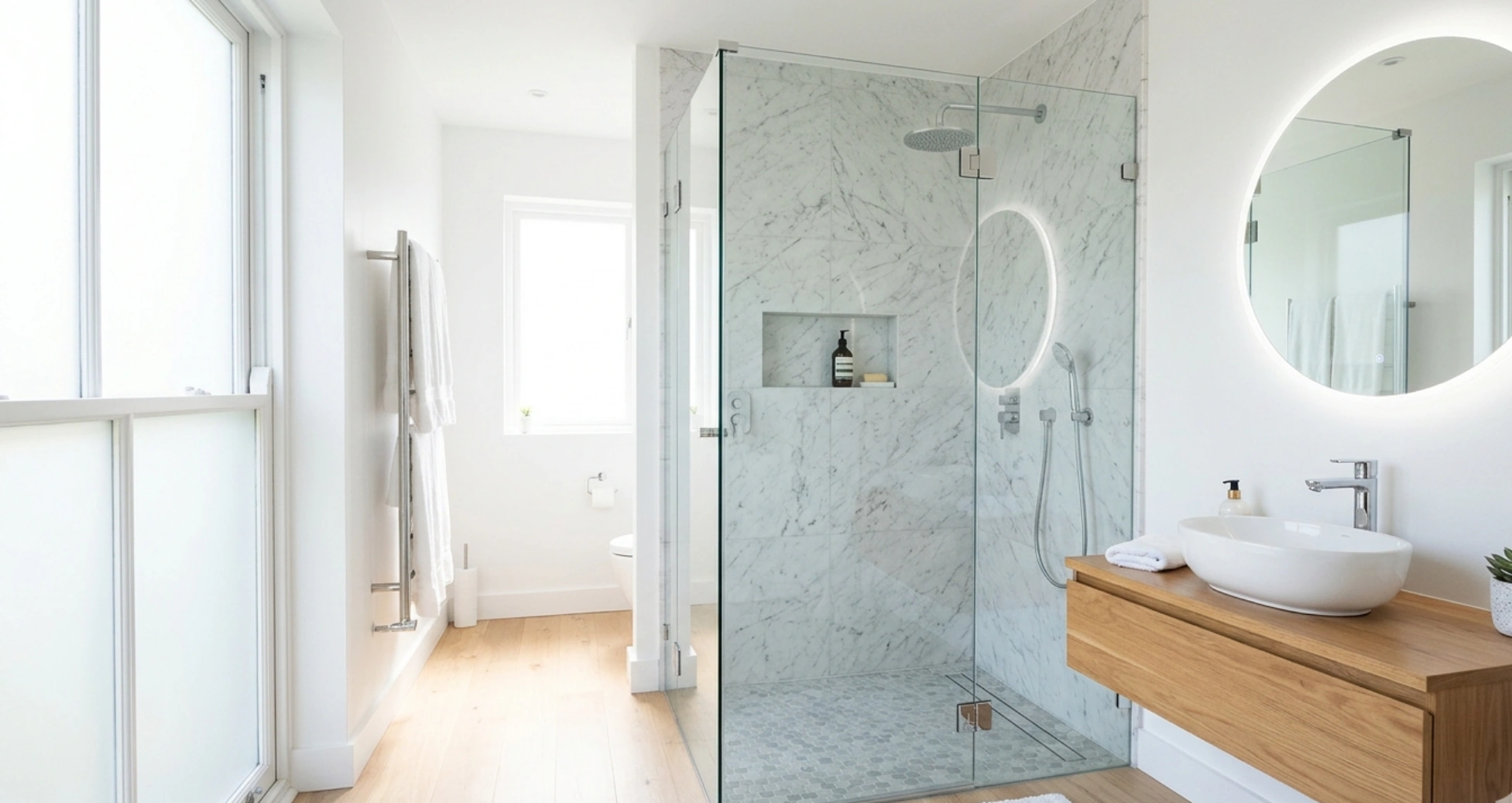
Frameless shower screens remain one of the most reliable ways to keep a bathroom looking current without chasing short‑lived trends. The clean glass panels suit a wide range of homes, from new coastal builds to renovated federation cottages and can adapt as colours and fixtures change over time.
Modern bathrooms prioritise light, space and easy cleaning. A frameless screen supports all three. It opens up compact rooms, showcases feature tiles and stone and avoids the cluttered look that dated framed screens can create.
Minimal hardware and uninterrupted glass give frameless screens a contemporary feel that works with almost any design direction. Whether the room leans coastal, industrial or classic, the screen sits quietly in the background and lets other features take the spotlight.
In bathrooms that often combine light tiles with natural textures like timber or stone, a frameless screen prevents visual breaks in the room. The result is a more seamless transition between the shower and the rest of the space. This is particularly effective in open‑plan ensuite designs where the shower is in full view from the bedroom or dressing area.
Because there is no bulky frame in a set colour, the screen continues to suit the bathroom even as tapware and accessories are updated from chrome to brushed nickel, brass or black. The glass works with each finish rather than competing with it.
Many bathrooms face the challenge of limited space or narrow layouts. Frameless shower screens address this by keeping sightlines open. With clear glass from floor to ceiling or close to it, the eye is not stopped by horizontal frame lines, so the room feels wider and taller.
Natural light is a key asset in coastal homes. A frameless screen lets light flow freely from windows or skylights into the shower area, so the whole bathroom feels brighter throughout the day. This is especially useful in internal bathrooms with only one window, where any blockage can make the room feel enclosed.
In smaller family bathrooms or combined laundry bathrooms, a frameless screen can be customised to odd widths or angles. This allows a functional shower without sacrificing valuable floor space to bulky frames or standard‑size cubicles.
Modern bathrooms need to look good and function with minimal maintenance. Frameless shower screens support that balance. With less metal and fewer grooves, there are fewer places for soap scum and coastal moisture to settle, so cleaning is typically faster and more effective.
The use of toughened safety glass provides strength and durability that stands up to daily family use. Quality fittings and proper installation help prevent common problems like wobbles in the panels or water leaking around the edges.
For Central Coast conditions where humidity and salt air can accelerate corrosion, a frameless design reduces the amount of exposed metal in the bathroom. This can help the space look fresher for longer and delay the need for another refurbishment.
Minimalist frameless shower screens suit bathrooms because they keep sightlines open, accentuate natural light and cope well with coastal humidity. The focus is on clean glass surfaces, discreet fixings and hardware that supports longevity without visual clutter. Homeowners are moving away from heavy frames and statement hardware towards slim profiles, aligned lines and smart coatings. The result is a bathroom that feels larger, more luxurious and easier to maintain in a salty coastal environment.
Clear toughened glass remains the dominant choice, as it makes compact bathrooms feel wider and brighter. Low-iron glass is increasingly specified because it removes the green tinge found in standard glass and pairs better with white tiles, pale timbers and stone-look surfaces. For privacy without losing light, homeowners are choosing lightly frosted bands or panels rather than full frosting and softly textured glass that blurs outlines while still looking modern.
Minimal tint is preferred, with very pale grey or smoke used sparingly to reduce glare in strongly sunlit bathrooms. Thick 10 mm or 12 mm glass is common for frameless screens, as it feels solid yet visually simple. Edges are polished for a refined line that works with contemporary interiors.
Minimalist design in a coastal bathroom depends on hardware that visually recedes but performs reliably in humid, salty air. Small square or low-profile wall brackets and channels are favoured over bulky hinges that interrupt the clean line of the glass.
Channel fixing along the floor or wall keeps sightlines clear and avoids multiple clips dotting the glass. Where hinges are needed, they are typically compact, geometrically simple and chosen to match other fittings in the room.
Concealed or semi-concealed fixing methods are increasingly popular because they reduce visual noise and make cleaning easier. Handles are kept simple with straight pull bars or small knobs rather than ornate shapes that date quickly.
Hardware choices must balance style with corrosion resistance. Brushed stainless steel is often preferred as it hides fingerprints and stands up better to salt-laden air than many plated finishes when correctly specified.
Black hardware remains in demand but is used in slender profiles so it outlines the glass lightly rather than dominating it. Brushed nickel and brushed brass are strong minimalist options, creating a warm accent that works with coastal neutrals and timber without feeling ornate.
Matte finishes are more popular than high gloss, as they show fewer watermarks and sit comfortably with stone and textured tiles. The goal is consistency, so shower hardware typically matches tapware and towel rails, creating a unified, understated look that supports the minimalist glass rather than competing with it.
Frameless shower screens are associated with a clean, open look, yet many bathrooms still need a degree of privacy. The right glass finish can soften sightlines without sacrificing light or making a compact space feel closed in. Choices range from fully clear panels to subtle tints and decorative treatments that balance privacy with a coastal aesthetic.
Local conditions also affect what works best. Humidity, salt air and strong daylight can highlight water marks and fingerprints, so finishes that disguise minor streaks while still looking contemporary are becoming more popular in Central Coast homes.
Clear toughened glass remains the most common option for frameless screens in the region. It visually enlarges small en-suites, lets natural light reach darker corners and showcases feature tiles or stone. It suits main bathrooms where privacy is less critical.
Frosted or satin-etched glass is chosen when privacy is the priority, such as in shared family bathrooms or combined bedroom en-suites. The etched surface diffuses light so the shower still feels bright, but body outlines are softened. This finish is also practical in coastal conditions, as the matte texture hides soap spots and light limescale more effectively than fully clear glass, helping maintain a tidy look between cleans.
Partial frosting is another solution. Bands of etched glass through the midsection of the panel provide privacy at standing height, while the top and bottom remain clear. This approach keeps the open feel of a frameless design while screening key areas.
Tinted glass in light grey or bronze is a growing trend in bathrooms that aim for a more resort-style look. A gentle tint provides a subtle veil of privacy, especially against darker tiles and can reduce glare from strong coastal light. It is best to keep it relatively light in compact rooms to avoid making the space feel closed in.
Textured or patterned glass, such as soft reeded or fluted styles, is also gaining interest. Vertical ribbing catches light, creates movement and breaks up silhouettes without looking heavy. In smaller bathrooms, a fine, subtle texture is preferable to deep or busy patterns, which can compete with other finishes.
For high-end renovations, switchable privacy glass is starting to appear in coastal projects. This technology allows glass to change from clear to opaque at the touch of a button. It suits master suites where the shower is fully exposed to the bedroom and where flexibility between openness and privacy is important.
Privacy choices should reflect how the bathroom is used. A family home where children share a main bathroom typically benefits from higher privacy, such as full frosting or textured glass. Guest bathrooms often balance clear glass with partial frosting so the room looks generous but still feels comfortable for visitors.
In compact units and townhouses, the priority is usually light and space. In these settings, clear or lightly tinted glass with strategic screening, such as a tiled half wall, often strikes the best balance between an open feel and practical privacy.
Layout has more impact on a bathroom than any single product choice. The right frameless shower screen configuration can make a compact room feel open and calm, improve circulation and prevent everyday annoyances, such as water on the floor or a door that clashes with a vanity. Current trends focus on using glass to visually expand the room while guiding water and movement in a controlled way.
Local homes often combine coastal light with modest floor plans, so layout trends centre on making better use of corners, awkward niches and window walls. The most effective solutions do not just look streamlined. They are planned around how people actually move in and out of the shower and how other fixtures like toilets and vanities sit in the space.
Corner frameless showers remain a leading choice for Central Coast en-suites and compact family bathrooms. Using two glass sides with the other sides formed by tiled walls conserves floor space and keeps the centre of the room open. Pivot or hinged doors are usually placed on the longest edge to maximise the entry opening without hitting nearby fixtures.
Neo-angle layouts refine this idea by cutting off the sharp corners of a square base and placing the door on a 45-degree angle. This trend suits tight spots where a traditional right-angle entry would clash with a vanity or door swing. The angled door directs entry movement towards the room centre, reducing traffic bottlenecks in narrow bathrooms.
Walk-in frameless showers with a single fixed glass panel are increasingly specified for mid- to large Central Coast bathrooms. This layout removes the door entirely, simplifying hardware and eliminating any risk of clashing with other elements. It suits rectangular rooms where the shower can run along one wall with drainage graded away from the open end.
To make a walk-in layout practical, the opening should be sized to minimise spray while still allowing easy access. A typical approach is a 900 to 1200 mm long fixed panel with an entry gap of 600 to 700 mm at the end. Ceiling height and window position also matter, as higher ceilings and natural light reduce any sense of enclosure, even with a larger glass expanse.
Walk-in designs work well with linear drains and level-entry floors that allow continuous tiles across the bathroom. This not only improves accessibility for all ages but also makes smaller rooms feel broader, as there is no visual break from hob walls or steps.
Frameless shower screens are now designed as much for low maintenance as for visual impact. In Central Coast bathrooms where coastal moisture and daily use can quickly lead to soap scum and hard water marks, the right easy-clean features can cut cleaning time and keep glass looking clear for longer.
Modern glass coatings, smart hardware choices and thoughtful layout all contribute to a shower that suits everyday life, not just the first week after installation. Selecting practical finishes at the planning stage usually costs less than constant scrubbing or early replacement later on.
The most useful easy-clean upgrade is a factory-applied protective coating. These treatments bond to the surface of the glass and create a smoother barrier that helps resist:
In a humid Central Coast bathroom, this coating reduces the amount of build-up that sticks to the glass and makes any residue easier to wipe away. Cleaning usually requires a soft cloth and a mild glass-safe cleaner rather than harsh chemicals or abrasive pads.
Two points matter when assessing coatings:
Frameless screens use far less metal than traditional framed showers, removing many of the channels where grime collects. For everyday practicality, look for:
Hardware that cleans with a single cloth pass is far more practical than complicated fittings that trap moisture.
Layout and configuration have as much impact on cleaning as the glass itself. A few practical design trends include:
Simple habits such as keeping a squeegee in the shower and giving the glass a quick pass after use work best when the design minimises obstructions and ridges. Thoughtful frameless screen selection turns that 30-second wipe into the only regular cleaning needed for a clear, modern finish.
Choosing a frameless shower screen for a Central Coast bathroom starts with understanding how the space is used day to day. The right choice should work with the room’s layout, coastal light and ventilation patterns, not against them. Style, safety and easy cleaning all need to be balanced with budget and long-term durability.
Humidity from sea air, sandy feet after the beach and often compact floor plans mean that size, hardware and glass type must be selected with more care than a generic off-the-shelf option. A considered design will make the bathroom feel larger, control splashing and stand up to coastal conditions over time.
Begin with the footprint of the bathroom. Measure clearances carefully from walls, the vanity, the toilet and windows to identify what layout will actually work.
Common frameless layouts for Central Coast bathrooms include:
In small rooms, a single fixed panel with an open entry usually keeps the room feeling wider. In larger spaces, a full enclosure can create a more luxurious feel and help contain steam in cooler months. Always allow for door swing so it does not hit vanity drawers or heated towel rails.
For durability and safety in a coastal environment, 10 mm toughened safety glass is typical for frameless screens. It feels solid in the hand and resists minor knocks from daily use. In some larger spans, 12 mm glass may be specified to reduce flex.
Clear glass maximises natural light, which suits many bathrooms with small windows. Where more privacy is needed, frosted or satin-etched glass softens visibility without making the space feel closed in. For very sunny orientations, low-iron glass reduces the green tint and keeps white tiles looking crisp.
Frameless shower screens open up compact spaces, enhance natural light and respond to the demands of a humid coastal environment, explaining their continued relevance across both new builds and renovations. For homes, success lies in aligning aesthetics with function, durability and local environmental conditions. Working with an experienced specialist ensures that material selection, detailing and installation reflect design intent and regulatory requirements. When these elements are properly integrated, a frameless shower screen becomes a long-term upgrade that enhances comfort, performance and overall property value.
Ready to elevate your space with stunning glass solutions? Contact Clearview Glass today for expert advice, quality craftsmanship, and unmatched customer service. Let's bring your vision to life – get in touch now for a consultation.


