Glass balustrades on the Central Coast continue to be popular for residential and commercial properties, combining modern aesthetics with reliable fall protection. Clearview Glass Group understands that while quality materials are important, correct installation is what determines whether a balustrade performs safely, complies with Australian standards and remains durable over time.
This article outlines the most common signs of poor glass balustrade installation, the compliance and safety risks associated with faulty workmanship, and the situations where professional assessment is recommended. Recognising these warning signs early can help prevent costly repairs, minimise legal risks and ensure glass balustrades continue to provide the structural performance and visual appeal they were designed to deliver.
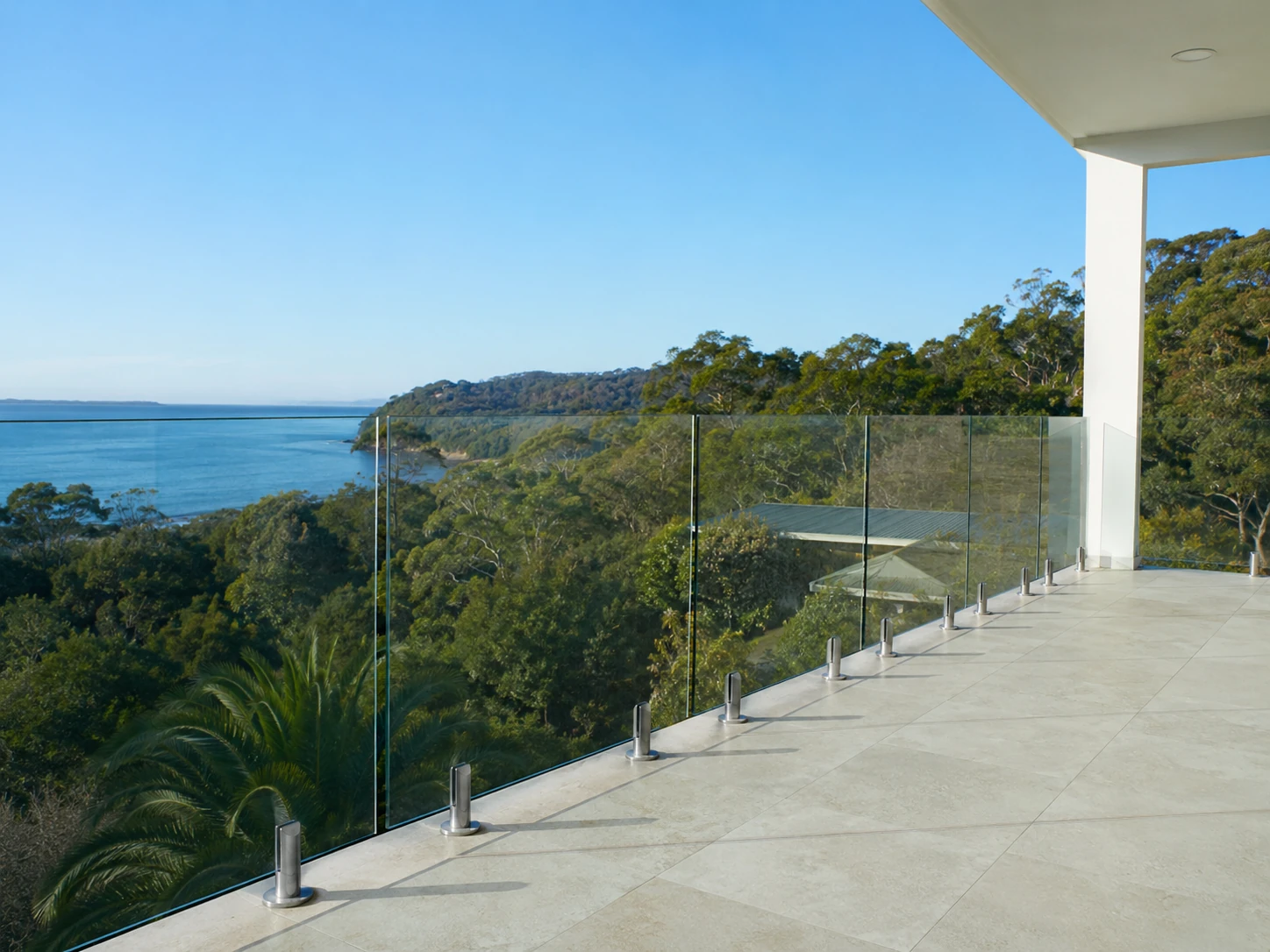
Glass balustrades are safety barriers first and design features second. Correct installation is what allows them to perform both roles. When installed properly, a glass balustrade can resist impact, cope with wind loads, protect glass edges from damage and remain secure with minimal movement.
Poor installation can turn a compliant product into a serious hazard. Even if the glass is the correct type and thickness, incorrect fixing methods, inadequate support or poor detailing can lead to loosening, cracking or complete failure. The risks are greater on balconies, stairs, elevated terraces and pool surrounds where a fall from height is possible.
Correct installation also affects the long-term appearance and maintenance of the system. A well-installed balustrade should sit straight, maintain consistent gaps and keep hardware secure. Poor workmanship often shows through uneven top lines, inconsistent spacing, loose fittings, water staining, corrosion or panels that begin to move over time.
Investing in accurate, code-compliant installation at the outset is usually far less costly than repairing or replacing a balustrade that has started to fail. Rectification can involve removing glass panels, replacing fixings, repairing substrates and refinishing surrounding surfaces, which is far more disruptive than doing the work correctly the first time.
Poorly installed glass balustrades rarely fail without warning. There are often visible, physical or audible clues that something is not right before a major safety issue occurs. Identifying these early warning signs allows defects to be assessed and rectified before minor problems develop into structural failures or injury risks.
Any of the following signs should be treated as a red flag that the balustrade may not have been installed correctly or may no longer be performing as intended.
A correctly installed glass balustrade should feel stable under normal hand pressure. Some systems are engineered to allow minimal deflection under load, but noticeable movement, rocking or flexing is a concern.
If the handrail moves when leaned on or the glass panels shift when pushed, there may be problems with the fixings, anchors or supporting structure. Movement at the base of spigots or posts may indicate loose anchors, undersized fixings or inadequate substrate preparation. Over time, this movement can worsen and may cause cracking around tiles, concrete or mounting points.
In frameless systems, glass should not rattle within channels or spigots. Any perceptible wobble may point to incorrect packing, insufficient tightening, damaged gaskets or the wrong fixing system for the application.
Clear, consistent alignment is important for both appearance and compliance. Uneven gaps between glass panels, walls, posts or handrails can indicate inaccurate measuring, poor adjustment or movement after installation.
Panels that appear out of level or do not line up along the top edge may suggest that spigots, posts or channels were not installed correctly. While small variations can occur across some building surfaces, noticeable misalignment should be investigated, especially if it has developed over time.
Cracks, chips or star fractures in the glass at fixing points or along exposed edges are also serious warning signs. They may indicate point loading, stress from misaligned hardware or damage caused during installation. Even small edge chips can worsen, particularly in toughened glass exposed to wind, vibration or impact.
Sealants that are split, shrinking or separating from frames and substrates may also point to movement, water ingress or incorrect product selection. Rust marks, water staining or efflorescence around fixings can indicate that moisture is entering areas that should be properly sealed.
Audible signs are often overlooked, but they can provide strong clues that a balustrade is under stress. Creaking, squeaking, clicking or rattling sounds when the handrail is used or when wind picks up may indicate friction between components that should be stable.
Loose or spinning fixings, handrail brackets that can be twisted by hand, or spigots that move out of position are clear signs that the system needs assessment. Exposed fixings that are mismatched, stripped, corroded or only partially engaged may suggest poor hardware selection or poor installation practice.
Glass panels should not rattle in windy conditions or when nearby doors close. Properly installed glazing should be firmly supported with suitable gaskets, packers or setting blocks that prevent movement without placing excessive stress on the glass.
Poorly installed glass balustrades are not just an aesthetic issue. They can breach building codes, void warranties or insurance cover, and put people at serious risk of injury. A balustrade can look strong while still being unsafe if the wrong glass, fixings, spacing or support system has been used.
Balustrade requirements are specific because they are designed to prevent falls and withstand expected loads. If any part of the installation does not meet the required standard, the system may fail under normal use, impact or environmental pressure.
Glass balustrades must use glass that is suitable for the application, span, height and fixing method. Common non-compliances include using glass that is too thin, using the wrong type of safety glass, or installing glass without the required support or interlayer for the location.
In some frameless and semi-frameless systems, laminated safety glass may be required so that if one layer breaks, the panel remains in place long enough to reduce the risk of a fall. Where incorrect glass is used, the balustrade may be more likely to shatter, crack or fail under impact.
Fixings and hardware are equally important. Problems can occur when installers use undersized anchors, incorrect bolts, internal-grade fittings in exposed locations or fixings that are not suited to the substrate. These shortcuts may not be obvious at first, but they can lead to gradual loosening, corrosion or sudden pull-out if someone leans or falls against the balustrade.
Regulations set minimum balustrade heights and maximum allowable gaps to help prevent falls, particularly for children. Poor installations may breach these requirements through balustrade heights that are too low, gaps that are too wide or elements that create climbable surfaces.
Glass balustrades must also be able to resist required loads, including horizontal and point loads. If panels are oversized, poorly supported or fixed only at points not designed to carry structural loads, they may flex excessively or fail under pressure.
Warning signs such as noticeable movement, rattling panels, uneven gaps or openings large enough to create a child safety risk should be treated seriously. These issues may indicate that safety and compliance have already been compromised.
Non-compliant balustrades can expose property owners, builders and body corporates to legal and financial risk. Council or building surveyor orders may require repair or replacement at the owner’s cost. Non-compliant work may also create difficulties with final occupancy certification, future sale or leasing.
Insurance and warranty issues can also arise. Insurers may question claims where an unsafe or non-compliant balustrade contributed to an injury or damage. Product warranties may also be voided if the system was not installed according to manufacturer requirements and relevant standards.
Following an incident, expert inspection may determine whether the balustrade met code and installation requirements. If it did not, liability may extend beyond the installer to those who commissioned or managed the work. Regular inspection and prompt rectification are important for reducing safety and legal exposure.
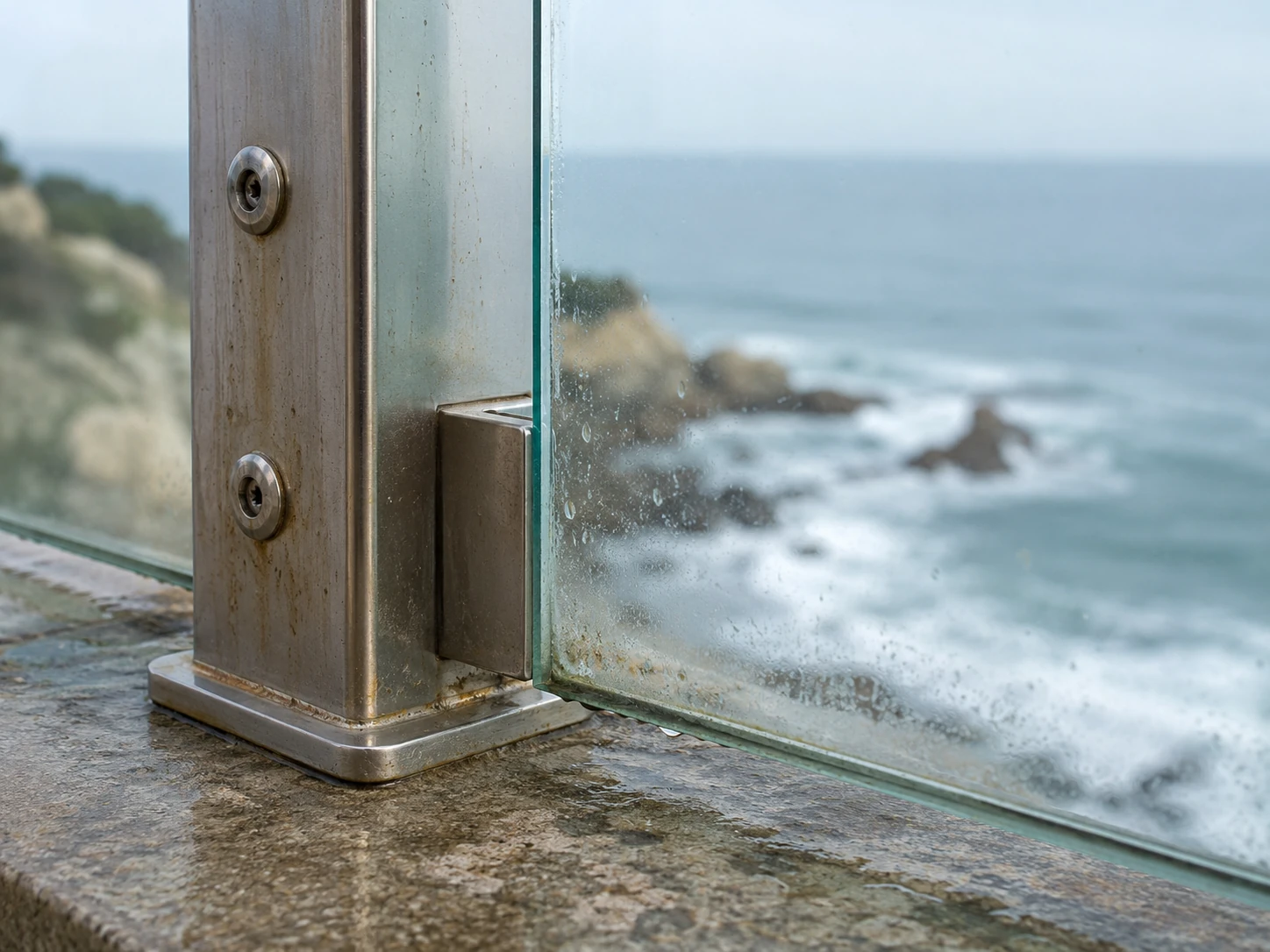
Hardware plays a critical role in the safety of any glass balustrade system. Brackets, spigots, channels, handrail connectors and anchor bolts hold the glass in place and transfer loads back into the supporting structure. If these components are incorrect, poorly installed or deteriorating, the entire system can become unsafe.
This is especially important on the Central Coast, where salt air, moisture, pool chemicals and UV exposure can accelerate corrosion and wear. A system that is not specified correctly for the environment may deteriorate much faster than expected.
Balustrade systems rely on engineered hardware that is suitable for the loads, location and glass type. Problems can occur when cheaper or non-compliant components are substituted during installation.
Red flags include mismatched brackets or spigots, hardware with no identifiable markings or product codes, fittings that do not match supplier documentation, or components that appear inconsistent across the balustrade. Inferior hardware may not have been tested for the required load and impact conditions.
This can result in brackets bending, handrails loosening, glass panels slipping or fixings failing under pressure. Even if the glass itself is compliant, the balustrade cannot perform safely if the supporting hardware is not suitable.
Corrosion is more than a cosmetic problem. Rust, pitting or surface deterioration can reduce the strength of fixings and hardware, increasing the risk of failure under load. Early signs may include tea staining on stainless steel, blistering or flaking on coated steel, and white powdery corrosion on aluminium.
Material incompatibility can also cause problems. Galvanic corrosion may occur when different metals are in contact with moisture between them, such as stainless steel brackets fixed with zinc-plated screws into aluminium components. Over time, one material can corrode faster, weakening the connection from within.
Hardware should be selected for the environment and installed with appropriate washers, gaskets, sleeves or separation materials where needed. This is particularly important in coastal and poolside locations where moisture and chemicals are common.
Every fixing point in a balustrade system must remain secure. Any movement at anchors, spigots, base shoes or brackets is a warning sign that should not be ignored.
Symptoms of fixing or anchor point failure may include:
Ongoing movement can enlarge holes around fixings, allow more water ingress and accelerate corrosion. Once this process starts, the balustrade can deteriorate quickly. Any perceptible movement should be investigated by a competent balustrade or structural specialist before the system is relied on for safety.
A professional inspection should not be left until glass fails or a balustrade feels obviously unsafe. Many problems develop gradually and are only identified when a qualified person checks the glass, fixings, edges, hardware and supporting structure in detail.
There are clear situations where a professional assessment is recommended, including visible damage, movement, impact, renovation work, harsh exposure or age-related deterioration.
A balustrade should be inspected if it starts to move more than expected under normal hand pressure, if panels feel loose, or if the handrail feels unstable. Movement that can be felt or seen may indicate loose fixings, degraded anchors, substrate failure or undersized hardware.
A professional review is also recommended if there are chips or cracks in the glass, rust staining around fixings, damaged gaskets, missing caps, loose cover plates or panels that are no longer evenly aligned. These signs may appear minor, but they can point to deeper installation or structural problems.
A balustrade can appear intact after an impact while still being compromised. If someone falls heavily against the glass, furniture strikes the panels or building materials hit the balustrade during renovation, an inspection is advisable even if no cracks are visible.
Renovation work can also affect balustrade safety. If decking, tiles, slab edges or surrounding structures have been altered, resurfaced or cut near the balustrade, previously compliant fixings may no longer have adequate embedment or support.
Harsh weather and exposed conditions should also prompt closer monitoring. Balustrades in coastal, poolside or highly exposed areas should be checked more frequently because salt, chlorinated water, wind and UV exposure can accelerate corrosion, seal failure and hardware deterioration.
Even without visible problems, older glass balustrades should be inspected periodically. A professional inspection is especially prudent if the balustrade is more than 10 years old, if the original installation details are unknown or if the system predates current safety expectations.
Regular checks are particularly important in high-traffic settings, including apartment balconies, commercial terraces, public stairways, childcare centres and aged care facilities. These areas place greater and more frequent loads on balustrades, so any installation defects can carry higher safety risks.
For residential properties, inspections are also worthwhile before selling, leasing or renovating a property. This can help identify safety or compliance issues before they create delays, disputes or costly rectification requirements.
Poorly installed glass balustrades are more than a cosmetic concern. Movement, misalignment, cracked glass, loose hardware, corrosion and non-compliant gaps can all indicate that a balustrade is no longer performing as intended.
Recognising these warning signs early allows defects to be assessed and rectified before they become serious safety hazards. For property owners on the Central Coast, regular inspections, compliant materials and qualified installation remain essential for maintaining the long-term safety, durability and appearance of any glass balustrade system.
Ready to elevate your space with stunning glass solutions? Contact Clearview Glass today for expert advice, quality craftsmanship, and unmatched customer service. Let's bring your vision to life – get in touch now for a consultation.


