Shopfront glass in Central Coast is designed to provide visibility, security and long-term performance. When a pane cracks or suddenly shatters, however, it can interrupt trading, create an immediate safety hazard and leave the premises exposed to weather or unauthorised access.
Failures are not always caused by an obvious impact. Glass can also break because of damaged edges, incorrect installation, thermal stress, building movement, unsuitable specifications or microscopic imperfections. Clearview Glass Group can assess damaged shopfront glass, identify possible contributing factors and recommend an appropriate replacement for the opening.
Understanding the likely cause is important because replacing the glass without correcting an underlying frame, installation or specification problem may allow the failure to happen again.
Impact is one of the most common causes of damaged shopfront glass. Although safety glass is stronger and safer than standard annealed glass, every product has limits. A heavy or concentrated strike can cause cracking or complete failure.
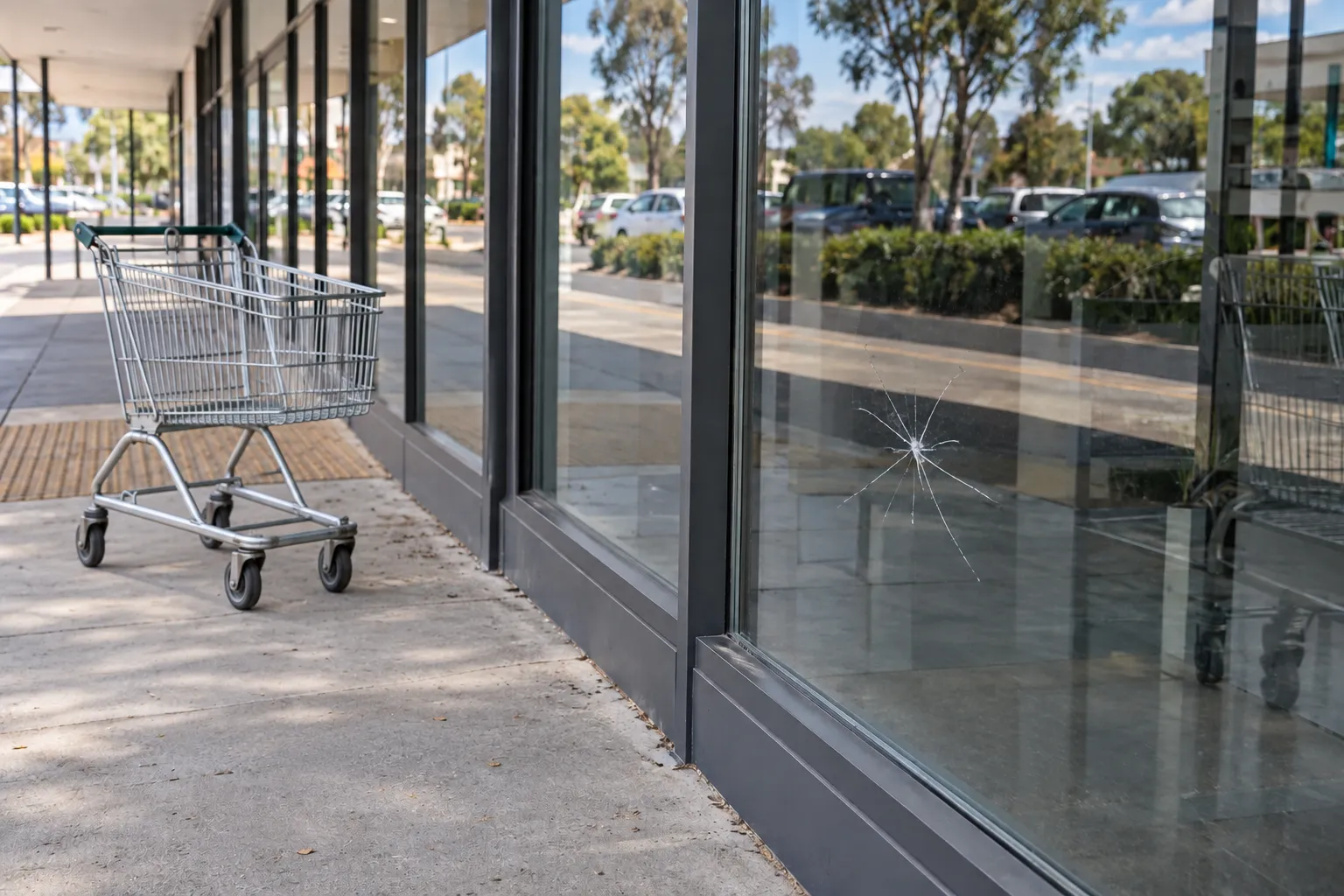
Common sources of impact include:
Choosing suitable high-traffic shopfront glass can help manage the risk of accidental contact from trolleys, prams, stock equipment and customers.
Glass is particularly vulnerable when a hard object hits a small area. The concentrated force can exceed the strength of the pane even when the glass is correctly manufactured and installed.
Floor-to-ceiling and frameless panels may face a greater risk of accidental contact when they are difficult to see or have unprotected edges. Appropriate visual markings, commonly called manifestation, can help pedestrians recognise that a glazed barrier is present.
The breakage pattern often provides clues about the type of glass and the possible cause of failure. Annealed glass normally develops long, sharp cracks extending from the point of impact. It may remain in the frame temporarily, but the pane can become unstable and produce large, hazardous shards if it fails completely.
Toughened safety glass usually breaks into many small fragments when its surface compression is overcome. These fragments are generally less likely to cause severe cuts than the large shards produced by annealed glass. The failure is normally sudden and affects the entire pane.
Laminated glass may develop a spiderweb pattern while remaining largely in place. Its plastic interlayer holds the fragments together, helping the damaged panel continue acting as a temporary barrier. It is still unsafe and requires professional assessment and replacement.
Impact damage often leaves a visible point of contact, such as a chip, crater or concentrated area from which cracks radiate. However, the final breakage pattern can be difficult to interpret after the pane has collapsed.
Thermal stress develops when one area of a glass pane becomes significantly hotter or cooler than another. The warmer section attempts to expand while the cooler section resists that movement. If the resulting stress exceeds the strength of the glass, a crack can form.
Large shopfront panes can be exposed to strong sunlight on the outside while air conditioning keeps the interior surface cool. Frames, awnings, neighbouring buildings and signage may also shade one portion of the pane while another remains in direct sun.
Common thermal stress triggers include:
Selecting glazing designed to reduce heat gain may help manage temperature differences in shopfronts exposed to strong sunlight.
Thermal cracks commonly begin at an edge because this is where glass is most vulnerable. A crack may initially extend roughly at a right angle from the edge before changing direction as it moves across the pane. The absence of a clear impact point can indicate thermal stress, although a glazier should inspect the glass and frame before determining the likely cause.
Toughened and heat-strengthened glass generally tolerate temperature differences better than annealed glass. The appropriate product depends on the pane’s size, exposure, framing, coatings and intended use.
The main surface of a glass panel may appear undamaged while a small chip, scratch or bruise remains hidden inside the frame. Edge damage can concentrate stress in a small area and allow a crack to develop later.
Damage may occur during manufacturing, transport, handling or installation. It can also result from contact with screws, tools, metal framing or cleaning equipment. Toughened glass is especially sensitive to edge damage because of the internal stresses created during the toughening process.
Glass requires suitable clearance and support within its frame. It should rest on correctly positioned setting blocks and remain separated from hard framing materials by compatible gaskets, tapes or sealants.
Installation problems that may contribute to breakage include:
These conditions can leave the pane under constant pressure. It may remain intact for months before a temperature change, wind load, building movement or minor impact triggers a crack or sudden shattering.
A replacement pane should not simply be installed into a defective frame. The opening, support blocks, gaskets, fixings and clearances should be checked so the original cause is not repeated.
Shopfront glazing forms part of a larger building system. Movement in the structure or surrounding frame can transfer stress into the glass, particularly when there is insufficient allowance for movement.
Potential causes include:
Large panes must also resist wind pressure. Wind can cause glass to flex, especially on exposed sites, near corners or in areas affected by wind tunnels between buildings. Some movement is expected, but excessive deflection may indicate that the glass thickness, panel size or support arrangement is unsuitable.
Cracks associated with structural or frame movement often begin near corners or edges. A professional assessment may need to consider both the glazing and the surrounding building elements, rather than treating the damaged pane as an isolated problem.
Glass must be selected according to the dimensions of the opening, support conditions, location, likely human impact, wind exposure and thermal conditions. A pane that is too thin or unsuitable for its application may flex excessively or fail during normal use.
Possible specification problems include:
Shopfront glazing should comply with relevant Australian building requirements and applicable standards, including requirements covering glass selection, installation and safety glazing materials. The correct solution depends on the specific opening and cannot be determined from thickness alone.
A qualified glazier should assess the panel dimensions, glass type, frame, fixings, exposure and surrounding conditions before recommending a replacement.
Toughened safety glass can shatter even when there is no visible evidence of an impact. This is uncommon, but it is a recognised type of failure.
In many cases, an apparently spontaneous break is associated with hidden edge damage, installation pressure, thermal stress or frame movement. The initial weakness may have existed for some time before an ordinary change in temperature or load caused the pane to fail.
Nickel sulphide inclusions are microscopic impurities that can occasionally be present in toughened glass. Changes within an inclusion can create local pressure inside the pane. If that pressure becomes greater than the glass can withstand, the entire panel may shatter without an external impact.
This type of failure can occur months or years after installation. However, not every unexplained breakage is caused by a nickel sulphide inclusion. Edge damage and installation stress are also common possible explanations.
Heat-soak testing during manufacture can reduce the likelihood of glass containing unstable nickel sulphide inclusions reaching installation. It does not eliminate the risk completely and is not automatically required for every shopfront. Whether it should be specified depends on the glazing system, location and consequences of failure.
Glass can fail suddenly, but some problems produce warning signs before complete breakage.
Signs that should be professionally assessed include:
The shape of a crack can suggest a possible cause, but it does not always provide definitive proof. A glazier may need to inspect the origin of the fracture, the condition of the edges, frame clearances, setting blocks and surrounding structure.
Damaged shopfront glass should be treated as unstable. The first priorities are keeping people away from the hazard, securing the premises and arranging a professional make-safe service.
Customers, employees and members of the public should be kept away from the damaged pane. The affected entrance may need to be closed, with people redirected to another safe access point.
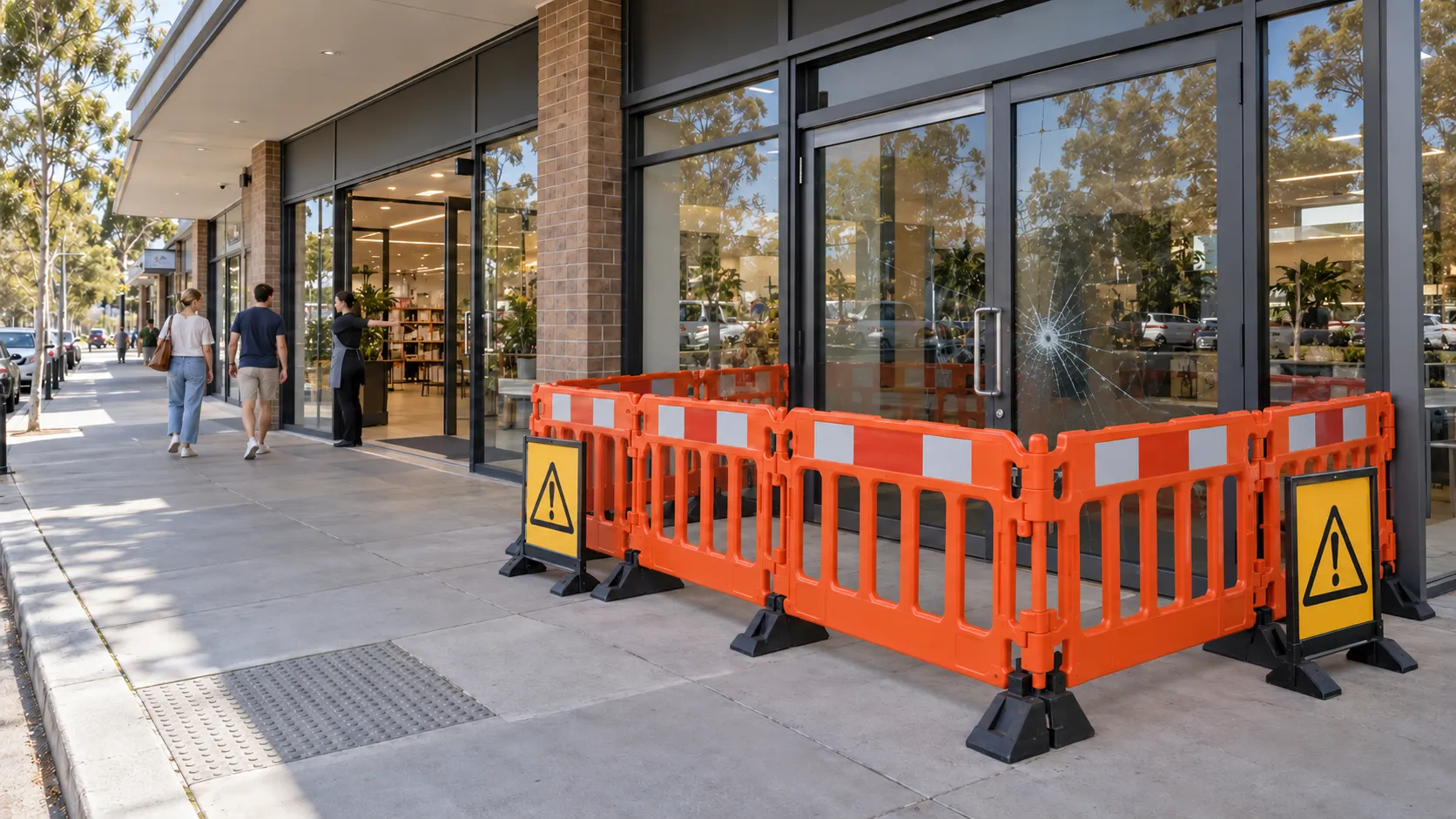
Appropriate exclusion zones, stable supports and professional glass-handling safety procedures are important when damaged panels are being removed or replaced.
Stock, displays and electrical equipment should be moved away from the glass only when this can be done without approaching the unstable pane. Doors near the damage should not be slammed, as vibration or air pressure may cause the glass to collapse.
Staff should not attempt to remove loose glass, apply film to the pane or dismantle the frame. Broken fragments and partially supported sections can move without warning.
A commercial glazier should be contacted as soon as possible. Useful information to provide includes:
Photographs may help the glazier prepare for the call-out, but they should only be taken from a safe distance. No one should approach unstable glass solely to obtain better images.
If the pane cannot be replaced immediately, the glazier may install professional temporary boarding or another suitable barrier. Damaged shopfront glass should not be left unattended when the opening no longer provides security.
Once immediate safety measures are underway, the business can document the incident for its records and insurer. Relevant information may include photographs taken safely, the time the damage was discovered, witness accounts, CCTV footage and details of any suspected impact or vandalism.
If vandalism or deliberate damage is suspected, businesses can report property damage to NSW Police and retain the event number with their incident records.
The need to document the event should never delay urgent make-safe work. Inspection reports, invoices and photographs of the damaged frame can be retained to support an insurance claim and help explain why a particular replacement was recommended.
Cracked shopfront glass generally requires replacement. Adhesive tape and similar temporary measures do not restore the pane’s structural strength and should not be treated as a repair.
The most effective prevention measures address the glass, frame and surrounding environment together.
Businesses and property managers can reduce risk by:
If a pane has failed more than once in the same opening, the frame, installation method, glass specification and building movement should all be investigated before another replacement is installed.
Shopfront glass can crack or shatter because of impact, thermal stress, damaged edges, frame pressure, structural movement, wind loads, unsuitable specifications or hidden imperfections. The visible damage does not always reveal the full cause, particularly when the original fracture point is concealed inside the frame. Promptly isolating the area and arranging a professional assessment protects customers, employees and the premises. Clearview Glass Group can inspect the damaged glazing and its surrounding frame, identify likely contributing factors and recommend a replacement suited to the shopfront’s safety, security and performance requirements.
Ready to elevate your space with stunning glass solutions? Contact Clearview Glass today for expert advice, quality craftsmanship, and unmatched customer service. Let's bring your vision to life – get in touch now for a consultation.


