Selecting shopfront glass on the Central Coast involves more than achieving a clear view into a retail space. In busy commercial environments, glazing must withstand constant pedestrian traffic, changing weather conditions, accidental impacts and ongoing security demands while supporting visual merchandising, energy efficiency and long-term durability. Working with Clearview Glass Group helps ensure the glazing system is suited to the specific requirements of the site.
This article discusses the key considerations for high-traffic retail locations. It also covers practical design, safety, security and maintenance factors that influence the durability, daily operation and long-term performance of a retail shopfront.
Busy retail locations expose shopfront glass to far greater demand than quieter sites. Constant foot traffic, frequent deliveries, street activity and longer trading hours all increase the risk of impact damage, wear and visibility issues. Choosing durable glass is not simply about preventing breakage. It is about protecting safety, appearance, security and trading continuity.
Durable shopfront glass in high-traffic areas must cope with accidental knocks, crowd pressure and repeated cleaning while still presenting products clearly and attracting customers. The more exposed the frontage, the more important the glass specification becomes.
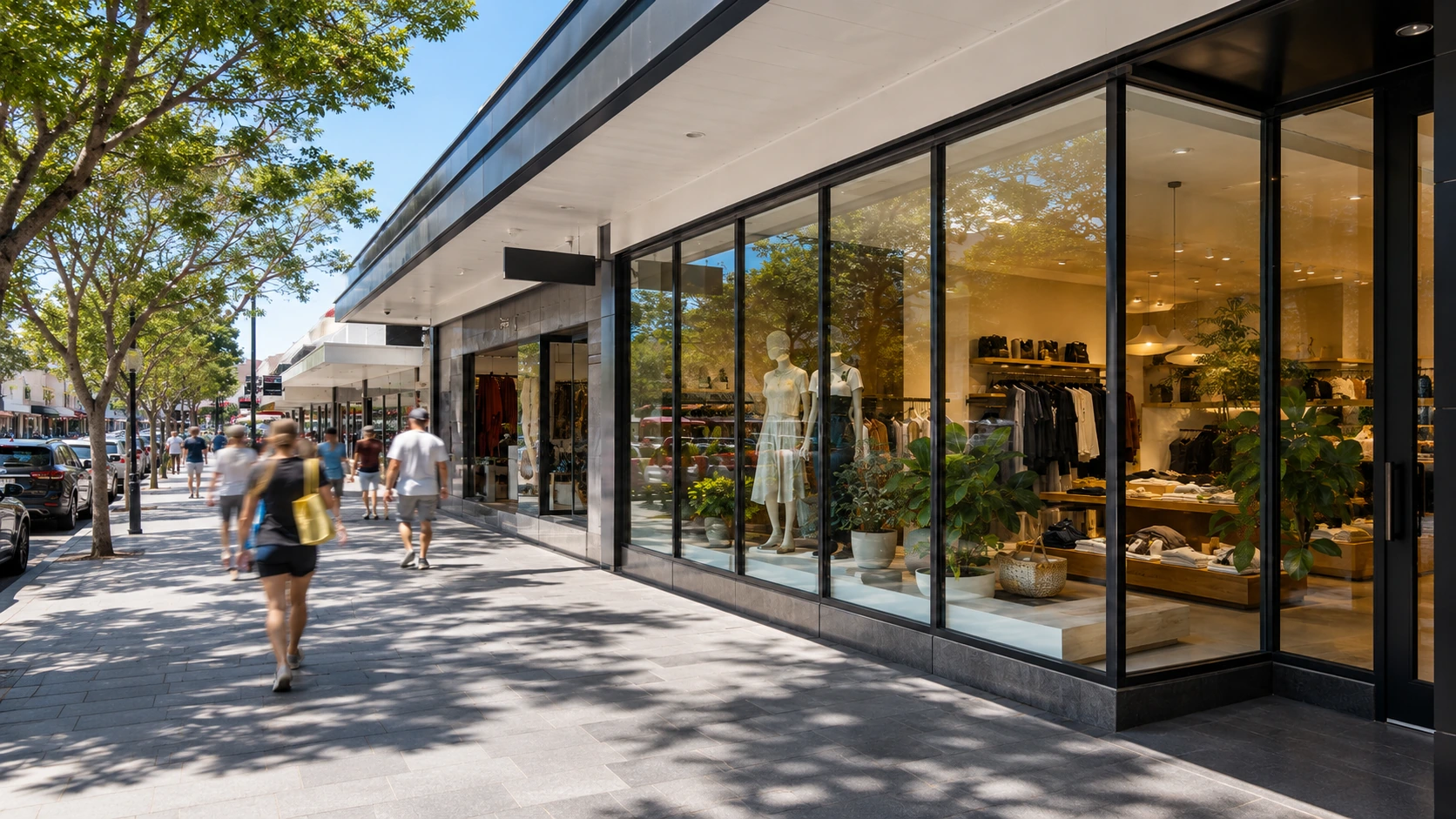
In busy precincts, the shopfront sits within arm’s reach of large numbers of people every hour. Trolleys, prams, mobility aids and bags regularly brush against the glass. Children may lean on glazed panels, and queues often form close to the façade.
For these environments, glass must be designed to fail safely if it breaks. Toughened safety glass and laminated safety glass are commonly used because they reduce the risk of serious injury. Toughened glass is heat-treated to increase strength and, when it fails, it breaks into small granular pieces rather than sharp shards. Laminated glass consists of two or more panes bonded with an interlayer, so if it cracks, the fragments adhere to the film and the panel often remains in place.
High-traffic areas often have longer trading hours and greater exposure to accidental or deliberate damage. Late-night crowds, delivery vehicles and opportunistic crime can all increase the risk to shopfront glazing. Standard annealed glass is more vulnerable to forced entry and can fail quickly under blunt impact.
Durable shopfront glazing may use thicker glass, stronger interlayers or security laminates to slow access and discourage break-ins. Laminated glass is valuable because even if the pane is fractured, it is harder to create a clear opening. This deterrent effect helps protect stock, limits disruption and may reduce insurance-related risks.
Higher impact resistance is especially important in locations near public transport, nightlife areas, busy car parks or ATMs. Specifying durable glass at the outset is often more practical than dealing with frequent panel replacements, emergency repairs and trading downtime.
Retail frontage must stay visually clear despite heavy use. In busy locations, glass is cleaned frequently to remove fingerprints, dust, salt, pollution and street grime. Lower-quality glass, poor fabrication or unsuitable surface treatments can lead to scratching, hazing or distortion, making displays look tired.
Durable shopfront glass can include harder surface finishes or compatible coatings that resist staining and make cleaning easier. Correct glass thickness and high-quality fabrication also help minimise distortion, so products appear true to colour and shape behind larger panes.
Safety glass selection is one of the most important decisions for a high-traffic shopfront. It affects public safety, security, compliance and maintenance costs. The correct glass type reduces injury risk, deters opportunistic break-ins and keeps a busy frontage looking clear and professional despite constant use.
For retail locations on main streets, shopping centres or transport hubs, glass must be selected for both legal requirements and practical conditions. Crowd density, likelihood of impact, vandalism risk, door movement and exposure to weather should all influence the final specification.
Most retail shopfronts use toughened glass, laminated glass or a combination of both. Understanding how each behaves is essential.
Toughened glass is heat-treated to increase its strength compared with standard annealed glass. It is well suited to everyday knocks from trolleys, prams and bags and is less likely to break from accidental impact. When it does fail, it breaks into small, relatively blunt fragments.
Laminated glass consists of two or more glass panes bonded together with an interlayer, commonly PVB or ionoplast. If the glass breaks, the fragments adhere to the interlayer and the glass sheet usually remains in place. This helps maintain a barrier against weather and intrusion while reducing falling glass hazards.
For high-footfall shopfronts, laminated glass is often preferred at lower levels because it resists smash-and-grab attempts and can keep an opening secure long enough for a response.
Shopfront glazing must comply with applicable building and glazing requirements, particularly where safety glazing is mandatory. In practice, this means using suitable safety glass in critical locations where people are likely to come into contact with the glass.
Hardware and framing details are also important. Proper edge cover, correct setting blocks and suitable seals help protect glass edges from stress that can lead to premature failure. In very high-traffic entrances, door leaves may use toughened or toughened laminated glass to cope with repeated opening impacts, while adjacent fixed panels may use laminated glass to prioritise retention if broken.
Clarity and appearance should also be considered. Higher-quality laminated interlayers can reduce haze and discolouration, helping displays remain crisp and visible.
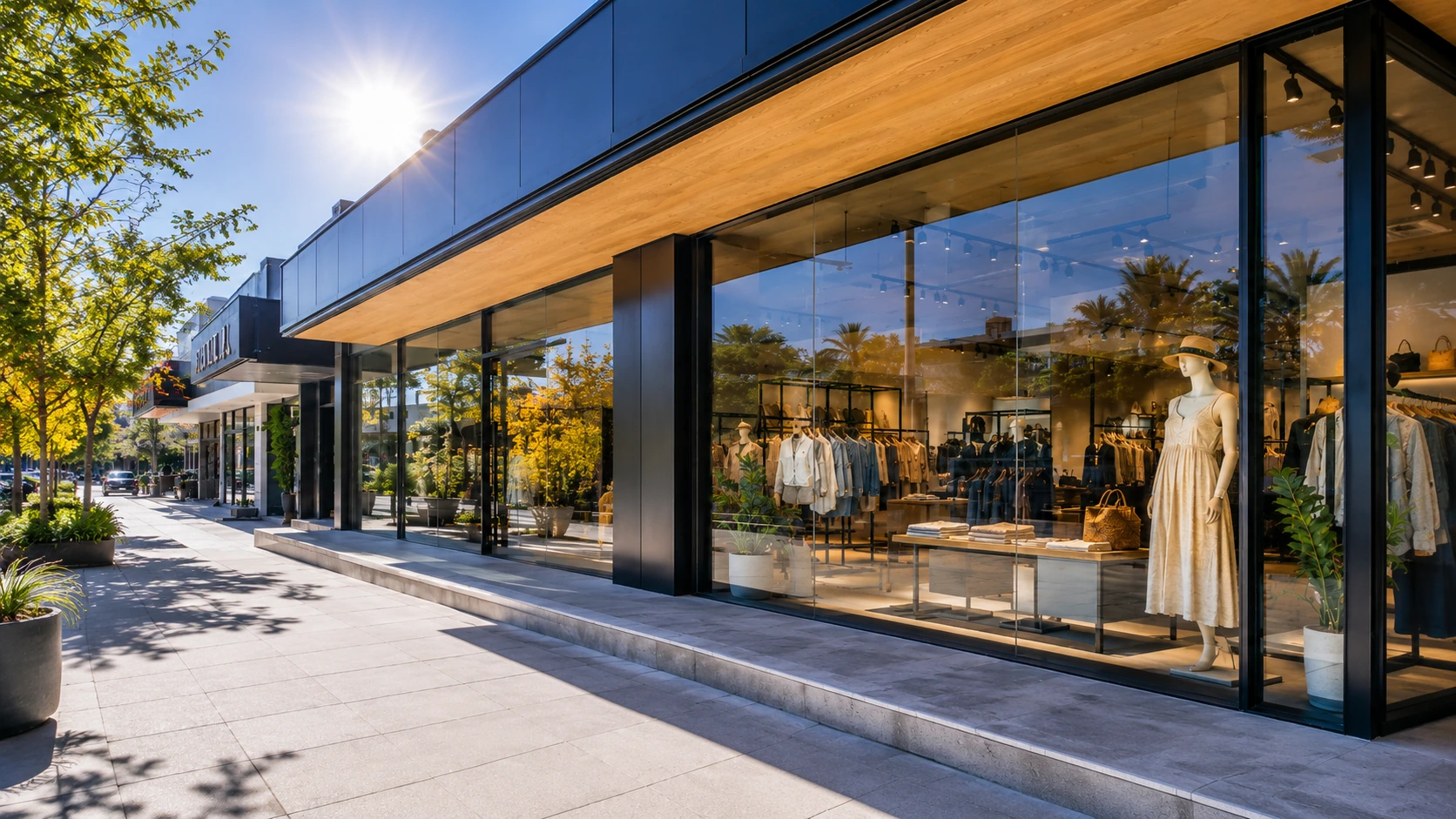
Shopfront glass in a high-traffic retail area must showcase merchandise clearly, resist impact and intrusion attempts and support a welcoming street presence. The right solution does not sacrifice one of these priorities for another. It uses glass type, thickness, framing and detailing to keep them in balance.
Achieving this balance starts at the design stage. Decisions about transparency, framing, door configuration and hardware influence how easily products can be seen from the street, how difficult the frontage is to breach and how the store presents within a busy retail strip or shopping centre.
Clear visibility is one of the main reasons for using glass at street level. This means choosing glass that remains optically clear in different lighting conditions and after repeated cleaning. High-quality toughened safety glass or toughened laminated glass in an appropriate thickness can provide clear visibility while meeting safety requirements.
Large uninterrupted panes draw attention to product displays and allow sightlines deep into the store. To maintain safety near footpaths and crowded areas, shopfront glass should be selected so that if it breaks, it crumbles safely or remains bonded rather than forming sharp shards.
Reflectivity also matters. Highly reflective glass can obscure merchandise during daylight and create glare for passers-by. Clear, neutral or low-iron safety glass usually delivers a better balance of transparency and colour accuracy for retail displays.
Security requirements depend on location, operating hours and merchandise value. Laminated safety glass is often preferred for ground-level frontages because the interlayer holds the glass together under impact and can delay forced entry. Toughened laminated glass can increase resistance to smash-and-grab attempts while still presenting as a standard shopfront.
Where risk is higher, thicker laminated configurations or compatible security films may be used to further slow intrusion without making the frontage look heavily fortified. Framing systems should match the glass in strength. Robust aluminium or steel frames with properly anchored channels and secure glazing beads help prevent panels from being forced or levered out.
Security measures work best when combined with other systems, such as alarms, lighting, roller shutters, CCTV and secure internal display layouts. These supporting elements allow the glass itself to remain visually open while the overall shopfront provides meaningful protection.
Street appeal helps turn passing foot traffic into store entries. Glass choice directly shapes the atmosphere at the threshold. Clear open frontages feel welcoming and contemporary, while heavily tinted or mirrored glass can appear closed off, which may not suit most high-traffic retail environments.
Subtle branding can be incorporated into the glass without reducing visibility. This may include modest logo etching, partial frosting to conceal low-level storage while keeping display zones clear or slimline patterns that tie into the façade design. These treatments preserve transparency where it matters most while adding identity and privacy where needed.
Consistency with neighbouring tenancies and centre guidelines is also important. A well-proportioned shopfront with clean framing, minimal visual clutter and well-lit displays contributes to the streetscape. When visibility, security and aesthetics are planned together, the result is a frontage that is inviting to customers, resistant to damage and visually suited to the retail environment.
Shopfront glass also affects comfort and product protection. On the Central Coast, retail frontages can be exposed to strong sun, glare, heat gain and changing weather conditions. Without the right glazing, a shopfront may allow excessive heat into the store, making the interior less comfortable and increasing cooling demand.
Solar control glass, low-E glass or selected tinting can help manage heat and glare while maintaining visibility from the street. The right option depends on the orientation of the shopfront, the level of sun exposure and how important product visibility is to the business.
UV protection is another consideration, particularly for stores displaying clothing, artwork, furniture, flooring, cosmetics or packaged goods near the window. Laminated glass and selected interlayers can help reduce UV exposure, which may limit fading and deterioration of merchandise over time.
The aim is to improve comfort and protection without making the shopfront too dark or reflective. Professional advice is important because the wrong tint or coating can reduce street appeal, distort product colour or make displays harder to see.
Doors in high-traffic retail environments must combine visual transparency with controlled movement and reliable security. The choice of door type, hardware and access layout has as much impact on safety and customer flow as the glass specification itself. Poorly chosen components can lead to congestion, premature wear and increased risk of accidents or forced entry.
The priority is a door system that opens smoothly, closes reliably and withstands constant use without sagging or misaligning. Handles, closers, locks, hinges and pivots should be suited to the volume of traffic, not just the visual design of the shopfront.

Frameless toughened glass doors create a clean retail appearance but may not suit every busy access point. For high-traffic entrances, framed or patch-fitted doors in toughened or laminated glass can provide better stability and easier integration with heavier hardware.
Single swing doors can become bottlenecks in busy shopping strips or near public transport. Double swing doors allow easier entry and exit and provide a wider opening for prams, mobility aids and deliveries. Automatic sliding doors are often the most practical option for very high volumes because they reduce door swing into the pedestrian zone and support smoother customer flow.
Where automatic systems are used, safety sensors, controlled opening speeds and clear visibility markings are important to reduce the risk of collision.
Door hardware should be strong enough for repeated daily use. Closers need to control the movement of the door so it does not slam, drag or remain partly open. Hinges, pivots and patch fittings must be suitable for the weight and size of the glass door.
Handles should be visible, comfortable and easy to use. Full-height pull handles or D-handles often provide better leverage on heavier doors and are easier for customers of different ages and abilities to operate.
Accessibility must also be considered. Shopfront doors should provide suitable clear opening widths, low operating forces and threshold details that minimise trip hazards. Manifestation bands or visible markings are important on large clear glass doors to help prevent people from walking into the glass, particularly in busy environments.
Shopfront glass in high-traffic retail areas must cope with constant contact, fingerprints, pollutants and repeated cleaning. The right glass specification and a consistent maintenance routine influence how clear the façade remains, how safe it is to use and how often it needs repair or replacement.
Long-term performance is determined at two stages. First, during selection, when coatings, thickness and framing details are chosen. Second, during day-to-day care, when the glass and surrounding components are cleaned correctly and inspected for early signs of wear or damage.
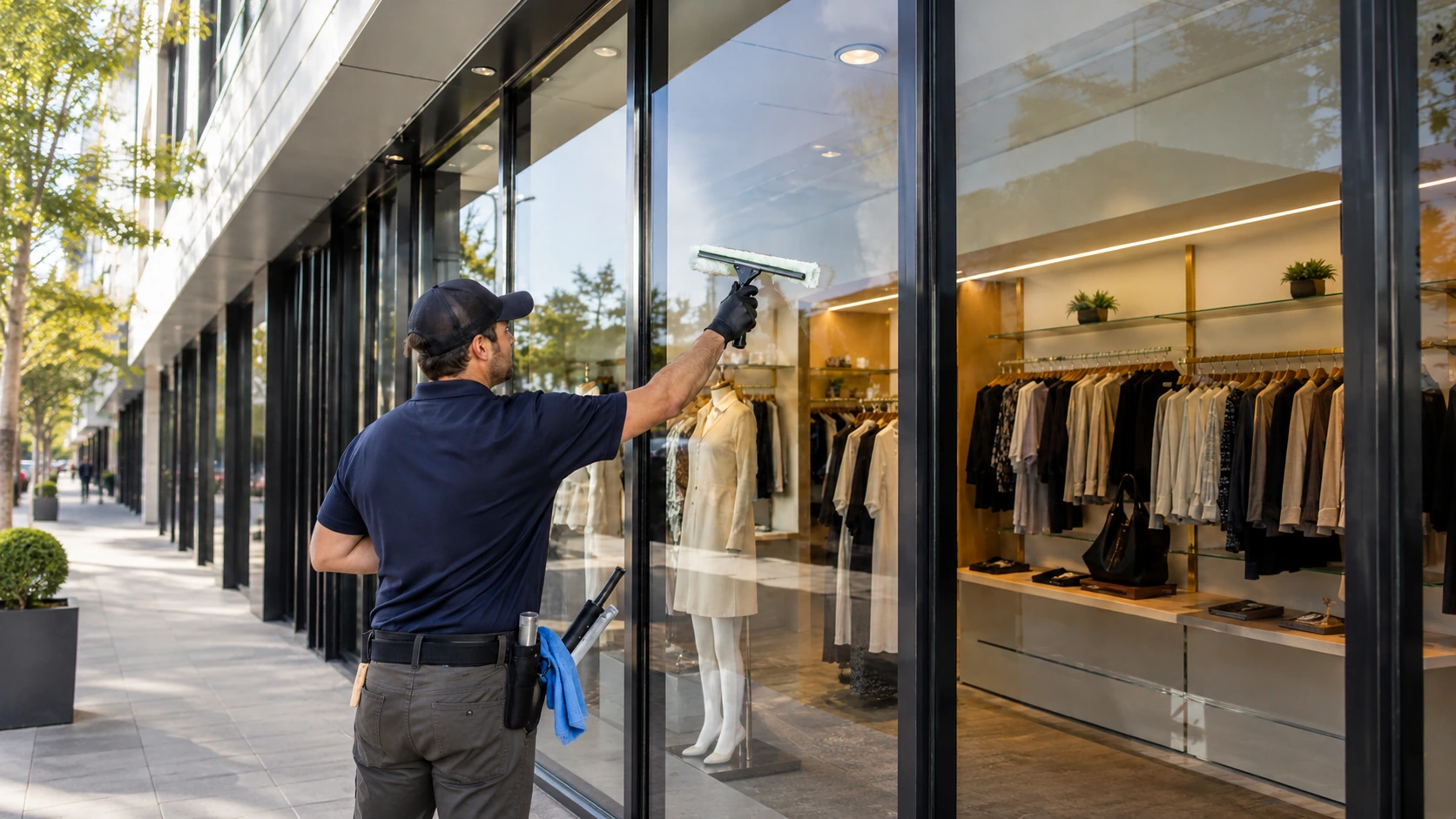
Glass requires regular cleaning to preserve clarity and protect specialist coatings from long-term contamination. Main touchpoints may need daily attention, while larger panels may require more thorough cleaning several times a week depending on location and exposure.
Use a pH-neutral glass cleaner or mild diluted detergent with a soft microfibre cloth or squeegee. Harsh chemicals, strong alkalis, acids and abrasive powders should be avoided because they can damage coatings or scratch surfaces. Metal scrapers should only be used by experienced personnel and never on coated surfaces unless manufacturer guidance confirms this is safe.
Edges and corners collect dirt quickly, especially near ground level and around door hardware. These areas need extra attention to prevent staining and maintain hygiene where customers frequently touch the glass.
Modern shopfront glass may include coatings that reduce glare, control solar gain or make cleaning easier. These coatings require compatible cleaning products and tools. Using ammonia-based cleaners or abrasive pads can leave permanent marks or reduce performance.
Frames, gaskets and sealants are also important to long-term performance. During cleaning routines, frames should be wiped with a non-abrasive cleaner suited to the frame material. Gaskets and seals should be kept free from dirt and debris to maintain weather-tightness and acoustic performance. Standing water at sill level should be cleared so it does not sit against the edges of laminated glass.
Beyond routine cleaning, high-traffic retail shopfronts benefit from structured inspections at least annually, and more often in coastal or polluted urban environments. These inspections should check for chips, cracks, loose hardware, damaged seals, water entry, frame movement and any change in door alignment.
Where insulation or acoustic performance is important, misting between panes in double glazing should be investigated. Misting can indicate seal failure, which reduces thermal performance and often requires unit replacement.
Planning for the service life of glazing units, coatings and hardware allows businesses to budget for upgrades rather than relying on emergency repairs. A well-maintained shopfront is safer, more presentable and less disruptive to daily trade.
Selecting glass for a busy retail frontage is not just an aesthetic choice. The right specification affects safety, security, energy performance, maintenance and customer experience. A professional assessment ensures these factors are considered in relation to the actual site conditions rather than relying on generic assumptions.
High-traffic locations present specific risks, including accidental impact, crowding, repeated door use, vandalism and exposure to coastal weather. Professional input helps match glass type, thickness, framing systems and hardware to these risks and to the relevant building requirements.
A professional assessment considers how the entrance functions throughout the day. This includes customer flow, door frequency, delivery access, likely impact points, sun exposure and areas where people may queue or congregate.
Without this level of review, it is easy to underspecify glass for large spans, high-impact zones or exposed locations. Incorrect specification can lead to excessive flexing, visible distortion, premature breakage or ongoing maintenance problems.
A professional assessment can also determine whether glare control, UV protection, acoustic performance or thermal performance should be part of the glass selection.
Shopfront glass in high-traffic areas must comply with relevant safety requirements covering impact resistance, breakage behaviour and accessibility. Professional assessors interpret these requirements in the context of the specific site layout.
This has practical consequences. For example, glazing near doorways, walkways or areas where people may come into contact with the glass generally needs to be safety glass that breaks safely or remains held together on impact. Professional assessment confirms that the relevant panes are suitable for their location, which may be important for approvals, leasing requirements and insurance.
Insurers may also require evidence that shopfront glazing has been specified and installed appropriately. A documented specification and professional installation record can support smoother claims handling if damage occurs and reduce the risk of disputes over non-compliant work.
Shopfront glass contributes to safety, security, durability, energy performance and customer experience. Selecting the appropriate glazing requires careful consideration of safety glass options, impact resistance, thermal efficiency, UV protection, framing systems, hardware and ongoing maintenance requirements.
For high-traffic retail locations, the best result comes from matching the glass system to the way the site is actually used. Clearview Glass Group can assess the location, usage conditions and design requirements to recommend shopfront glass that supports daily operations, protects occupants and merchandise, and maintains a clear, attractive street presence over the long term.
Ready to elevate your space with stunning glass solutions? Contact Clearview Glass today for expert advice, quality craftsmanship, and unmatched customer service. Let's bring your vision to life – get in touch now for a consultation.


