When a shopfront panel is damaged, businesses need to know how quickly the opening can be secured and when permanent glass can be installed. The timeframe affects security, customer access, trading hours and the appearance of the premises.
Clearview Glass Group assesses each shopfront glass in Central Coast according to the damage, glass specification, panel size, frame condition and site access. Emergency attendance may be available on the same day, but manufacturing and installing the permanent panel can take several business days when custom glass is required.
As a general guide, an emergency make-safe visit may be completed on the same day or the following day. A straightforward permanent replacement may be completed within several business days, while oversized, toughened or specialised glass can require 10 to 20 business days or longer. The actual installation commonly takes between two hours and one working day.
An initial assessment or emergency make-safe service can often be scheduled within 24 to 72 hours. Dangerous or exposed openings are generally prioritised, particularly when broken glass presents a risk to staff, customers or pedestrians.
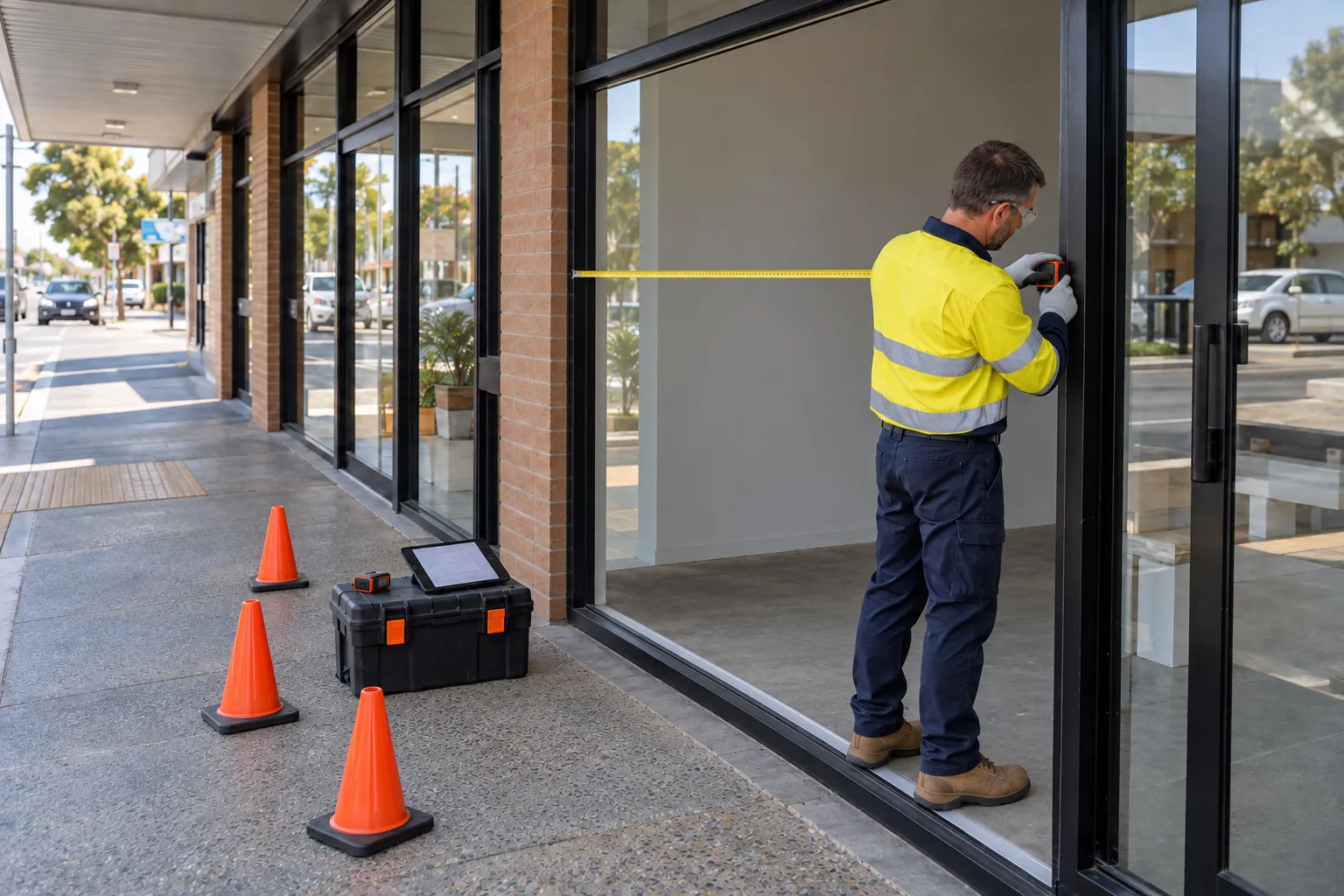
It is important to distinguish between an initial attendance and the permanent replacement. A glazier may be able to secure the premises quickly, but the final glass cannot be installed until the opening has been measured, the correct specification has been confirmed and the replacement panel is available.
An urgent breakage may receive same-day or next-day attendance, depending on when the damage is reported, the location of the premises and technician availability. The glazier may remove loose fragments, clean the immediate area and temporarily board or secure the opening.
When suitable laminated safety glass is available in the required thickness and can be processed promptly, permanent replacement may be possible within one to three business days. This depends on the panel size, edgework, frame type and local stock availability.
Toughened glass must be measured and manufactured to the required dimensions before installation. It cannot be cut, drilled or altered after the toughening process. Standard toughened panels may take approximately three to ten business days to produce, depending on processor capacity.
Oversized panels, insulated glass units, specialist tints, printed designs, cut-outs or complex shapes may take approximately 10 to 20 business days or longer. These products require additional manufacturing stages and may only be available from selected processors. These timeframes are indicative rather than guaranteed. A glazier can provide a more reliable estimate after inspecting and measuring the shopfront.
Several practical considerations determine when the work can be scheduled.
Providing accurate information during the first enquiry helps the glazier assess the urgency and organise the appropriate equipment. Useful information includes:
Providing these details when requesting a shopfront glass quote can help the glazier assess the work and identify potential access or installation issues.
The area around the damaged panel should be kept clear. Customers and staff should not attempt to remove loose glass or apply pressure to a cracked panel. Businesses can also reduce delays by approving the glass specification promptly. However, a visually similar product should only be substituted when it remains suitable for the location and complies with applicable safety requirements.
Manufacturing is often the longest stage of a shopfront glass replacement. The timeframe depends on whether the required product can be processed from available stock or must be custom manufactured.
Shopfront panels may use laminated or toughened safety glass, depending on their location, size, framing system and exposure to human impact. The replacement must be suitable for its intended use and installed in accordance with relevant Australian glazing and safety requirements.The replacement must be suitable for its intended use and installed in accordance with applicable Australian glazing requirements.
Common laminated safety glass may be processed relatively quickly when the required thickness is in stock and the panel does not need complex edgework or cut-outs.
Depending on the supplier and job requirements, it may be available within approximately one to five business days.
Clear toughened safety glass commonly takes around three to ten business days after the measurements and specifications have been approved. The panel must be cut, drilled and edged before it enters the toughening process. The production period begins only after accurate measurements have been taken. If the measurements or specifications change after manufacturing starts, a new panel may need to be ordered.
Production may take approximately 10 to 20 business days or longer when the replacement involves:
Each additional process requires more handling, machinery time and quality checking. Some products may also need to be transferred between separate manufacturing facilities.
Processor capacity can vary throughout the year. Retail fit-out periods, holiday shutdowns, severe weather events and major construction projects may extend normal lead times.
Material availability also affects production. Common clear products are generally easier to source, while uncommon colours, coatings, interlayers and thicknesses may need to be brought in from another facility.
Transport must also be considered. A finished panel may be manufactured outside the local area and delivered according to a scheduled glass transport run. Installation cannot proceed until the panel arrives undamaged and has been checked against the order.
Once the replacement glass has arrived and the site is ready, a straightforward installation commonly takes between two and six hours. Large, heavy or complex shopfront systems may require a full working day or more than one visit.
The installation period includes more than placing the new panel in the opening. The team must establish a safe work zone, remove the damaged glass, prepare the frame, position the replacement, install the required seals or gaskets and clean the surrounding area.
A small display window or single panel in a standard aluminium frame may take approximately two to three hours. This assumes the frame is undamaged, access is clear and the new panel fits correctly.
A large full-height panel or multi-panel frontage may take between three and six hours. Additional time may be required to handle heavy laminated glass, remove old sealants or coordinate work around entrances and pedestrian areas.
Frameless systems, structural glazing, automatic doors and double-height shopfronts can require most of a working day. In some cases, the work is completed over two visits so that sealants can cure or door hardware can be adjusted after the glass has been installed.
Clear access can significantly reduce the time spent on site. Display stands, merchandise and furniture should be moved away from the work area before the team arrives. Suitable parking or loading access is also important because glass must be moved carefully from the vehicle to the opening.
Installation may take longer when:
Unexpected frame damage is one of the most common causes of delay. A new panel should not be installed into a frame that cannot support or retain it correctly.
Before removing the damaged panel, installers establish an exclusion zone and assess the stability of the remaining glass. Appropriate suction equipment, lifting aids and protective equipment are used according to the size and weight of the panel.
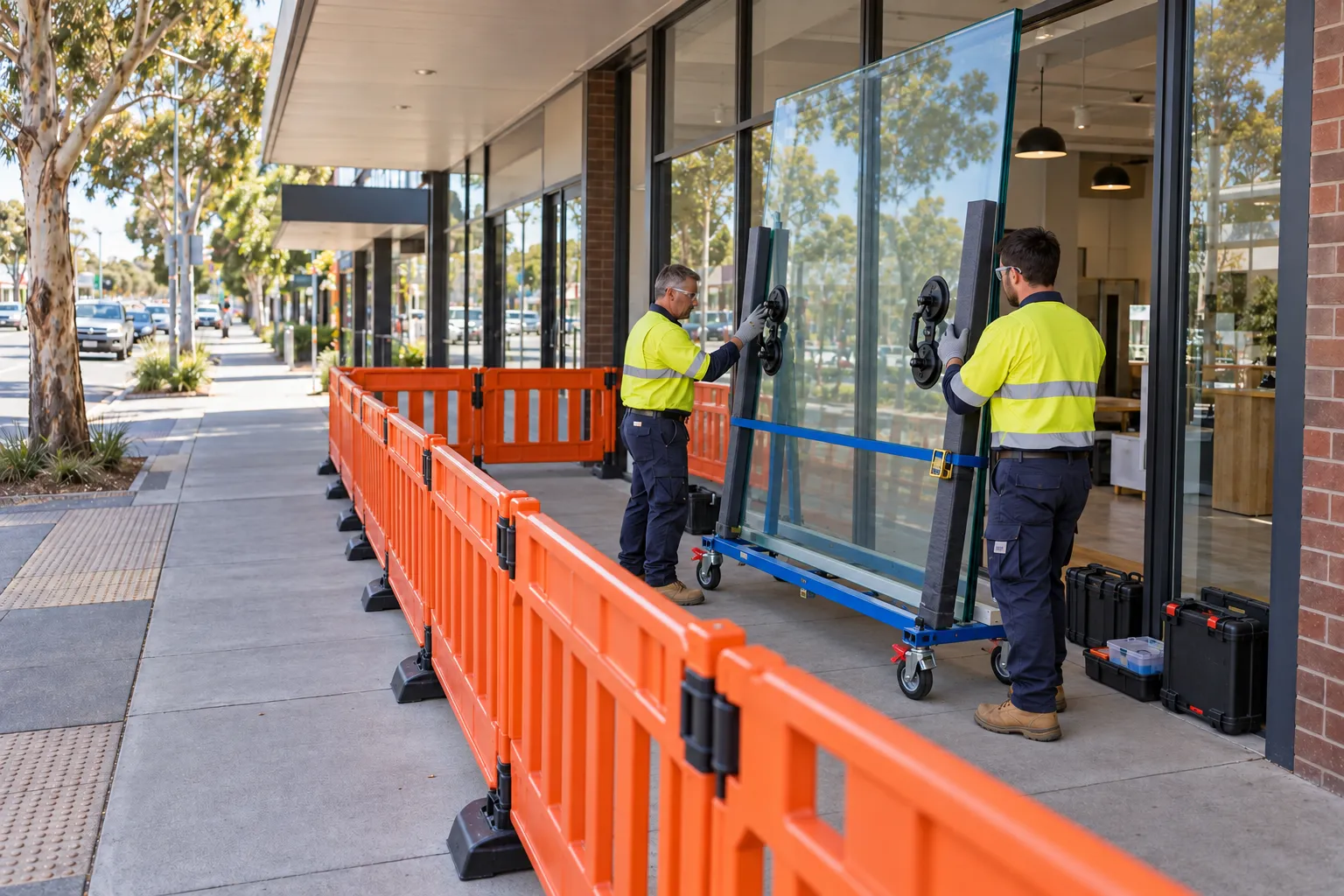
Appropriate equipment, exclusion zones and trained workers are essential for maintaining glass-handling safety during removal, transport and installation.
After the glass is positioned, it is supported with suitable setting blocks, gaskets, beads or sealants for the framing system. The installer then checks that the panel is secure and that nearby doors and fittings continue to operate correctly.
Some glazing sealants require additional time to cure. The glass may be secure before curing is complete, but the area may need to be protected from pressure, movement or cleaning for a specified period. Structural silicone applications can require longer curing periods and must follow the product manufacturer’s requirements.
Two shopfronts that appear similar from the street can require very different replacement processes. Glass type, frame construction, access conditions and damage to surrounding components all affect the total timeframe.
Common clear safety glass is generally easier to source than specialist glazing. Tints, acoustic laminates, low-iron products, printed designs and security glass may only be processed by selected suppliers.
Large panels require additional planning because their weight affects transport, lifting and installation. The team may need more installers, powered handling equipment or temporary removal of doors and framing sections.
Custom holes and notches must also be positioned accurately. This is especially important for frameless entrances, patch fittings, door closers and specialised hardware. An error cannot usually be corrected after toughened glass has been manufactured.
The condition of the existing shopfront frames determines whether a straightforward reglazing job can proceed or more extensive repairs are required. Bent aluminium, loose sections, corrosion and displaced glazing channels may need to be repaired before the replacement panel can be installed saf
Older or proprietary shopfront systems can also create delays when matching beads, gaskets or frame sections are no longer readily available. The installer may need to identify a compatible component or arrange a custom solution.
Multi-panel frontages, corner glazing, pivot doors and automatic sliding doors require careful dismantling and reassembly. The system must remain aligned so that doors, locks and other hardware continue to function properly.
Busy shopping areas may require work to be completed outside normal trading hours. Building management may also request permits, contractor documentation, loading arrangements or a specific work schedule before access is granted. High-level panels, transom windows and glazing above awnings may require scaffolding or an elevated work platform. Organising this equipment can add time before removal begins.
Traffic management may be necessary when the work affects a road, loading area or public footpath. These measures protect installers and pedestrians but may require additional planning and approval.
Even a straightforward replacement depends on stock availability, processor workloads and transport schedules. A specific thickness or tint may not be held locally, while custom manufacturing can only begin after the final dimensions are confirmed.
Following a storm, accident or period of widespread property damage, demand for make-safe and glazing services may increase. Emergency attendance will generally focus on removing immediate hazards and securing buildings, with permanent replacements scheduled according to glass availability and installation capacity.
Shopfront glass replacement can range from a same-day emergency make-safe service to several weeks for a specialised permanent panel. A standard installation may take only a few hours once the glass is ready, but manufacturing, access arrangements and frame repairs can extend the overall schedule.
Clear photographs, accurate site information and prompt approval of the correct glass specification can help prevent unnecessary delays. Clearview Glass Group can assess the damage, secure the premises when required and coordinate the replacement process while minimising disruption to the business.
Ready to elevate your space with stunning glass solutions? Contact Clearview Glass today for expert advice, quality craftsmanship, and unmatched customer service. Let's bring your vision to life – get in touch now for a consultation.


