Shopfront glass plays a major role in how a business looks, feels and functions. It affects street appeal, natural light, customer visibility, security and the overall impression people form before they walk through the door. When glass becomes damaged, cloudy, loose or outdated, it can make a premises look poorly maintained while also creating safety and performance concerns.
In this article, Clearview Glass Group outlines the key signs that shopfront glass on the Central Coast may need replacing in commercial properties. It covers visible damage, fogging, frame movement, water entry, outdated glazing and repeated repair issues so business owners can recognise when professional assessment is needed.
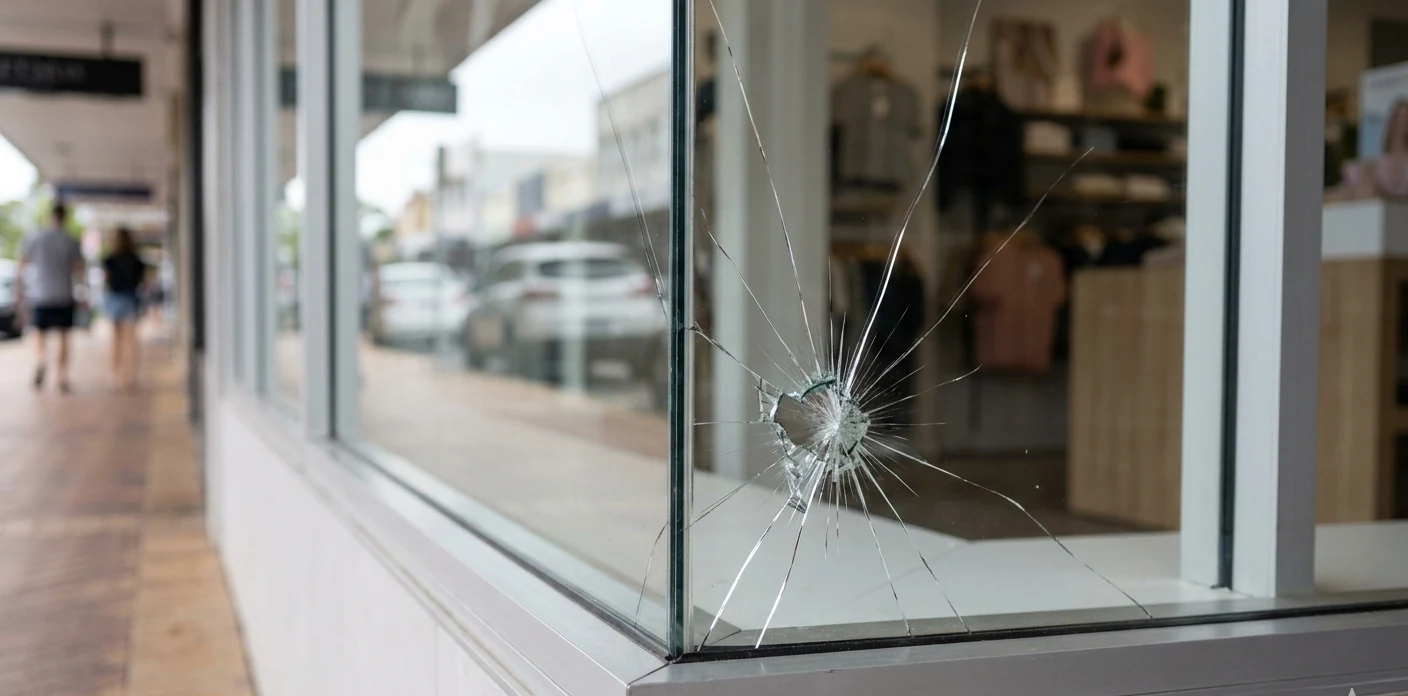
Visible damage is one of the clearest signs that shopfront glass is no longer performing as it should. Even minor-looking defects can affect safety, reduce security and weaken the professional appearance of a business. Once glass shows signs of physical deterioration, it should be assessed promptly rather than left to worsen.
Shopfront glass is exposed to constant movement and vibration from foot traffic, nearby doors, cleaning, street activity and changes in temperature. What starts as a small chip or crack can spread over time, especially when the panel is under pressure from the frame or affected by repeated impact.
Any crack in shopfront glass should be taken seriously. Hairline cracks that run from the edge of the frame towards the centre of the pane can indicate stress from frame pressure, building movement or impact. These cracks may spread suddenly, particularly during temperature changes or when nearby doors are slammed.
Chips and star breaks usually occur when the glass has been struck by an object. Even if the damage appears shallow, it may have created a weak point in the panel. Edge chips are especially concerning because the edges of glass carry significant stress. Once this area is damaged, the integrity of the whole pane can be affected.
Shopfront glass can develop scratches from cleaning tools, stock movement, signage, vandalism or general wear. Light marks may not always justify replacement, but deep scratching that is visible from the street can reduce clarity and make the frontage look neglected.
Acid etching from graffiti or harsh chemical cleaners can leave a cloudy or frosted pattern that cannot be fully cleaned or polished out. When scratching or etching affects large areas, eye-level viewing zones or window display areas, replacement is often more effective than trying to restore the surface.
Corners, frame junctions and the base of the glass near the pavement should be checked carefully. Small chips, flaking edges or cracks in these areas are common warning signs of pressure or movement within the glazing system. Because stress is often concentrated around the edges, this type of damage can spread across the pane.
Other warning signs include gaps between the glass and frame, loose glazing beads or visible movement when the panel is touched. If water is entering around these areas, staining nearby surfaces or corroding fittings, the glass may no longer be seated correctly. In these cases, simple resealing may not solve the underlying issue.
Shopfront glass relies on a stable frame to hold it securely and protect the surrounding building. When the frame moves, distorts or separates from the glass, the entire installation can become less effective. Even small gaps can allow water and air to enter, reduce security and shorten the life of nearby materials.
Visible gaps, draughts or water trails around the glass line often indicate that the seal has failed or the frame has shifted due to age, impact, building movement or previous damage. If these problems keep returning, replacement of the glass and possibly parts of the framing system may be more reliable than repeated short-term repairs.
Frame movement can appear as uneven joints, misaligned mullions or gaps where the glass no longer sits evenly in the opening. The pane may look slightly skewed or have uneven clearances around the edges. Doors within the shopfront may also start to catch, scrape against the threshold or require extra force to close.
In more advanced cases, the glazing bead or silicone line may no longer sit tightly against the glass. Small gaps can open at corners or along one side of the pane. Cracks in surrounding plaster, cladding or masonry near the frame may also suggest that movement in the building is placing stress on the glass.
Gaps around shopfront glass are not only an energy efficiency issue. They can also indicate that the glass is no longer properly supported by the frame. Persistent draughts, increased traffic noise, rattling glass or signage moving near the window can all point to failed seals or frame movement.
From a security perspective, loose or gapped glass is a concern. Openings around the frame may give intruders a point to lever against, especially if beads or fittings have loosened. Where the glass is already moving, impact from forced entry or accidental contact is more likely to cause the panel to dislodge or break.
If resealing or rebeading only solves the issue temporarily, the cause is likely to be deeper than the sealant itself. A professional assessment can determine whether the glass, frame or surrounding structure needs replacement or repair.
Water entry is one of the more serious signs that a shopfront glazing system is failing. Common signs include staining on the sill, bubbling paint, swollen timber skirting, damp carpet near the glass or white mineral staining on masonry beneath the frame. After rain, there may be small puddles or damp areas along the inside edge of the shopfront.
Repeated moisture can lead to corrosion of fixings, decay in timber subframes and mould growth in concealed cavities. Applying silicone over the same leaking joint may temporarily hide the problem, but it often does not fix the cause. If water is tracking behind the frame or into wall systems, more substantial repair or replacement may be required.
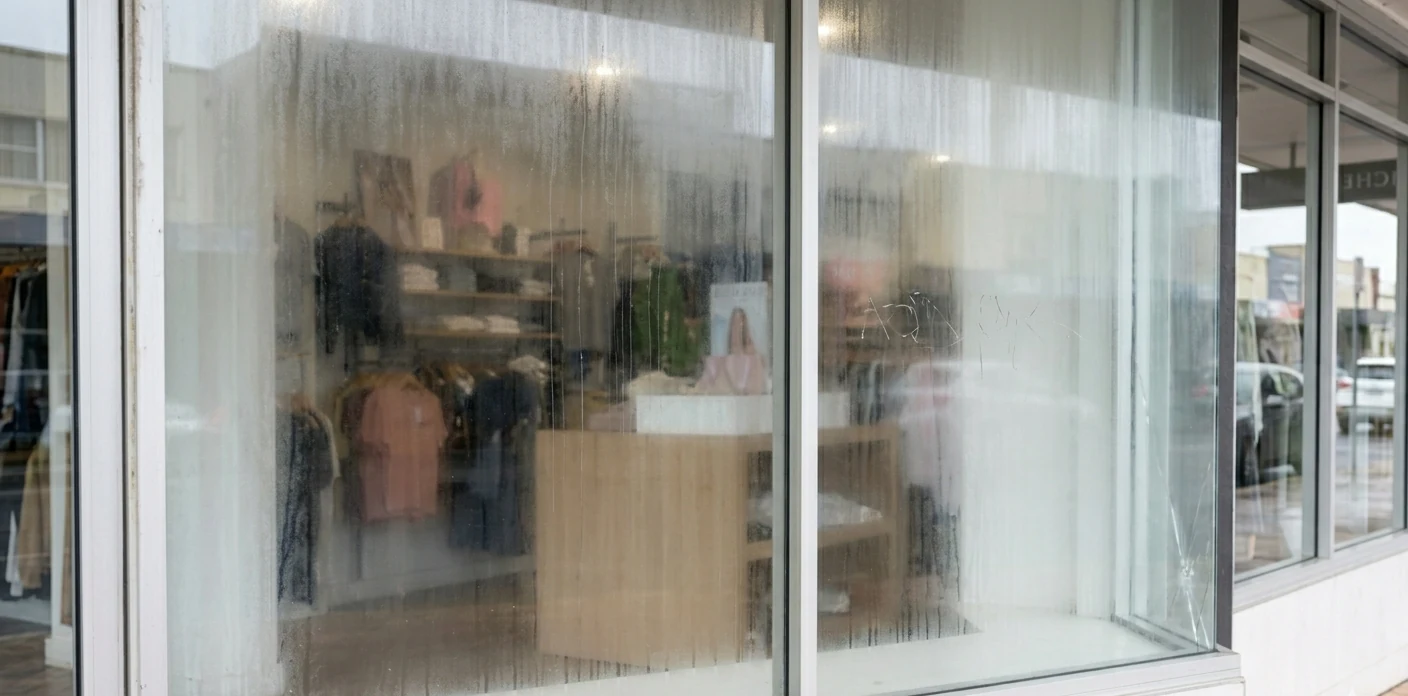
Shopfront glass should allow clear visibility from the street. When the glass becomes cloudy, fogged, scratched or discoloured, it can reduce the impact of window displays and make the business look less inviting. Persistent visual distortion is often a sign that cleaning alone will not restore the glass.
It is important to distinguish between normal surface dirt and deeper issues within the glass, coatings or glazing system. Once visibility problems are caused by seal failure, etching, film degradation or internal moisture, they usually continue to worsen.
In double-glazed shopfronts, condensation or fogging between the panes usually indicates a failed perimeter seal. When this seal breaks down, moisture enters the insulated cavity and creates a misty or streaky appearance that cannot be removed by cleaning the inside or outside surface.
This type of fogging may appear as:
Beyond appearance, failed seals can reduce the thermal performance of the glazing. The shopfront may become less effective at controlling indoor temperature, which can place extra demand on heating and cooling systems. Once moisture is trapped between panes, replacing the affected glass unit is generally the most practical long-term solution.
Glass that remains dull, streaked or milky after proper cleaning may have surface damage rather than dirt. Common causes include mineral deposits, hard water staining, micro-scratches from abrasive cleaning tools or deterioration of applied films and coatings.
This type of cloudiness can catch the light and create a permanent haze across the display. Under strong retail lighting or direct sunlight, it may become even more noticeable. If customers cannot clearly see product colours, signage, pricing or displays, the glass is no longer doing its job effectively.
Glass that has changed colour or developed uneven tinting can make a premises look older than it is. Discolouration may appear as yellowing in older laminated glass, patchy window film, uneven tint levels or blotchy areas across a panel.
This can be especially noticeable in retail strips where surrounding shopfronts look clear and bright. Patchy or discoloured glass may also distort the true colour of products and branding. When the shopfront no longer presents the business clearly and professionally, replacement should be considered.
Shopfront glass that was acceptable many years ago may no longer suit the way the premises is used today. Building requirements, tenancy use, customer traffic and security expectations can all change over time. Older glass may not provide the level of safety, impact resistance or performance now expected in commercial settings.
Replacement is not always about appearance. In some cases, it is a practical safety measure that helps reduce risk for staff, customers and passers-by.
Older shopfronts may contain standard annealed glass, which can break into large, sharp pieces. Modern commercial glazing commonly uses safety glass in high-risk areas such as doors, sidelights, low-level panels and other public access zones.
Signs that older glass may need assessment include very thin single panes, no visible safety markings, rattling panels or glass that sits poorly within the frame. If the premises has not been updated for many years, it is worth checking whether the existing glazing is suitable for current use.
A change in tenancy can also affect what is appropriate. A quiet office, busy café, retail store, showroom or family-focused business may each place different demands on the shopfront. Increased foot traffic, children near the glass, outdoor seating or high-use entry areas may all justify stronger glazing.
Modern businesses often expect more from shopfront glass than basic weather protection. Older glass may be easier to break during attempted entry, while laminated safety glass is designed to hold together even after impact. This can make forced entry more difficult and reduce the risk of dangerous glass fragments.
Comfort and energy performance also matter. Older single glazing may allow more heat transfer, draughts and outside noise. While this may not always require immediate replacement, it can contribute to uncomfortable indoor conditions and higher running costs. When combined with visible damage or poor frame performance, upgrading the glass can be a practical improvement.
Not every issue with shopfront glass requires immediate replacement. Some minor problems can be repaired or monitored. However, there comes a point where patching, resealing or temporary work is no longer safe or cost-effective.
The decision usually depends on the extent of the damage, the condition of the frame, the safety risk and how often repairs are needed. When problems keep returning, replacement is often the more reliable option.
Small, stable defects may sometimes be managed in the short term, but large, spreading or branching cracks indicate that the glass has been structurally weakened. A cracked shopfront panel cannot be relied on to perform properly under everyday stress from wind, door movement, vibration and accidental impact.
Glass should be assessed for replacement when it shows:
Once a panel has been weakened, it can fail suddenly without much additional warning. This creates a safety risk and may also leave the premises exposed if the glass breaks outside trading hours.
If the same panel, seal or adjoining frame section needs attention more than once, the issue may be larger than an isolated defect. Repeated resealing, rebedding or temporary crack repairs can indicate fatigue in the glass, movement in the frame or failure of the surrounding glazing system.
Common patterns include:
Frequent callouts can quickly become more expensive than a planned replacement. More importantly, they may still leave the shopfront vulnerable. Replacing the affected glass or glazing system can reduce disruption and provide a safer, more stable result.
Repair is not always appropriate when the existing glass no longer suits the safety or security needs of the premises. Older glass, weakened panels or loose glazing may create risks even if the glass has not fully failed.
Replacement should be considered where there are deep gouges, impact marks from attempted break-ins, obvious rattling, loose framing or panels that flex during door use or strong wind. In these situations, repairing surface damage does not address the underlying risk.
Upgrading the glass can improve resistance to impact, reduce the risk of injury and support better security for the premises. It also gives the surrounding frame, seals and fittings the opportunity to be checked at the same time.
Delaying shopfront glass replacement can affect safety, security, energy performance and customer confidence. Cracks, chips, fogging and loose framing are not just cosmetic issues. They can signal that the glass is no longer providing a reliable barrier between the business and the street.
Addressing problems early allows work to be planned before the glass fails completely. This can reduce the risk of emergency callouts, trading interruptions and temporary boarding. It also helps maintain a clean, professional frontage.
Damaged or weakened glass can make a shopfront more vulnerable. Cracks, gaps, loose panels and visibly aged glass suggest that forced entry may be easier. Older glass types may also provide less resistance during attempted break-ins or vandalism.
Replacing compromised glass with modern safety or laminated options can improve impact resistance and help deter opportunistic crime. A secure, well-maintained shopfront also shows that the premises is actively managed, which can reduce the impression of vulnerability.
Shopfront glass is part of the business’s visual presentation. Cloudy, scratched, delaminating or discoloured glass can make displays look dull and make the premises appear poorly maintained. Customers may form an impression before they even enter the store.
Clear replacement glass restores visibility, improves natural light and helps window displays appear sharper. Where suitable glazing is selected, replacement may also improve insulation, reduce draughts and support more comfortable conditions for staff and customers. Over time, this can assist with heating and cooling efficiency.
Recognising when shopfront glass needs replacing is about more than maintaining a clean appearance. Cracks, chips, fogging, loose frames, water entry and outdated glazing can affect safety, security, energy performance and the way customers perceive a business. Even small defects can worsen over time, especially in busy commercial environments where glass is exposed to vibration, impact, weather and daily use.
A timely professional assessment helps determine whether repair is suitable or whether replacement is the safer and more practical option. By addressing problems early, businesses can protect staff, customers, stock and the overall presentation of the premises while keeping the shopfront clear, secure and fit for purpose.
Ready to elevate your space with stunning glass solutions? Contact Clearview Glass today for expert advice, quality craftsmanship, and unmatched customer service. Let's bring your vision to life – get in touch now for a consultation.


