Choosing a balustrade system for a coastal property involves more than appearance. Factors such as salt air, strong sun, sea breezes and occasional storms place ongoing stress on materials, fixings and finishes. When evaluating glass balustrades in Central Coast homes, these conditions quickly highlight the difference between systems that perform long-term and those that deteriorate early.
Key considerations include glass type and thickness, hardware quality, fixing methods, design style, compliance requirements and maintenance demands. Structural strength, corrosion resistance and detailing all influence how well a balustrade maintains safety, clarity and durability. Understanding how these elements interact helps ensure the chosen system suits the property’s location, exposure and day-to-day use while supporting long-term performance and value.
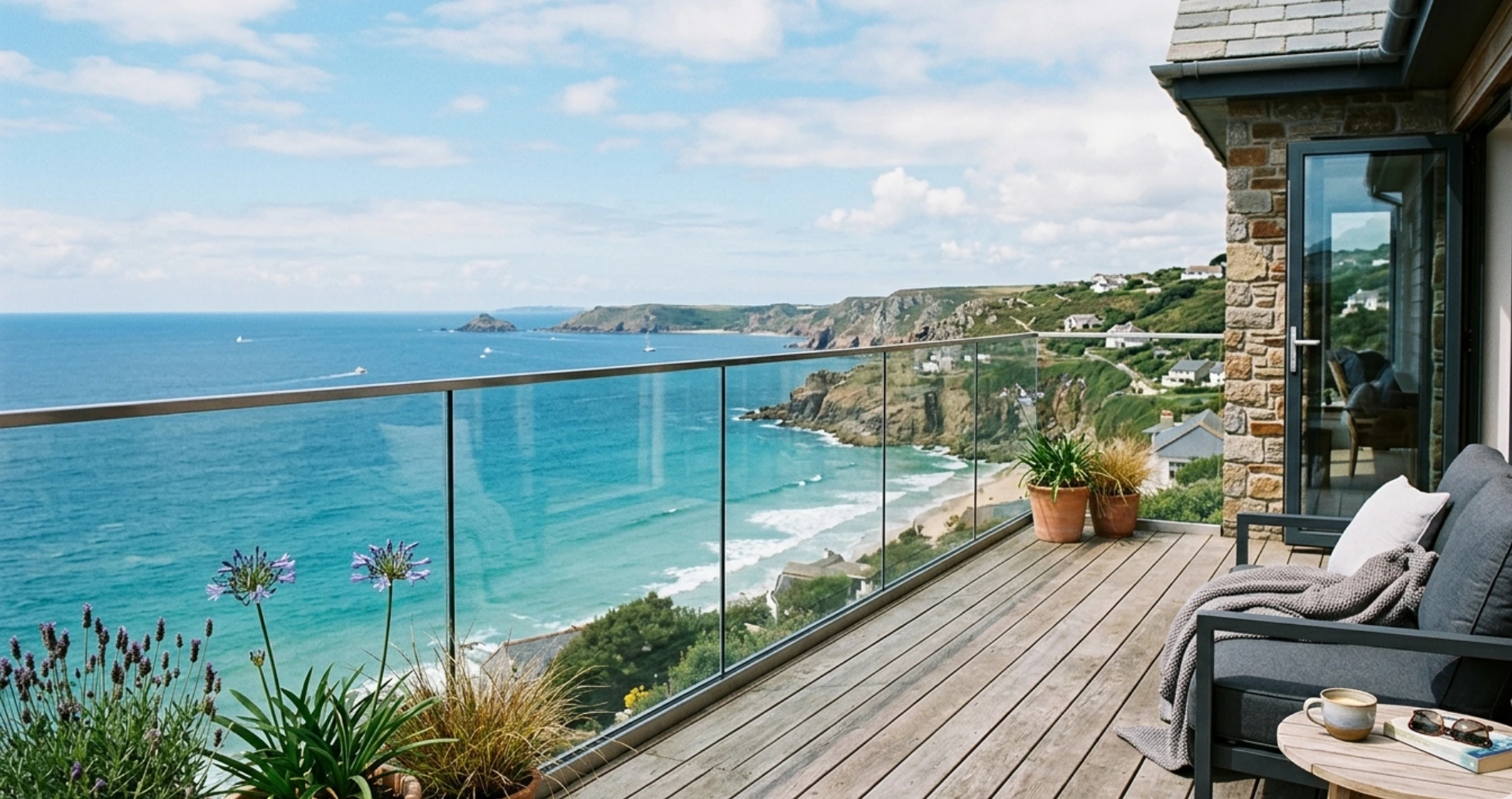
The glass used in a balustrade is the single most important safety element, especially in coastal homes exposed to salt air and strong winds. Choosing the correct glass type and thickness determines how well the balustrade will handle impact, weather and day‑to‑day wear without compromising views or aesthetics.
For properties where balconies, decks and pool areas are common, glass needs to meet Australian Standards for structural performance and human impact while also coping with corrosion risks from the marine environment. The right specification is not just about avoiding breakage but about how the glass behaves if it does break.
Toughened glass is heat treated to increase strength compared with standard float glass. When it breaks, it shatters into small blunt fragments rather than sharp shards, which reduces the risk of serious injury. It is widely used in frameless and semi‑frameless systems because it can handle wind loads and everyday impacts from people leaning or bumping into panels.
Laminated safety glass consists of two or more layers of glass bonded together with an interlayer, usually PVB or SGP. If the glass breaks, the fragments adhere to the interlayer and the panel typically stays in place, which maintains a barrier and buys time for safe replacement. This is especially valuable in high-level balconies or stairs where a sudden opening could be dangerous.
For Central Coast homes near the ocean, laminated options with high-performance interlayers can also provide better edge durability in a salty environment and help reduce noise from surf or traffic. In some designs, a toughened laminated panel is specified, which combines the strength of toughened glass with the containment benefits of lamination.
Glass thickness directly affects strength. Typical thicknesses for residential balustrades range from 10 mm to 17.52 mm, depending on:
Balustrades must comply with AS 1288 and AS/NZS 1170, which set out minimum performance criteria.
The way glass is finished and processed has a direct impact on strength and long‑term performance. All exposed edges on balustrade panels should be polished or arrised to reduce the risk of edge chipping, which can create weak points. This is more critical in coastal settings where windborne sand and frequent cleaning can abrade rough edges.
Heat soaking of toughened glass is often recommended for balustrades. This additional process reduces the likelihood of spontaneous breakage caused by nickel sulphide inclusions, which is particularly important in frameless designs where each panel is a key structural element. Hardware selection must also support glass strength. Corrosion-resistant fixings in marine-grade stainless steel or appropriately treated aluminium help maintain clamping pressure over time and prevent staining at glass edges. When combined with correctly specified glass type and thickness, these details ensure the balustrade remains safe, compliant and visually clear for many years.
Choosing between frameless, semi-frameless and fully framed glass balustrades has a direct impact on views, maintenance, cost and how well the design suits Central Coast conditions. The right style depends on how much structure is preferred around the glass, the exposure to wind and salt and the look that suits the home. Each option uses toughened safety glass, yet the fixing methods and visible hardware differ significantly. Understanding these differences helps match the system to locations such as oceanfront balconies, pool areas or internal staircases.
Frameless systems use thick toughened glass panels fixed with spigots or concealed channels at the base with minimal or no vertical posts. Sightlines are almost uninterrupted, which is ideal for coastal views and contemporary architecture.
This style suits exposed balconies and pool fences where preserving outlook and natural light is a priority. The heavier glass and specialist hardware typically increase cost compared with other options, yet also provide a high-end appearance that can add perceived value. Cleaning is relatively straightforward because there are no frames to trap dirt. However, on highly exposed seafront sites, salt spray can show more readily on large clear panels, so regular rinsing is important to keep glass looking crisp. Structural engineering and compliance with Australian standards are critical as the glass itself carries more of the load.
Semi-frameless balustrades use vertical posts in aluminium or stainless steel with glass panels captured between them and minimal or no top and bottom rails. The result is a compromise between openness and structure.
This option usually suits townhouses and family homes that want a modern look without the premium outlay of fully frameless ones. Posts introduce clear visual lines, which some designs use to echo window framing or rooflines. They also provide a sense of security for users who prefer a visible edge to grip along stairways or upper-level balconies. From a practical perspective, semi-frameless systems can perform well in windy pockets of the Central Coast because the posts help distribute loads. They are often easier to install where substrates are uneven or older, as post positions can be adjusted to suit. Maintenance focuses on cleaning both glass and posts and choosing quality powder-coated or marine-grade finishes is essential near the ocean.
Framed balustrades surround each glass panel with continuous top, bottom and side framing, usually in aluminium. Framing is visually dominant compared with the glass yet still allows light and outlook.
This style is typically the most economical and is often selected for investment properties, multi-residential developments or areas where the budget is tight. The continuous frame provides strong structural support, which can be advantageous on large balconies or high-traffic communal areas.
Framed systems create more edges and channels where dirt and salt can accumulate, so periodic detailed cleaning is required. In harsh coastal environments high-quality finishes and correct drainage and weep holes inside framing are important to reduce corrosion risk. For homes where safety, cost control and durability rank ahead of a completely unobstructed view, framed balustrades remain a practical choice.
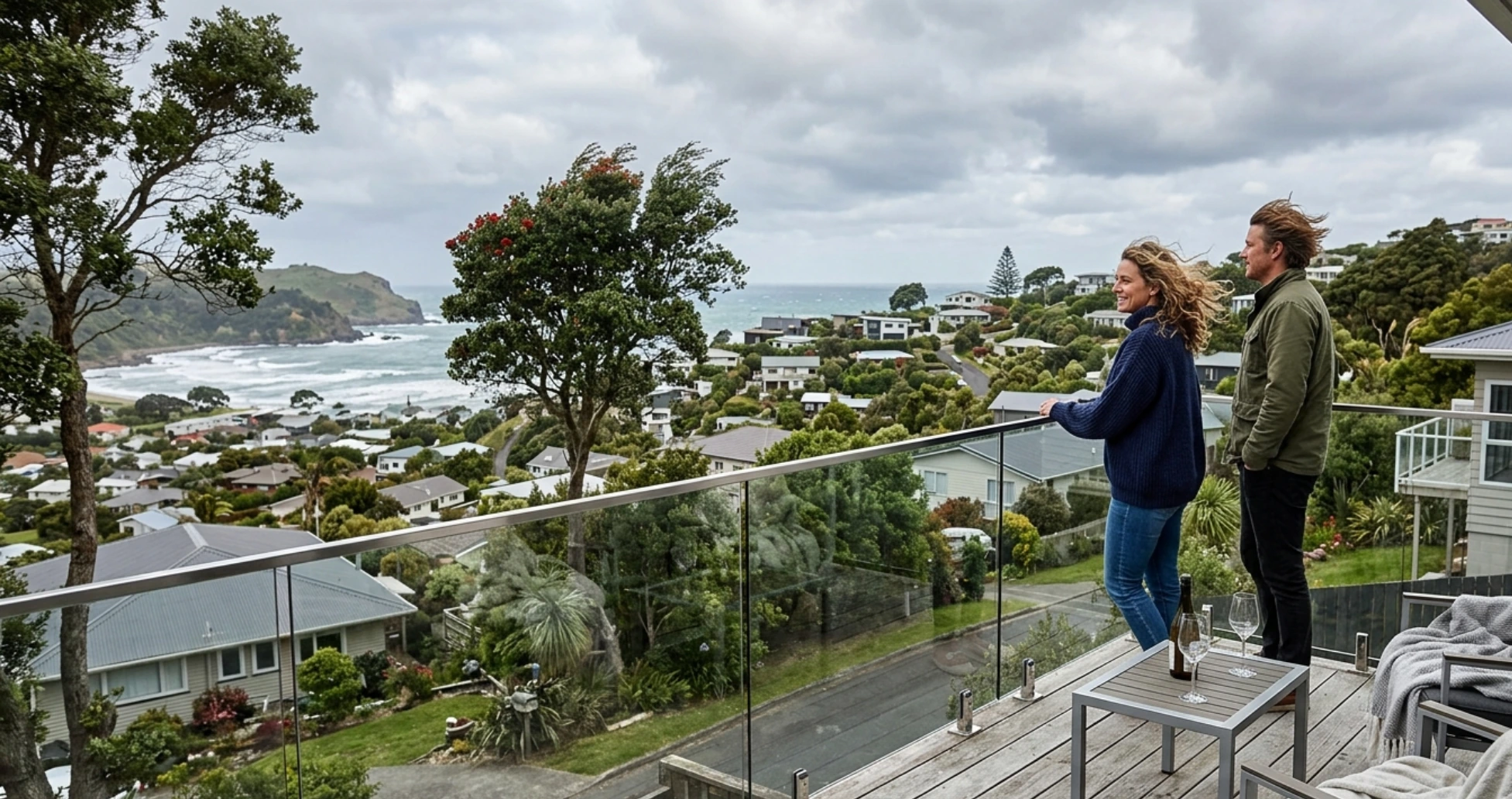
Glass balustrades are exposed to salt-laden air, wind, UV and occasional storms. The right combination of hardware, fixings and finishes is critical to prevent rust, staining and premature failure. Coastal durability is not only about safety compliance but also about keeping the balustrade looking clear and modern for many years.
Choosing suitable materials, specifying the correct grades of stainless steel and using appropriate fixing methods dramatically reduces corrosion risk. Attention to detail at this stage usually decides whether a balustrade stays low maintenance or becomes a constant source of rust spots and hardware issues.
For homes within a few kilometres of the ocean, 316 marine-grade stainless steel is generally the minimum standard for posts, spigots, handrails and fixings. Grade 304 can be acceptable in more sheltered inland locations but is far more prone to tea staining in coastal air.
The surface finish matters as much as the grade. Smooth, polished or brushed finishes collect less salt and are easier to clean compared to rough or bead-blasted textures. High-quality electro-polishing can further increase resistance to surface corrosion by creating a more uniform protective layer. Powder coating over stainless or aluminium can add another barrier, provided the coating system is specifically rated for coastal use. Chips or scratches in the coating should be repaired quickly so salt cannot creep underneath and start lifting the finish.
In coastal environments, hardware design contributes directly to longevity. Fully welded assemblies reduce the number of joints where water can sit and cause crevice corrosion. Where mechanical fixings are used, they should be high-grade stainless or specially coated structural fasteners suitable for salt exposure.
Spigots for frameless glass should:
Balustrade bases, top rails and brackets must be detailed to avoid water traps. Open or sloped profiles that allow rain and wash water to run off will outperform flat ledges that collect salt spray. Concrete or tiled balconies require correctly specified anchors and corrosion-resistant sleeves to prevent rust staining and cracking around fixings.
Even the best coastal hardware needs basic care. Regular rinsing with fresh water helps remove salt before it can attack metal surfaces. In higher exposure zones, such as beachfront homes, this may be required weekly, while more sheltered sites can extend intervals.
Mild pH-neutral detergents are suitable for routine cleaning of both glass and stainless components. Harsh acids, chlorine-based products or abrasive pads should be avoided, as they can damage passive films on stainless steel and shorten coating life. Periodic application of a quality stainless steel protectant can provide an additional barrier against tea staining on exposed posts and handrails.
Safety is the most critical factor in any glass balustrade for Central Coast homes, particularly on balconies, stairs and pool areas. Choosing a design that only looks good is not enough. The system must meet Australian safety standards, use the correct glass type and be installed to perform reliably in local coastal conditions.
Compliance is not just about passing an inspection. It affects liability, insurance and long‑term peace of mind. A fully compliant balustrade is structurally sound, uses approved materials and is installed to meet all height, loading and pool safety requirements relevant to New South Wales.
Glass balustrades in Central Coast properties must comply with several key standards and regulations, including:
These set minimum requirements for glass type, thickness, fixing methods and impact resistance. For example, a typical external balcony in a residential setting will usually require toughened safety glass of at least 10 mm or 12 mm, depending on height and fixing system. Higher or more exposed applications may require laminated toughened glass to prevent the glass from falling if broken.
Local council rules on the Central Coast also dictate balustrade height and climbability. As a guide:
Where glass is used as a pool fence, additional safety requirements apply. Gates must be self‑closing and self‑latching with latches positioned so children cannot easily reach them. Hinges and latches must be corrosion-resistant and adjusted so the gate reliably closes from any open position.
The barrier must prevent children from climbing into the pool area. This means avoiding horizontal rails or nearby surfaces that create footholds within 900 mm of the glass. Clear, unclimbable glass panels are particularly effective here, but panel spacing and any adjoining structures must be assessed carefully.
Regular inspection is also part of practical safety. Homeowners should check for loose fixings, corrosion, chips at glass edges and gate performance, particularly in coastal conditions where hardware is exposed to constant salt and moisture.
Maintenance is one of the most important practical considerations for glass balustrades in homes. Coastal air carries salt and fine sand, which can quickly mark glass and corrode fittings if cleaning is not planned from the start. The right glass type fixings and cleaning routine will keep balustrades clear and safe with minimal ongoing effort.
Understanding how the environment affects cleaning needs makes it easier to decide between framed and frameless systems, surface treatments and hardware finishes that will stand up to local conditions.
Glass exposed to sea breezes or direct beachfront conditions typically needs more frequent attention than inland installations.
As a guide:
Salt buildup, water spots and grime are more than cosmetic. Left too long, they can stain glass, etch the surface and accelerate corrosion in fixings. Regular light cleaning is far easier and cheaper than infrequent heavy scrubbing.
For most Central Coast homes, routine cleaning can be handled with simple non-abrasive methods. A mild detergent, a warm water microfibre cloth and a soft squeegee will cover almost all needs. Commercial glass cleaners are suitable, provided they are free of ammonia and harsh solvents that can damage sealants or hardware finishes.
Avoid:
Work from top to bottom and finish with a squeegee pull or dry microfibre polish to prevent streaks. In outdoor areas, a low-pressure hose rinse before handwashing will remove loose grit and reduce the risk of scratching.
In coastal environments, hardware choice has a major impact on long-term maintenance. Marine-grade 316 stainless steel or quality powder-coated aluminium is strongly preferred to reduce tea staining and surface corrosion. Even with these materials, regular rinsing with fresh water is essential where fixings face salt spray.
For the glass itself:
Hydrophobic coatings are particularly useful on balcony and pool fencing where hose rinsing is common. They do not remove the need for cleaning but extend the intervals between thorough washes.
Glass balustrades rely on more than good-looking panels and hardware. The way each component is measured, fixed and sealed has a direct impact on safety, durability and day‑to‑day usability. A precise, standards‑compliant installation protects people on balconies, decks, pool areas and stairs while preserving views and minimising maintenance. Poor installation may not be obvious at first glance yet can lead to movement in the glass, corrosion in fixings and even structural failure under load.
Penetrations into timber or concrete need correct sealing to stop moisture tracking into fixings. Inferior practice, such as cutting corners on sealants or using mixed‑metal fasteners, can accelerate galvanic corrosion in a coastal setting. Quality installation pairs marine-grade stainless hardware with compatible fixings and isolates metals where required.
Drainage is another key factor. In channel systems, glass should sit on appropriate packers with gaps that allow water to escape. Trapped water in poorly installed channels can lead to hidden corrosion and staining at the base of panels. This can compromise the integrity of the balustrade and make maintenance significantly more expensive.
A high‑quality installation preserves the clean lines and open feel that attract homeowners to glass balustrades. Poorly aligned posts, visible packers or uneven gaps distract from views and are difficult to correct once the system is in place.
Functional details such as smooth handrail transitions, correctly set gate tension and carefully dressed silicone joints influence how the balustrade feels to use every day. On stairs and ramps, consistent handrail height and secure fixings improve comfort and reduce noise from movement or rattling.
Quality control at installation also reduces future maintenance. Correct edge clearances make cleaning easier and help prevent dirt buildup. Securely fixed panels and rails are less likely to loosen under wind vibration or regular use, which avoids frequent call‑backs and adjustments.
Selecting a glass balustrade involves more than choosing a style that looks good in photos. Wind, salt exposure, views and how the space is used all affect which system will perform best and remain compliant. The goal is to balance safety, maintenance, privacy and aesthetics without overbuilding or underprotecting the area.
The right choice usually comes from considering three things together: where the balustrade will sit, who will use the space and how much maintenance is realistic. With those factors clear, it becomes easier to decide on the glass type, fixing method and hardware that make sense for the home.
Balustrade glass is not all the same. For high-risk areas such as upper-level balconies, laminated toughened glass is often preferred so that if a panel is damaged, the interlayer helps retain the glass rather than allowing it to fall away. In less critical applications, fully toughened glass may be acceptable, but thickness must always be matched to span and fixing type to meet standards.
Cleaning is a real advantage. Factory‑applied glass protection coatings can reduce the effort needed to remove salt, grime and mineral deposits on ocean‑facing elevations. For hardware, choosing marine‑grade components and avoiding mixed metals helps limit staining and tea staining, so the installation keeps its appearance for longer.
A frameless system with clear glass suits homes that prioritise uninterrupted coastal or bush views and where the main need is safety without visual obstruction. In more suburban streets or where neighbouring homes are close, some level of privacy may be more important. Satin‑etched, tinted or partially frosted panels can reduce overlooking while still allowing light to flow and maintaining a contemporary look.
Consider how people move through the space. On narrow balconies or stairs, top rails that project too far can make the area feel cramped. Side‑fixed glass or slim capping rails preserve usable width. For families with young children, solid glass panels are often preferable to widely spaced balusters, as they reduce climb points and stop small items from being pushed through to the outside. Thinking through view lines, privacy and daily use together makes it possible to choose a balustrade that looks right for the home and also works quietly and safely in the background for years.
The most effective glass balustrade systems are those designed with coastal exposure, structural performance and ongoing maintenance in mind. High-performance toughened or laminated glass, combined with marine-grade stainless steel or properly specified aluminium, provides the durability required in salt-laden environments. Fixing methods, drainage detailing and hardware selection all play a role in long-term safety, appearance and reliability. Compliance, appropriate handrail integration and attention to surrounding surfaces ensure the balustrade functions as a true safety barrier. At the same time, choices around transparency, tinting and layout influence privacy, glare control and overall usability. When these factors are carefully aligned with the property’s conditions and intended use, the result is a balustrade system that remains safe, low-maintenance and visually consistent.
Ready to elevate your space with stunning glass solutions? Contact Clearview Glass today for expert advice, quality craftsmanship, and unmatched customer service. Let's bring your vision to life – get in touch now for a consultation.


